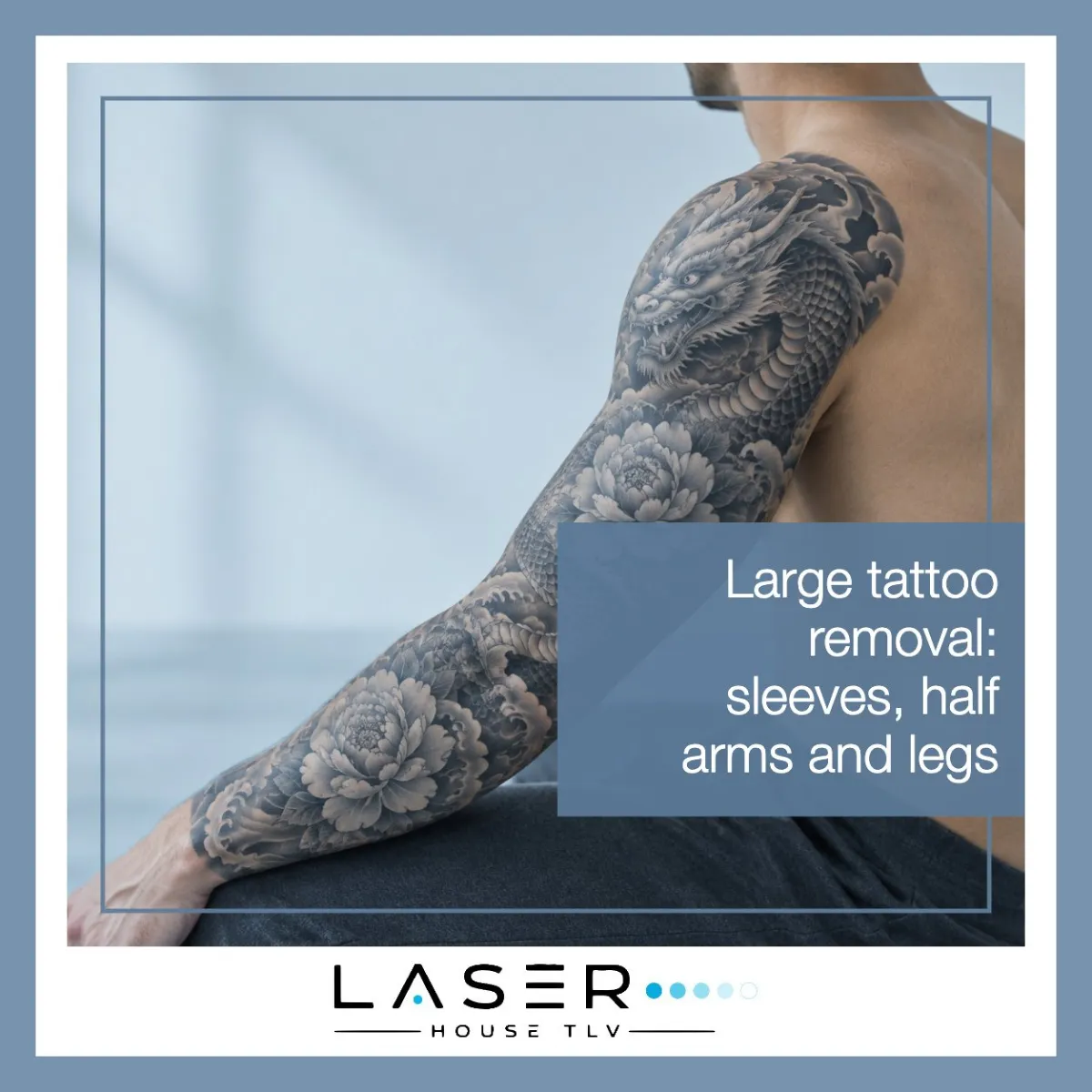
A full sleeve, a half sleeve, half a leg or a piece that covers the whole shoulder. With a large area it is natural to wonder where to even start, how long it will take and whether your skin can handle it. Removing a large tattoo takes longer, but it can be planned in a calm, organised way.
In this article we explain how we split a large tattoo into areas, why the outer and inner sides of the arm are treated separately, roughly how many sessions it takes and what matters between sessions. Further down you will find videos from treatments at the clinic and photos of real results.
Quick guide
Why not treat the whole sleeve at once?
A large tattoo means a lot of ink over a wide area of skin. After a session the skin reacts with redness, mild swelling and sometimes blisters. The bigger the area, the bigger the reaction. That is why we divide the tattoo into areas and treat them according to a plan.
On the arm the basic split is the outer side and the inner side. This way the skin is not treated around the whole circumference of the arm on the same day, healing is more comfortable, and each area gets the settings that suit it.
- Less swelling and discomfort after the session
- Laser settings matched to each area and its ink
- Easier aftercare and dressing in the following days
- Clearer tracking of how each part is fading
The exact split is decided at the consultation, based on the size of the tattoo, ink density and skin condition.
Example: one arm in two parts
Japanese sleeve, outer and inner side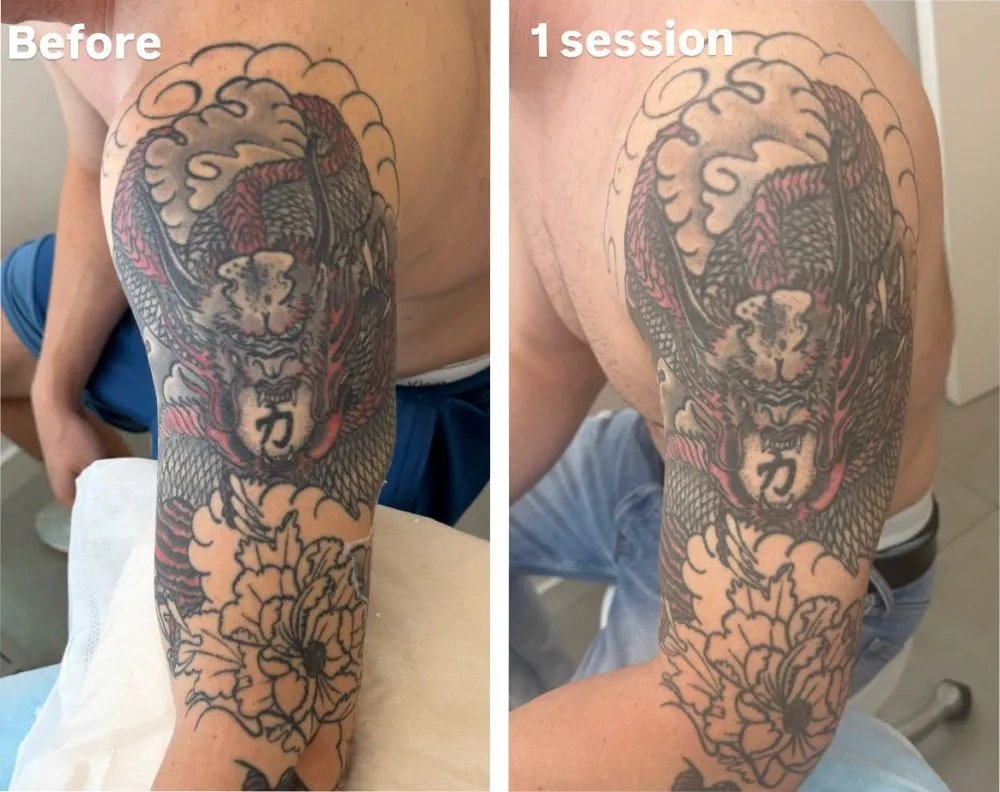
The outer and inner side of the arm
The skin on the two sides of the arm is different. On the outer side it is thicker and gets more sun. On the inner side it is thinner and more sensitive, so treatment there is often felt more.
The ink is not always the same either. One side may be more densely packed or have layers of touch ups and cover ups. So the two sides can fade at different speeds, and that is completely normal.
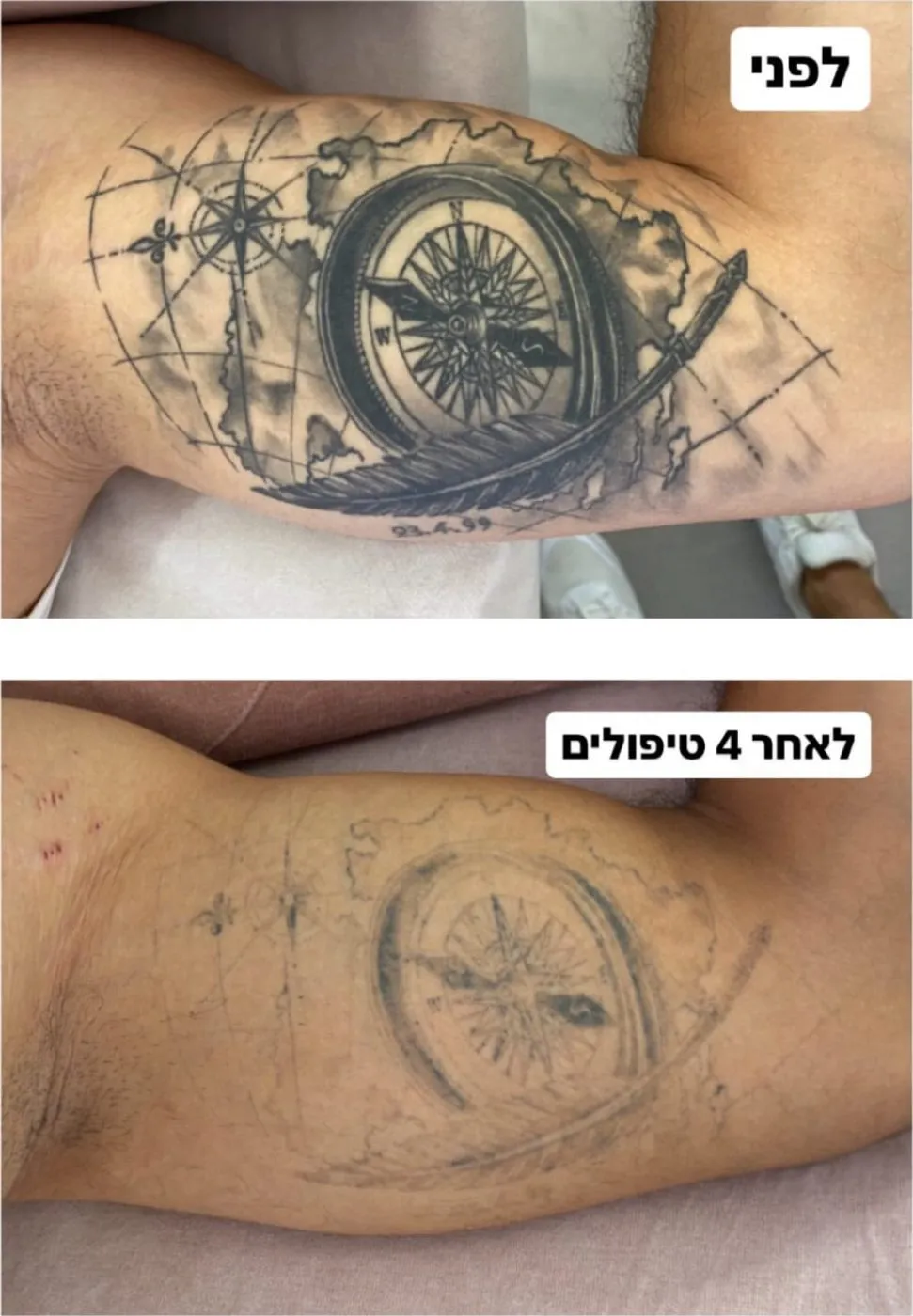
Throughout the process we use a cooling machine that blows cold air onto the skin, which helps especially on sensitive areas.
How many sessions does a sleeve need?
Roughly 7-15 sessions, sometimes more. With a large tattoo the number depends less on the size itself and more on what is inside it: how dense the ink is, which colours there are, whether there are cover up layers, and where on the body it sits.
Areas further from the heart, such as the forearm, shin and ankle, usually fade more slowly. We will know the exact number after an assessment.
How many sessions tattoo removal takes
The price for a large tattoo depends on its area and complexity, and we will define it at the consultation.
Colour and Japanese sleeves
Japanese style sleeves often include red, yellow, green and light blue alongside black. Each colour responds to a different wavelength, so a tattoo like this needs a combination of wavelengths. Black usually fades first, while colours such as yellow and white take more patience.
Half leg and large tattoos on the leg
On the legs, and especially the shin and ankle, fading is usually slower and the skin may swell more after a session. Here too we split the tattoo into areas according to its shape.
For the first days after a leg session, avoid long periods of standing, intense workouts and socks or shoes that press on the area. Raising the leg while resting can help with swelling.
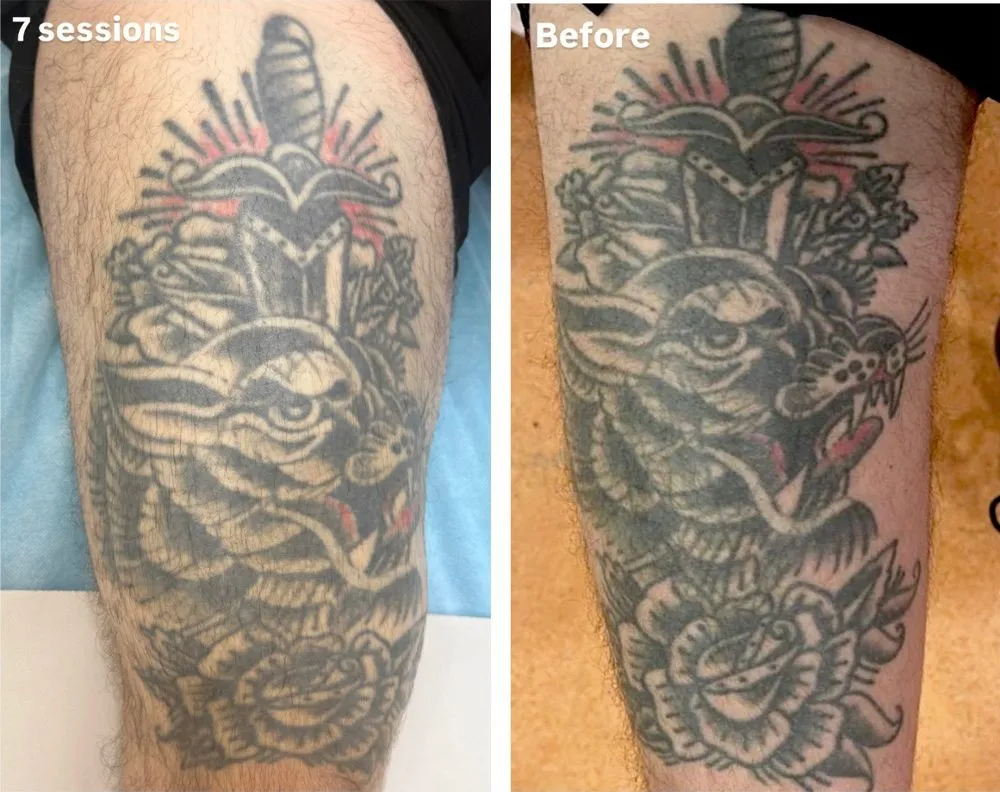
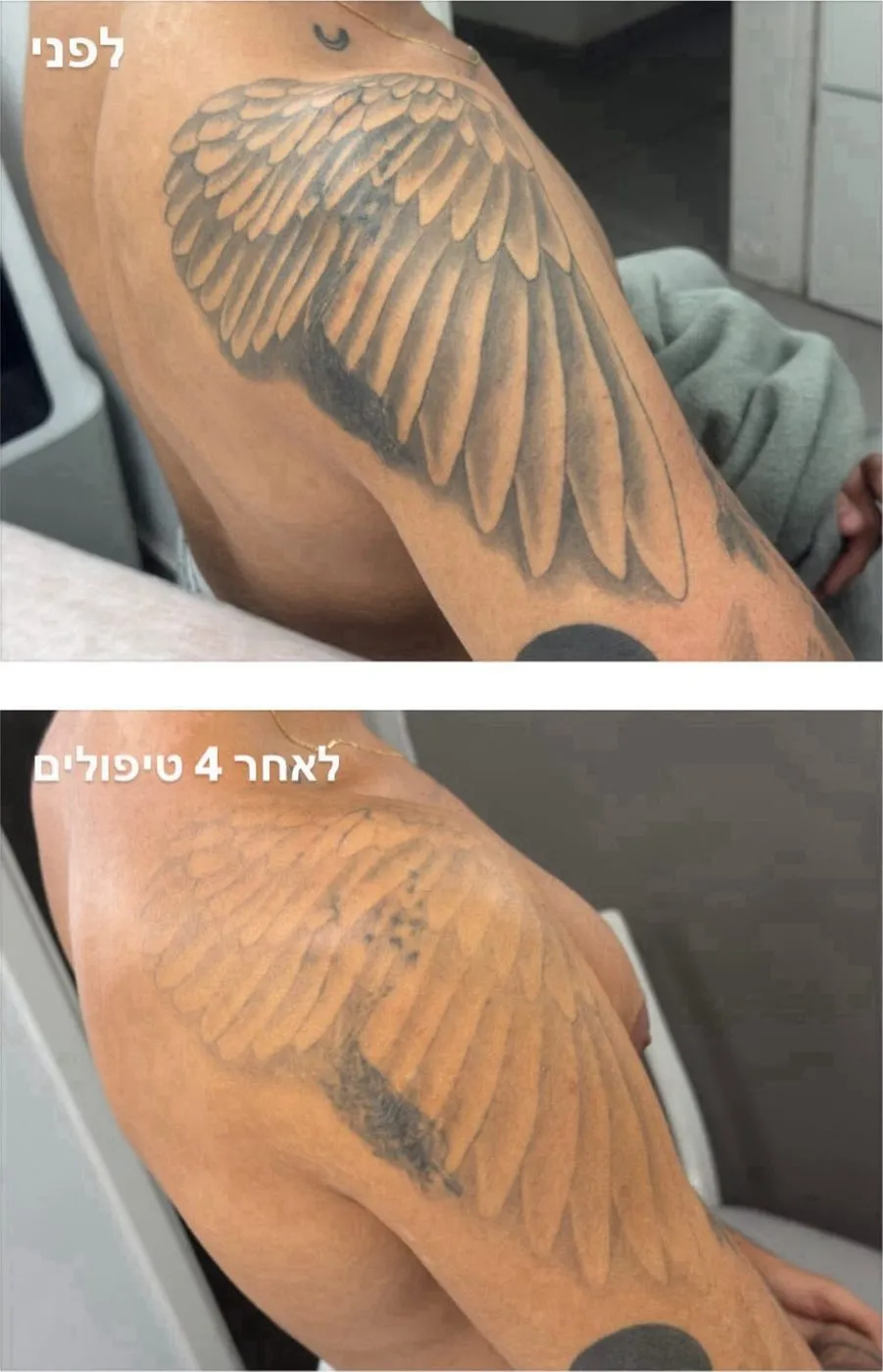
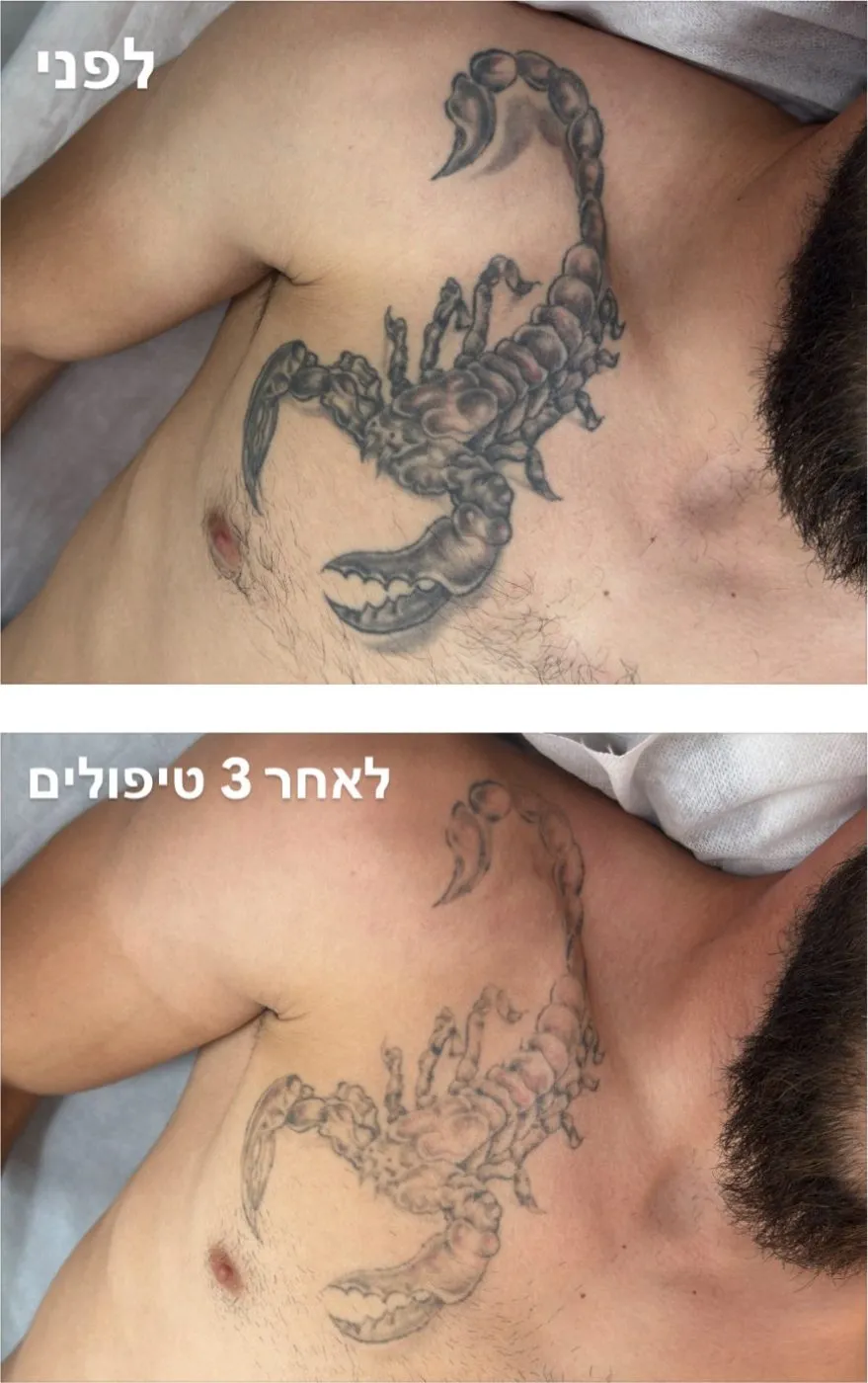
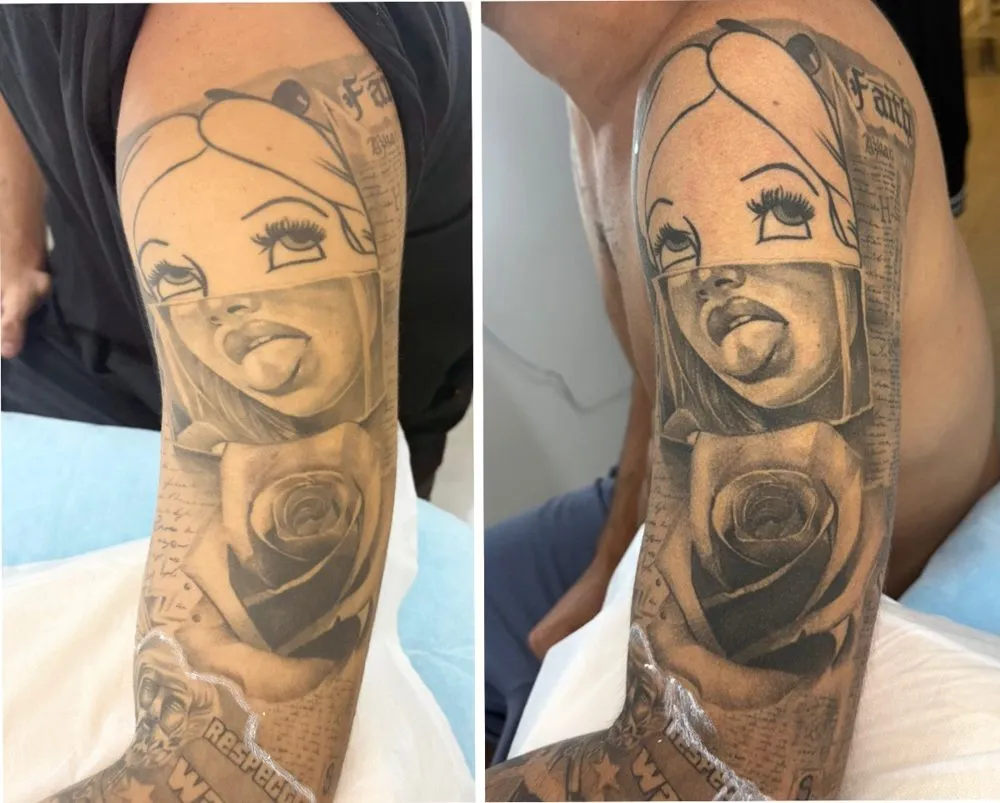
Real results: videos and photos
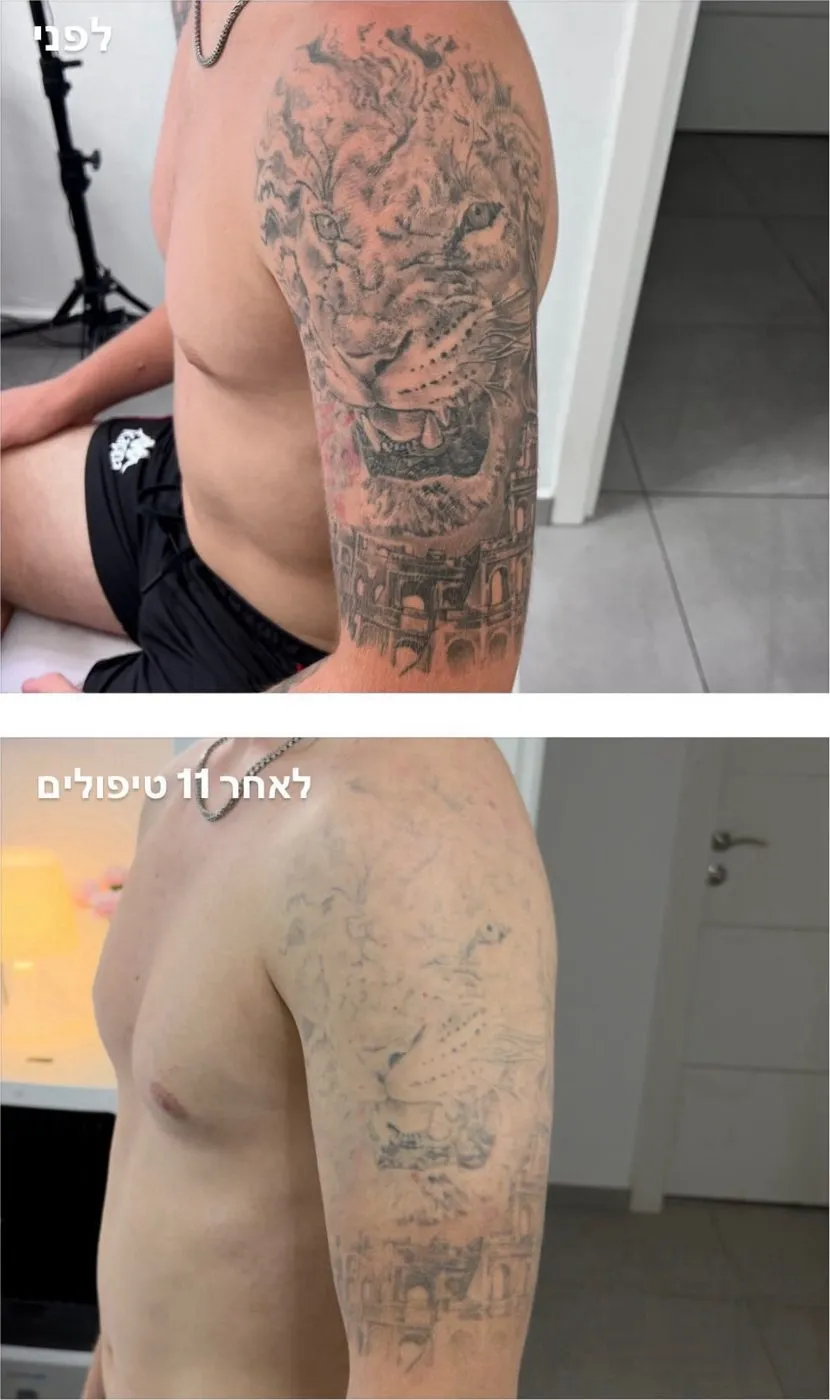
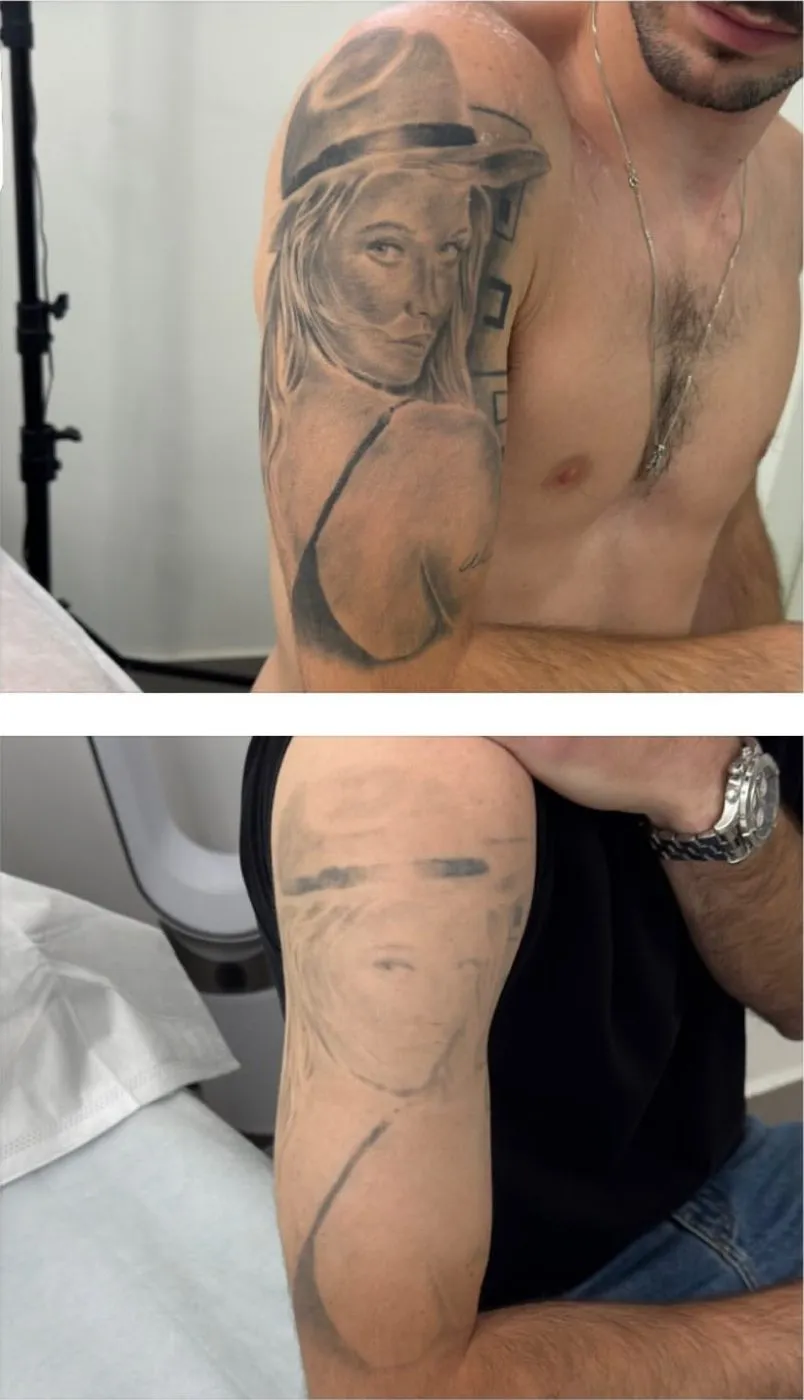
The photos and videos show specific client cases. Results vary from person to person, and lighting and camera angle also affect how skin looks. Success in one case does not guarantee a similar result or the same number of sessions in another.
Colour sleeve on the shoulder and arm
Shoulder and arm, colour ink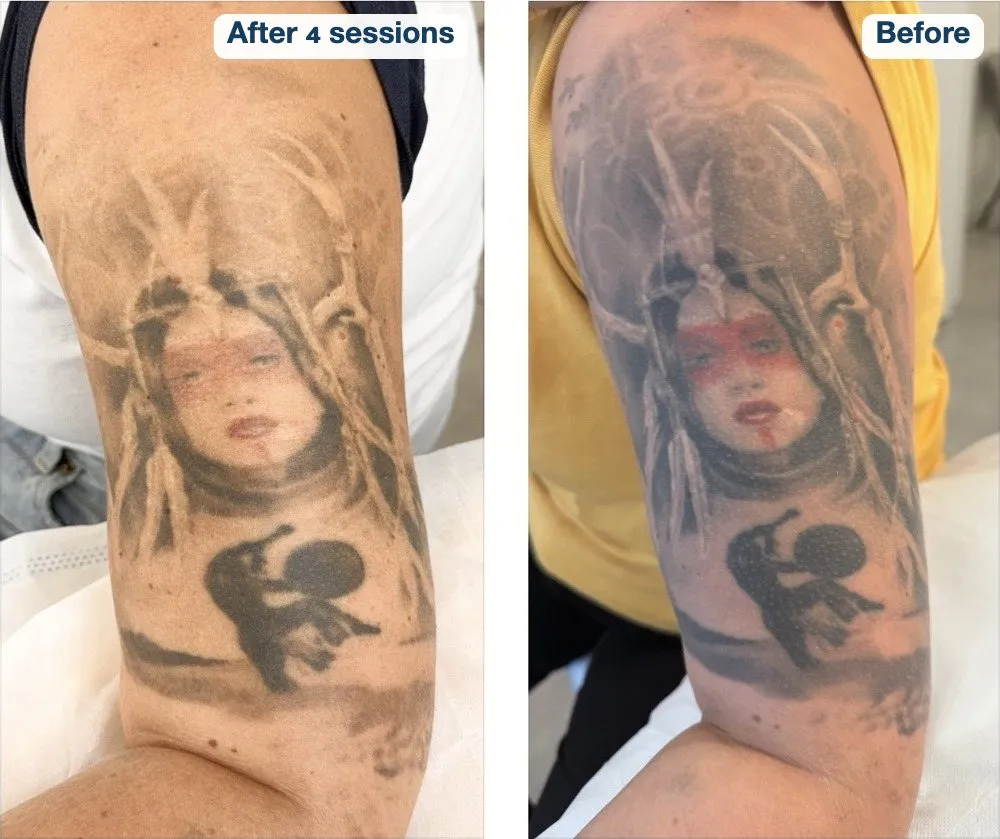
Fine line piece on the thigh
Thigh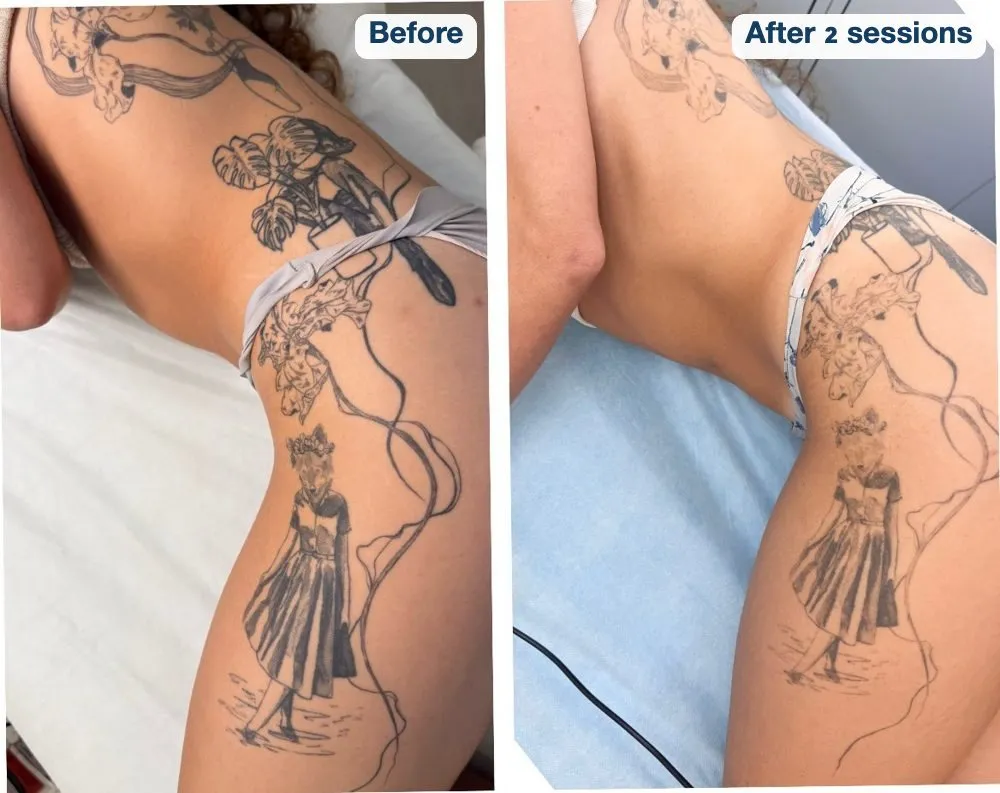
Monstera and flowers on the hip
Hip and side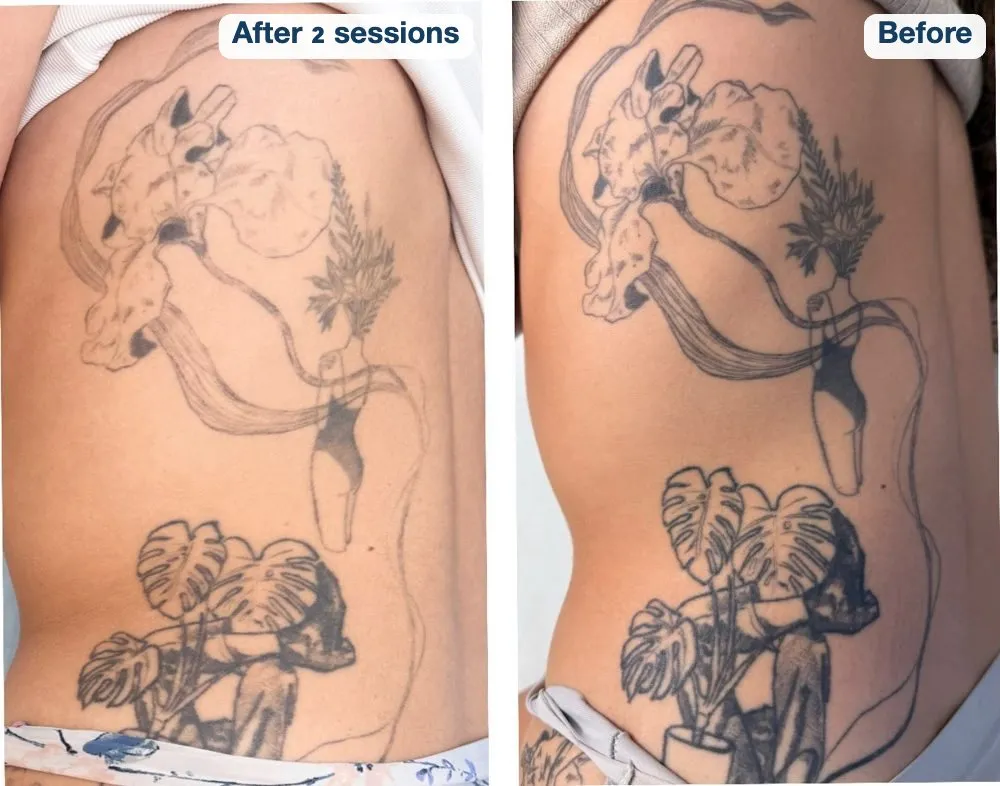
More large tattoos in progress
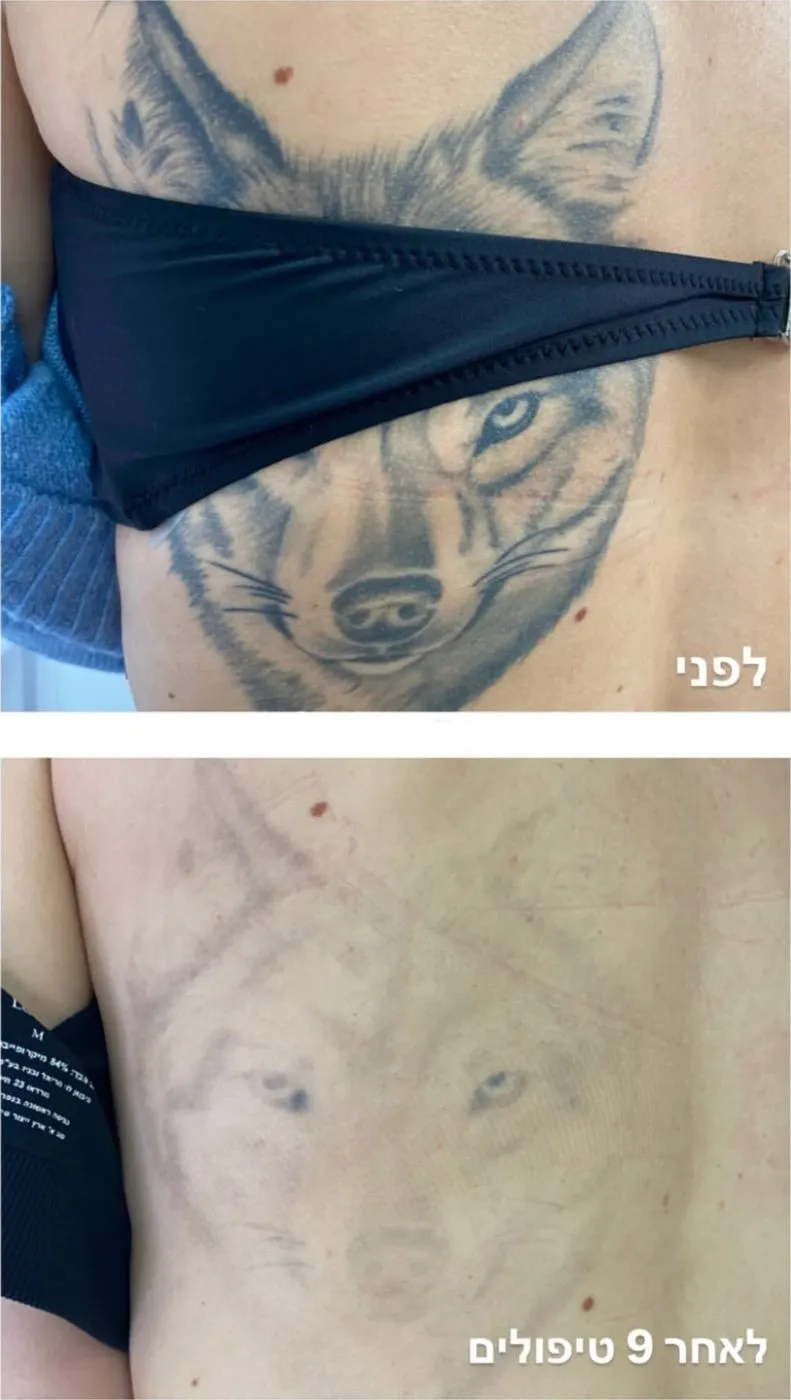
From treatments at the clinic
Between sessions
- At least 8 weeks between sessions on the same area, usually 8 to 12 weeks.
- Sun protection, especially on the outer arm and the shin, which are more exposed.
- Loose, comfortable clothing for the first days.
- Do not pop blisters or pick at scabs.
You do not have to remove it all: your options
Not every sleeve has to disappear completely. Before we start, it is worth thinking about what actually bothers you and then choosing the approach that fits.
- Full removal. We treat the whole tattoo until it is as faded as possible.
- Removing part of the tattoo. We can remove just one element, such as a name, a date or a figure, and leave the rest of the sleeve as it is. The laser works only on the area we choose.
- Removing one colour. We can target a single colour, for example taking out the blue and keeping the black. Black absorbs most wavelengths, so where colours touch or are mixed we work with extra care. We will tell you what is realistic in your case at the consultation.
- Fading before a cover up. If the goal is a new cover up tattoo, fewer sessions are sometimes enough to lighten the old one and give your tattoo artist a cleaner base.
Cover up or removal: when to fade with a laser first
If you are fading a tattoo before a cover up, we offer a special discount. Mention it when you first get in touch and we will price your plan accordingly.
Who performs treatment?
Yana Taletsky, owner and manager of Laser House TLV, has many years of practical experience in tattoo and permanent makeup removal, including cases following previous removal attempts. Her work at Taletsky Laser Clinic also covers pigmentation, scars and skin texture. She provides training in the use of Quanta System laser technologies.
Meet Yana and learn about our approachLet's plan your large tattoo removal
You do not need to figure this out on your own. Tell us what worries you, show us the tattoo and let us know about any previous treatments. We will talk through what may be possible, what is uncertain and what the next step could be.
Discuss your case on WhatsAppFurther reading
American Academy of Dermatology: laser tattoo removal
FDA: tattoo removal options and results
