You want to remove a tattoo, but one question keeps coming back: what will be left in its place? Will the skin look natural? Could there be a patch or a scar? It makes sense to wonder. Let’s take it step by step and look at some real examples.
Skin can look clear after laser removal, and black ink often responds well. But every tattoo has its own story. The ink, your skin and the way it heals all matter, so we cannot promise one result for everyone.
A quick guide
The first days do not show the final result
Your skin may be red or swollen after a session. Blisters or crusts can appear too. Give it time: the skin needs to recover, and your body keeps clearing tiny ink particles between visits. That is why the breaks between treatments are part of the process.
Try not to judge the result from a photo taken straight after treatment. Temporary redness tells us very little about the final appearance. We need to see how the skin looks once it has healed.
A shadow is not always a scar
A visible mark is not always a scar. Three different things can look like a trace of the old tattoo:
- Remaining ink. A faint outline or shadow may be pigment that has not cleared. Further fading or treatment may help in some cases, but complete removal is not always possible.
- A change in skin colour. The treated area may become darker or lighter than the surrounding skin. Some changes improve with time; others can persist.
- A change in skin structure. A raised, depressed or differently textured area may be a scar. Appropriate professional treatment reduces risk, but cannot eliminate it.
Waiting can make the situation easier to assess, but it is not a guarantee that every shadow will disappear.
Why yellow and white ink need special attention
Colours do not all fade in the same way. Some yellow pigments are resistant, while others respond to suitable treatment. White ink and pale mixtures can sometimes darken after laser exposure. Their composition, including ingredients such as titanium dioxide, can affect the response.
Looking at the colour is not enough to know exactly what is in the ink or how it will respond. Darker ink and a darker patch of skin are also two different things. We look carefully at what has changed before deciding on the next step.
Sometimes an old scar becomes easier to see
Tattooing itself can leave texture changes hidden beneath the ink. As the ink fades, an existing raised or uneven area may become more noticeable. This is why we look at the skin before starting removal and ask about previous procedures.
That does not mean every mark after treatment was already there. Nor does it prove that the tattoo artist or aftercare caused it. The history and the healed skin need to be assessed together.
Why does one tattoo fade faster than another?
There is more to it than the size of the tattoo. How much ink is there, how deep it sits and what it contains all matter. So do extra layers from a cover up, the area of the body, your skin tone, previous treatments and healing.
Oily skin or skin thickness alone cannot tell us how many visits you will need or whether a mark will remain. If you tend to develop raised scars, tell us before we start.
At Laser House TLV, we work with Quanta System Q switched Nd:YAG wavelengths of 1064 and 532 nm, Ruby 694 nm and Zimmer cooling. Equipment and treatment settings are chosen for the individual case. Having several options does not make every ink removable or every skin reaction predictable.
Real skin, real examples
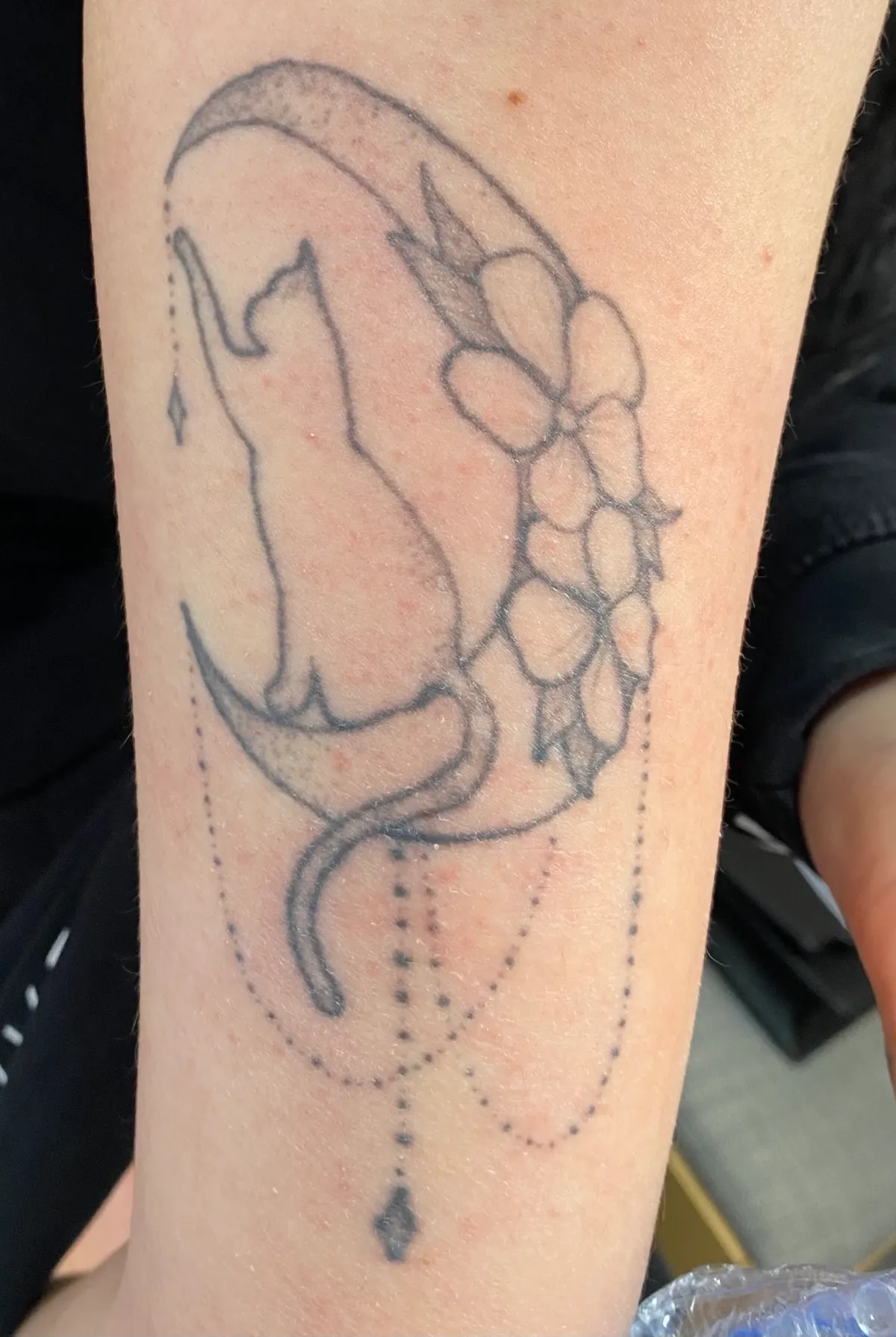
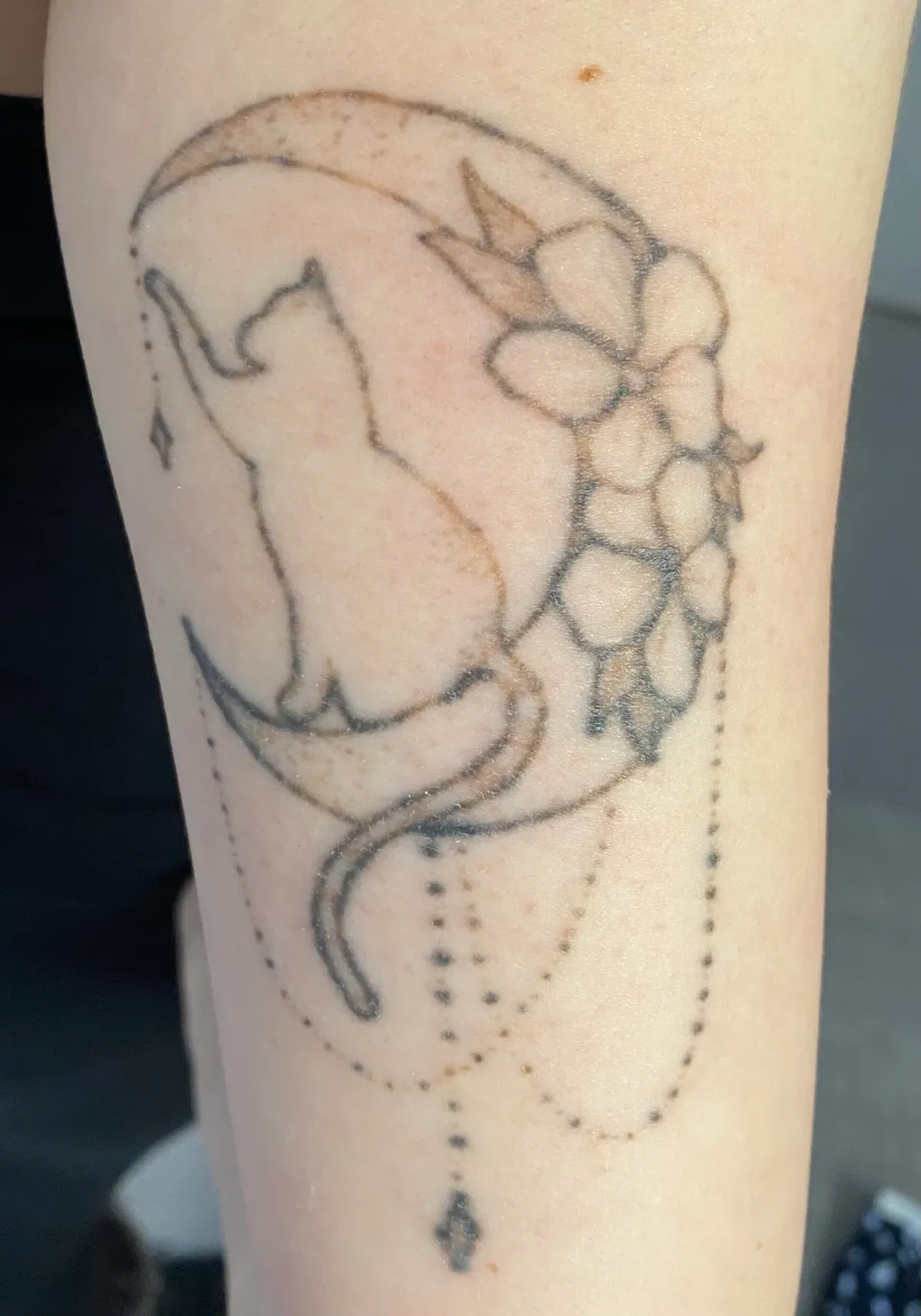
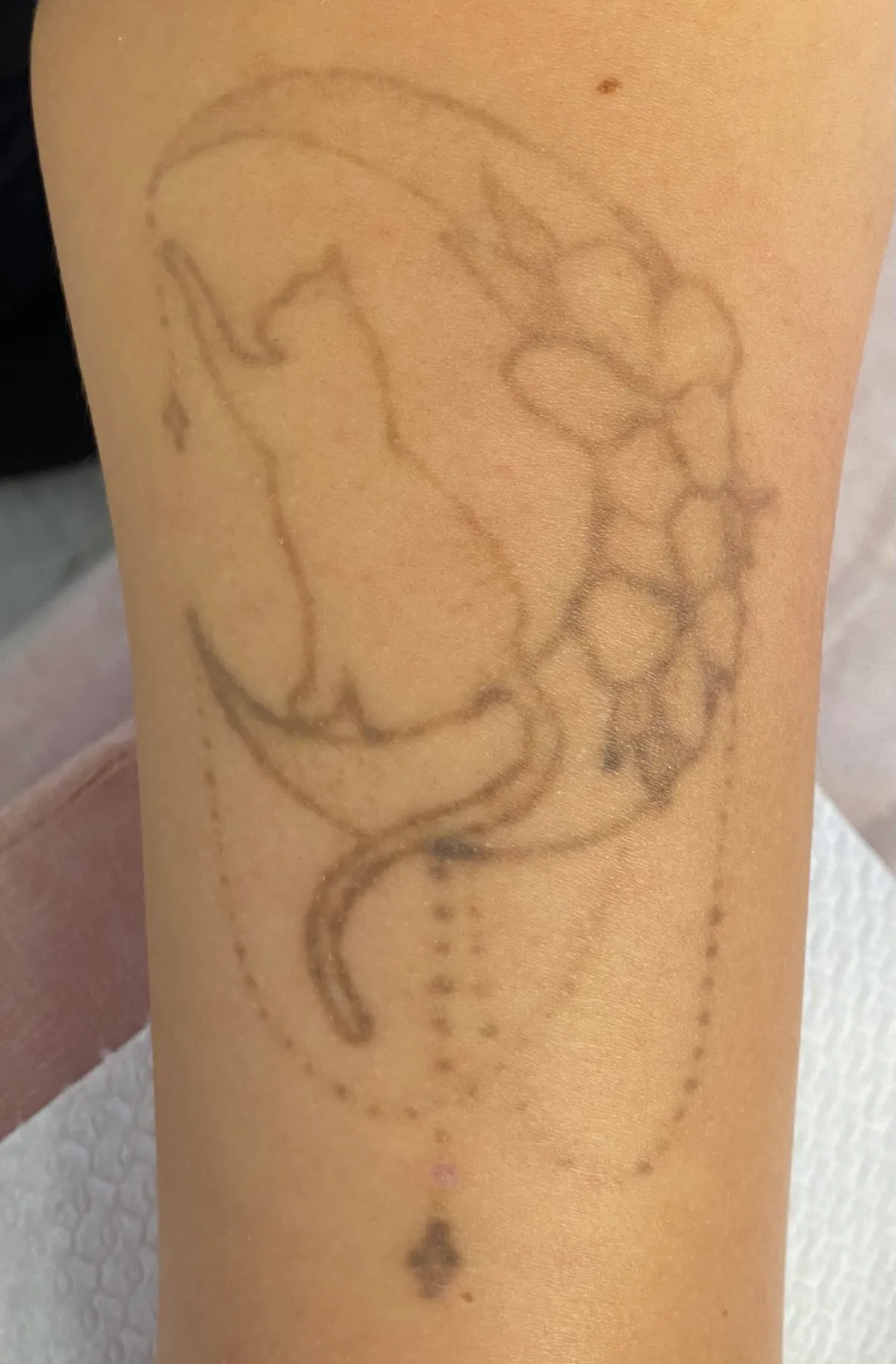
The photographs and videos below show individual clients. Results vary. Differences in lighting and camera angle also affect how skin appears. A successful result in one case does not promise the same result or number of sessions for another person.
Cat on the moon: photos from the same case
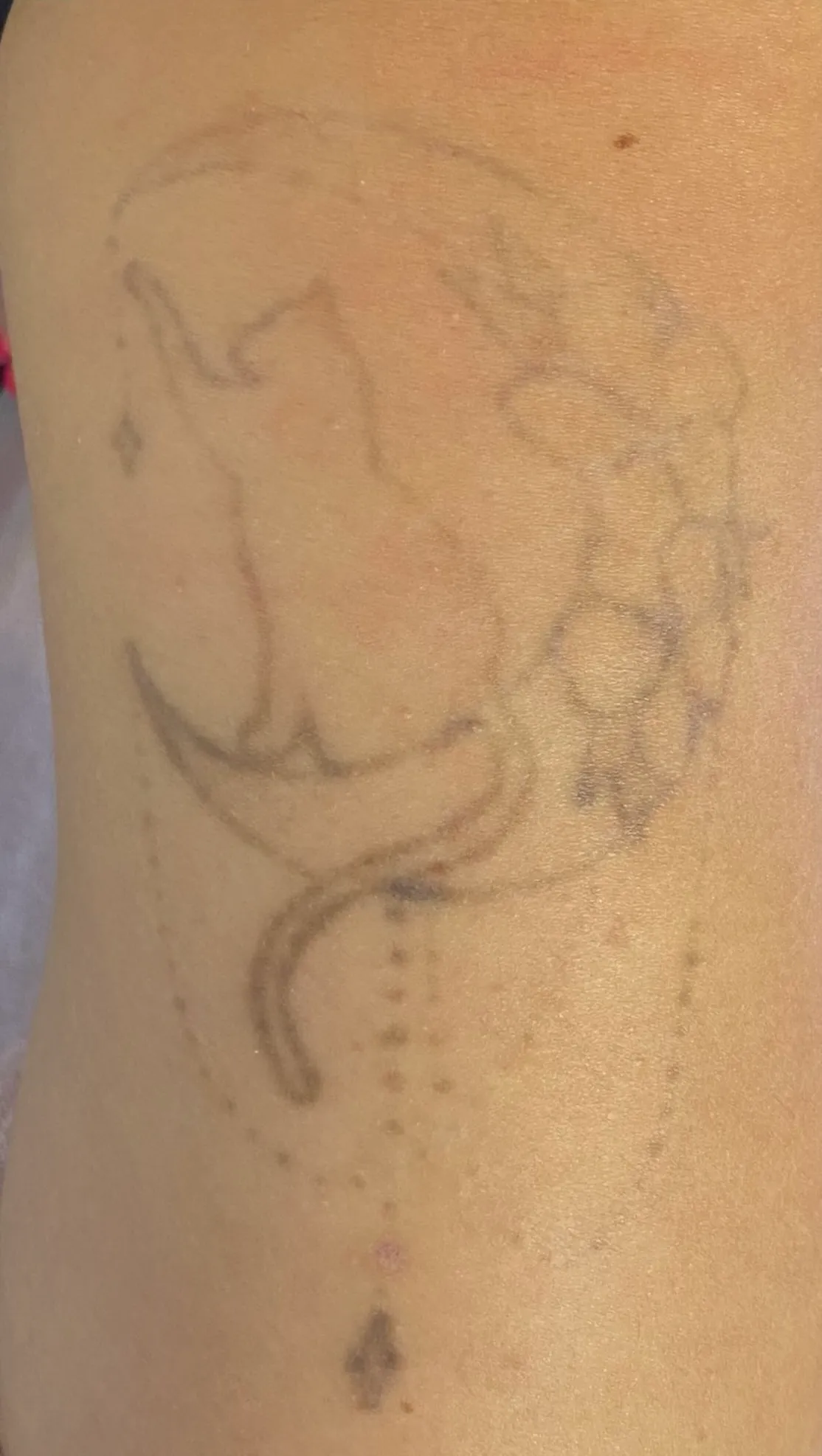
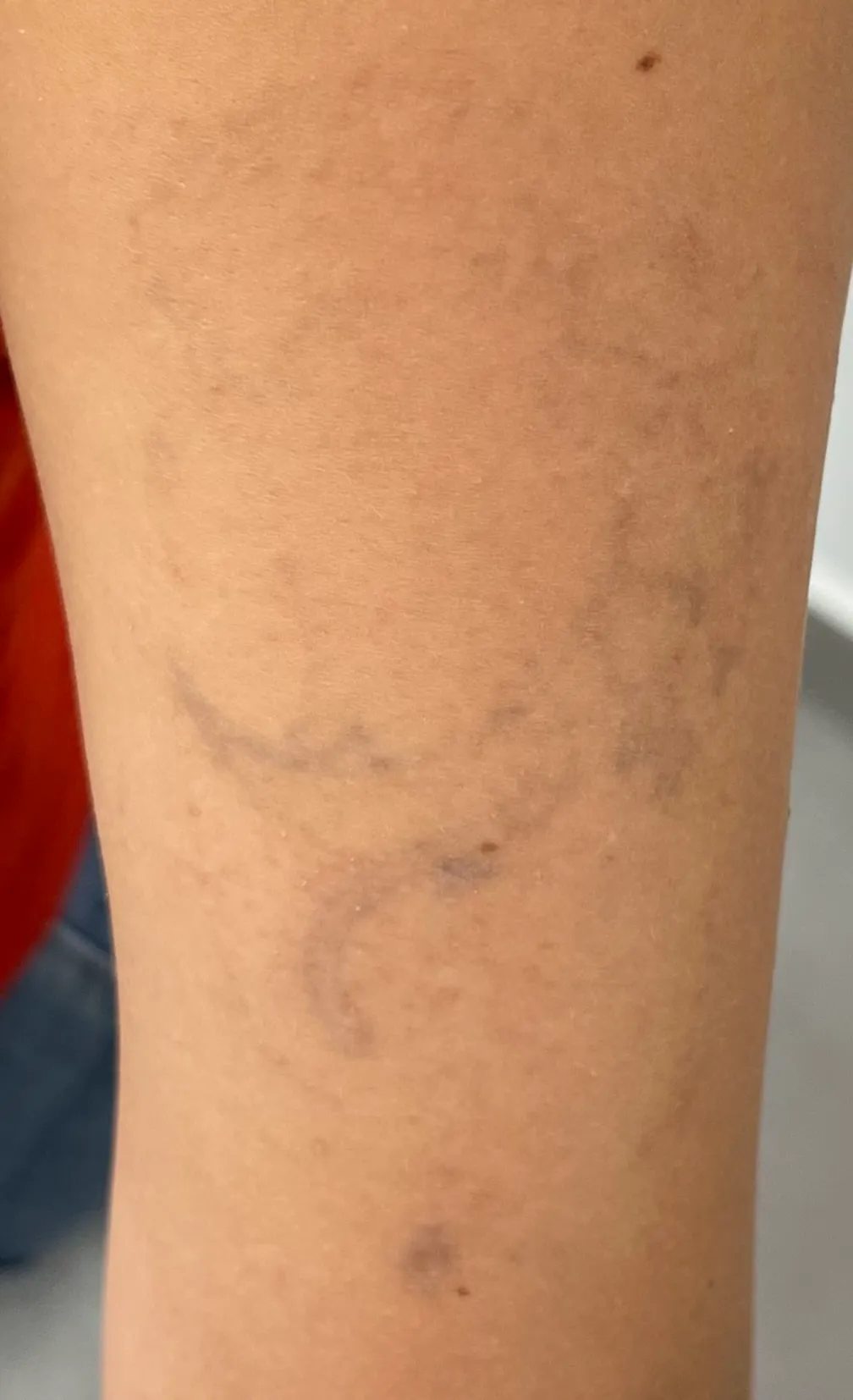
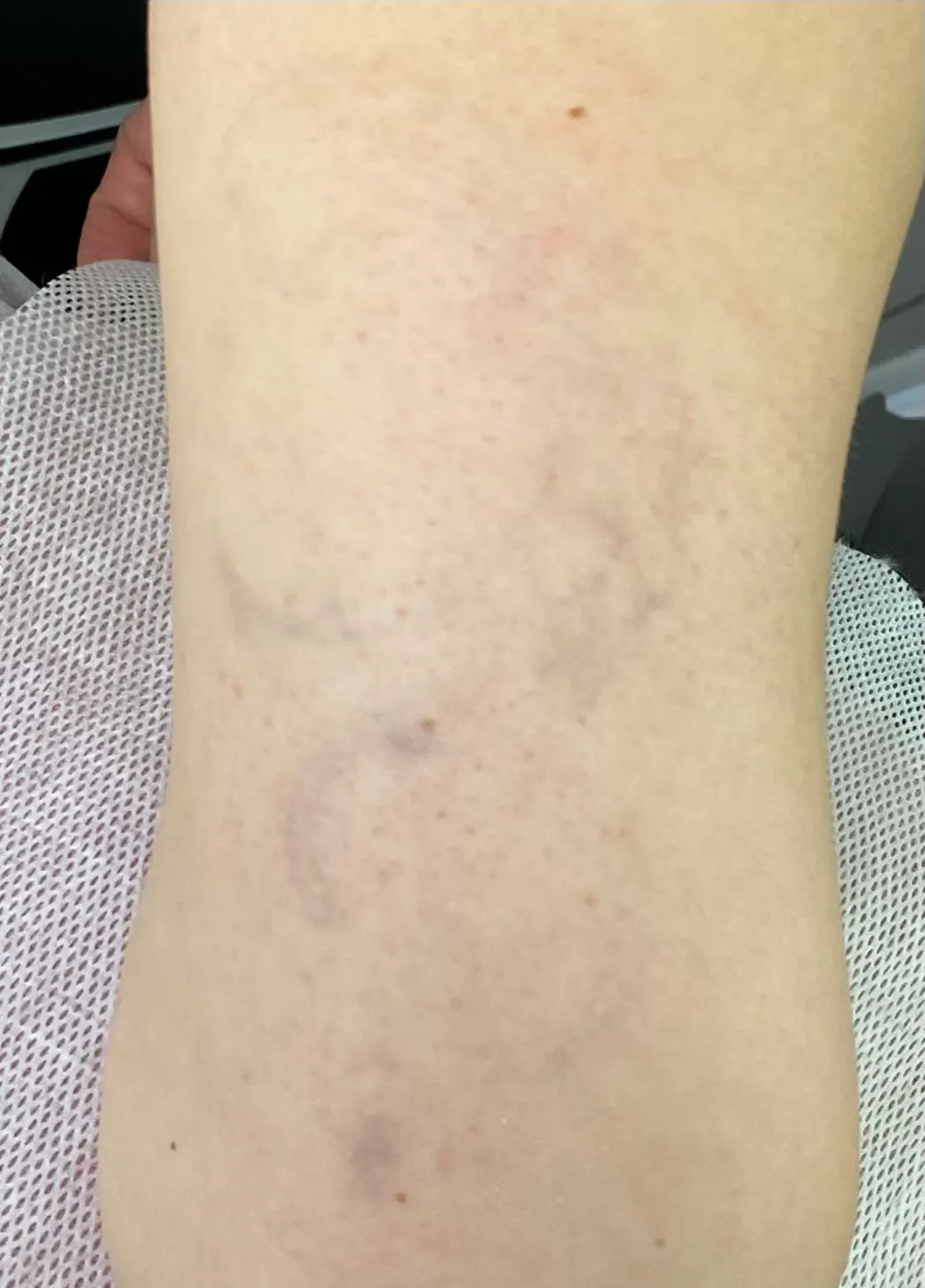
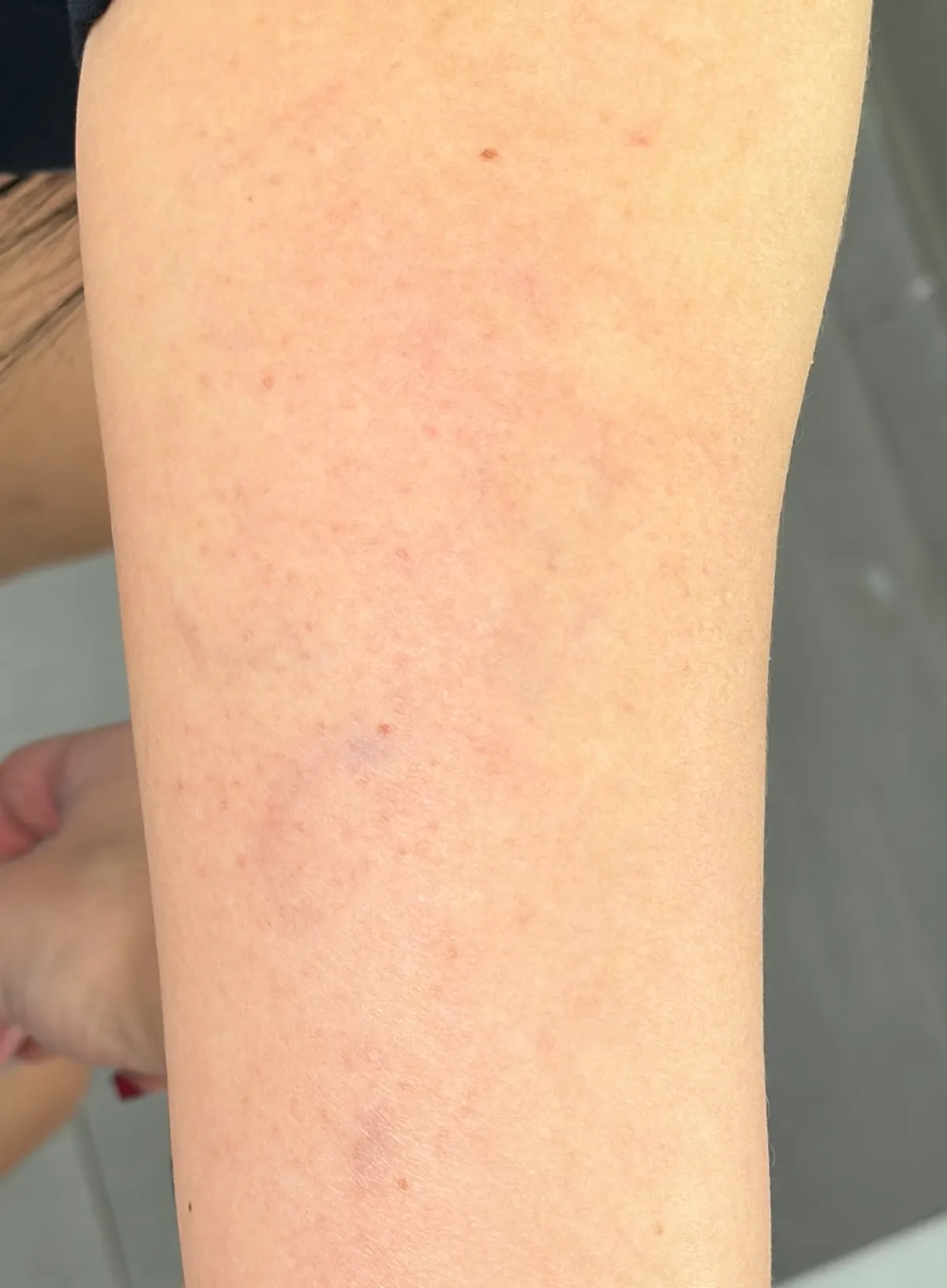
Cover up tattoo on the lower back
Sun tattoo on the shoulder
Tattoo on the side of the waist
Figure tattoo on the upper arm
Chest and other tattoo removal results
Tattoo beside the ear
A rose tattoo progress example and common removal questions
What if healed skin still feels uneven?
When a scar or texture change remains after the skin has healed, it may need its own assessment. In selected cases, Er:YAG treatment or a fractional approach using the 8DF handpiece may be considered. “Fractional” describes how laser energy is delivered; it does not necessarily mean a different laser.
The aim is to make a suitable scar or texture change less noticeable, not to promise that it will vanish. These treatments are not a necessary extra step for everyone. A fresh burn, an open wound or skin that has not healed needs medical assessment before cosmetic treatment is considered.
Give your skin time and the right care
Follow the aftercare instructions you receive, protect the area from the sun and do not peel crusts or open blisters. Contact your practitioner if you are unsure about a reaction. Increasing pain, spreading redness or discharge should be assessed by a medical professional.
Who performs treatment?
Yana Taletsky, owner and manager of Laser House TLV, has many years of practical experience in tattoo and permanent makeup removal, including cases following previous removal attempts. Her work at Taletsky Laser Clinic also covers pigmentation, scars and skin texture. She provides training in the use of Quanta System laser technologies.
Meet Yana and learn about our approachLet's look at your tattoo and your skin
You do not need to figure this out on your own. Tell us what worries you, show us the tattoo and let us know about any previous treatments. We will talk through what may be possible, what is uncertain and what the next step could be.
Discuss your case on WhatsAppFurther reading
American Academy of Dermatology: laser tattoo removal
FDA: tattoo removal options and results
