Advanced Colored Tattoo Removal And Pigment-Specific Laser Technology
Colored Tattoo Removal Is More Complex Than Most People Think
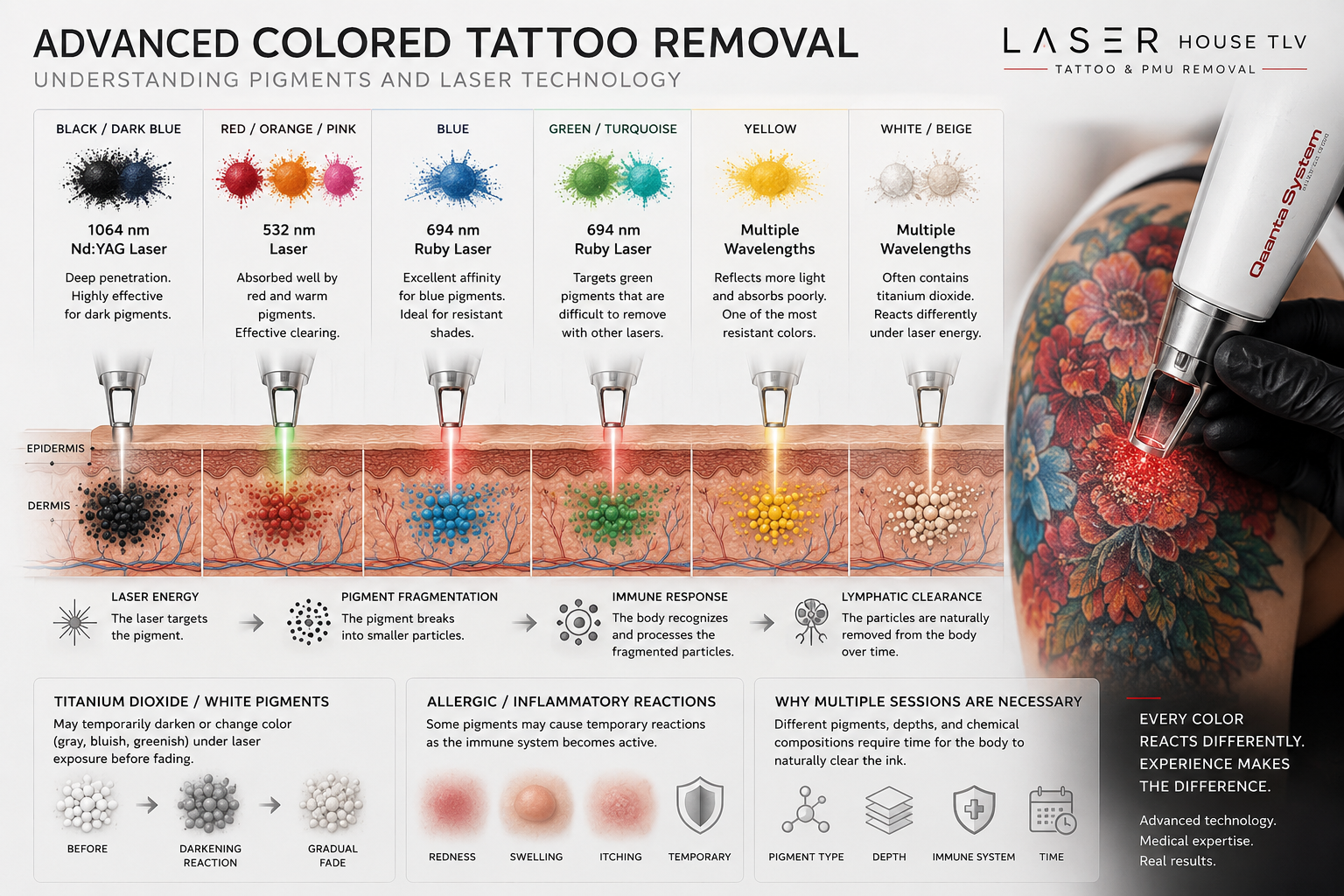
Colored tattoo removal is considered one of the most technically advanced procedures in modern laser medicine. Unlike black ink, colored pigments react differently not only to laser wavelengths, but also to skin biology, immune activity, and the chemical structure of the pigment itself.
At Laser House TLV, tattoo and PMU removal treatments are performed using professional medical laser technology with a strong focus on skin preservation and individualized treatment planning. Every tattoo behaves differently, even when two tattoos appear visually similar.
One of the main reasons colored tattoo removal is more challenging is because modern tattoo pigments are made from different chemical compounds, metals, stabilizers, and synthetic materials. Two tattoos with what appears to be the same shade of blue or red may respond completely differently during treatment because the pigment composition inside the skin is not identical.
Some pigments absorb laser energy efficiently and gradually break down over time, while others are significantly more resistant and remain inside the dermis longer. The immune system also plays a major role in the process. Laser treatment does not “erase” pigment instantly. Instead, the laser fragments the ink into microscopic particles, which are then slowly cleared by the body through the lymphatic system over the following weeks and months.
This is why some tattoos fade relatively quickly, while others require significantly more patience and additional sessions even when advanced laser technology is used correctly.
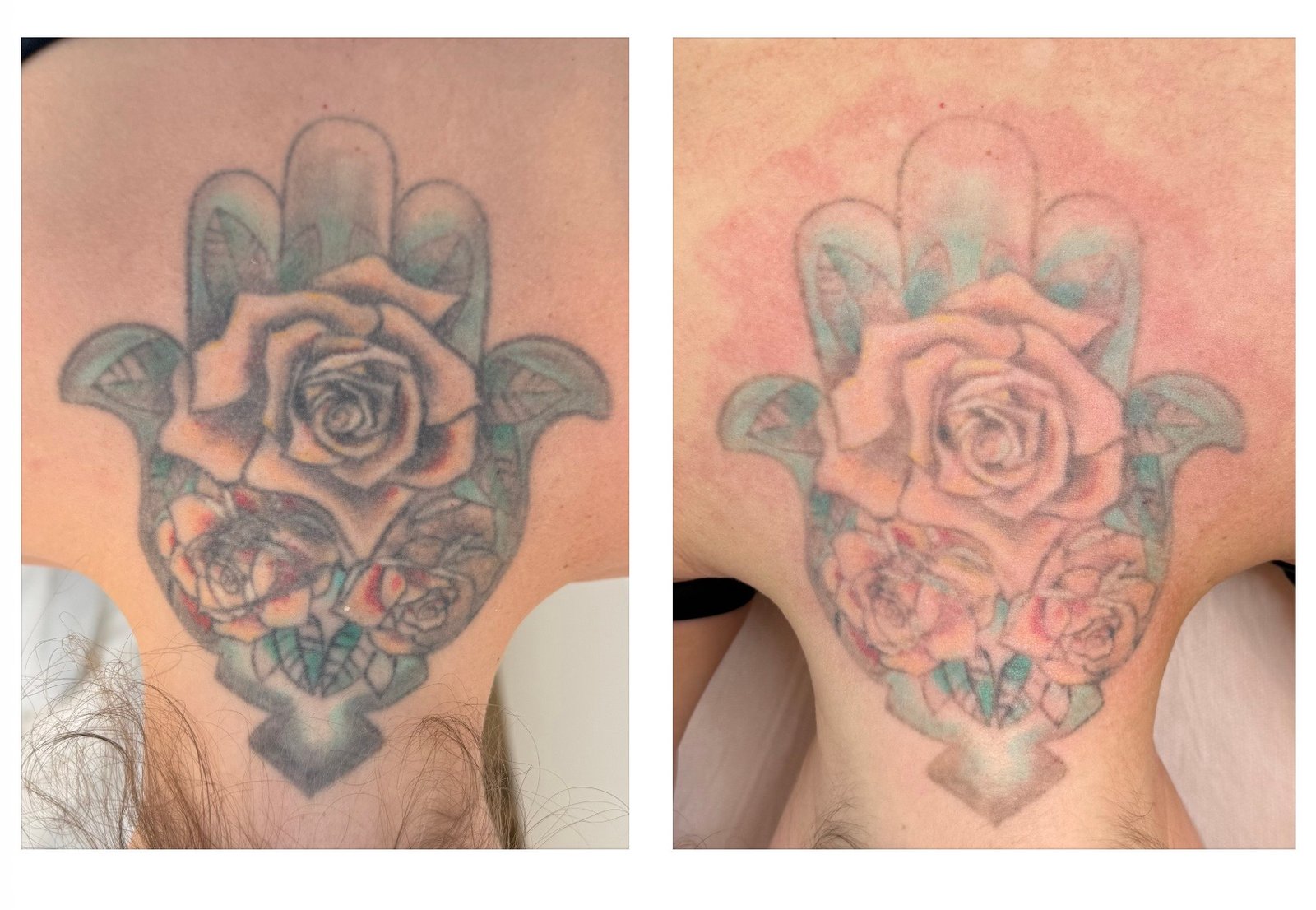 Tattoos in Prosess Tattoos in Prosess |
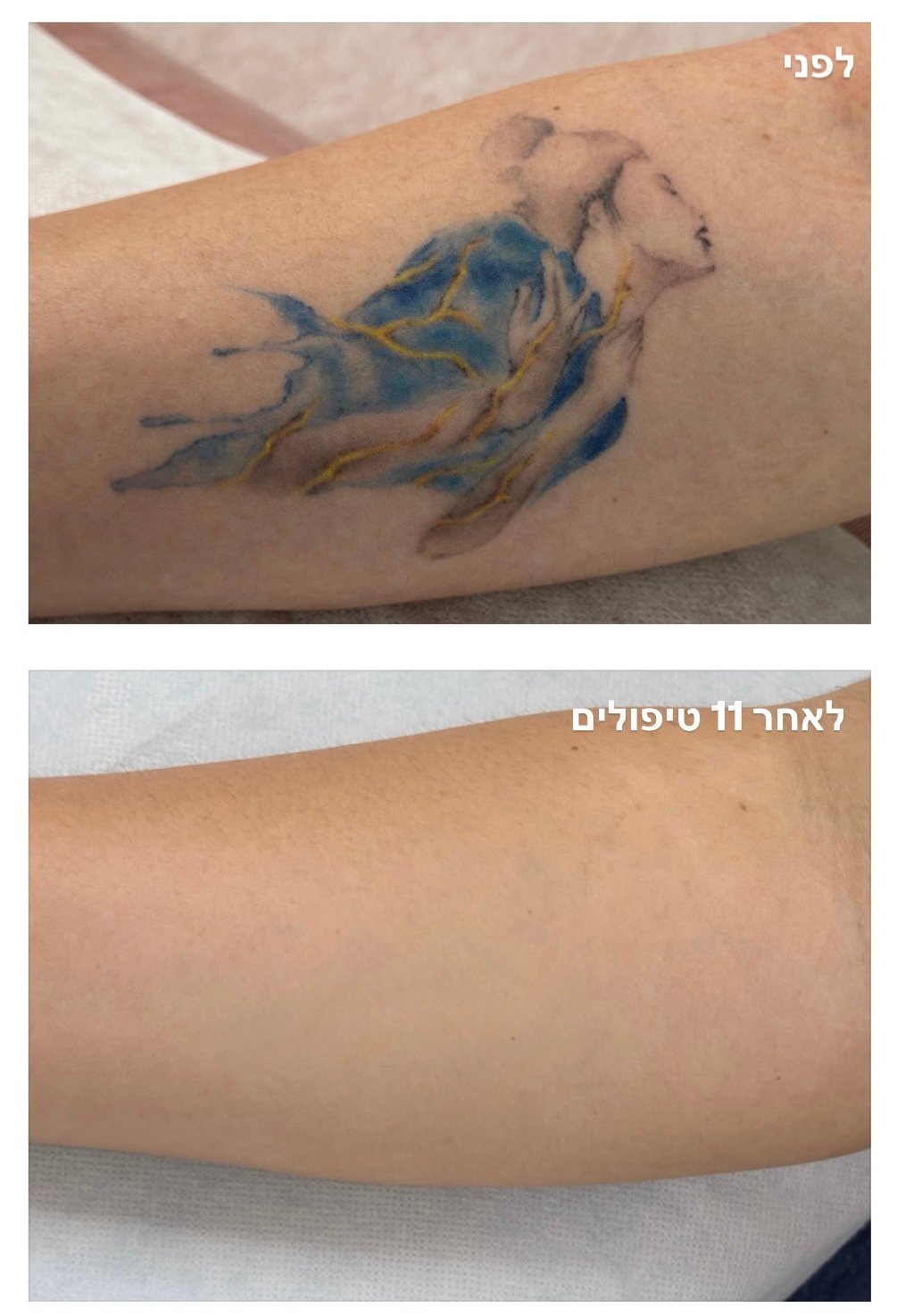 |
Tatoo in Prosess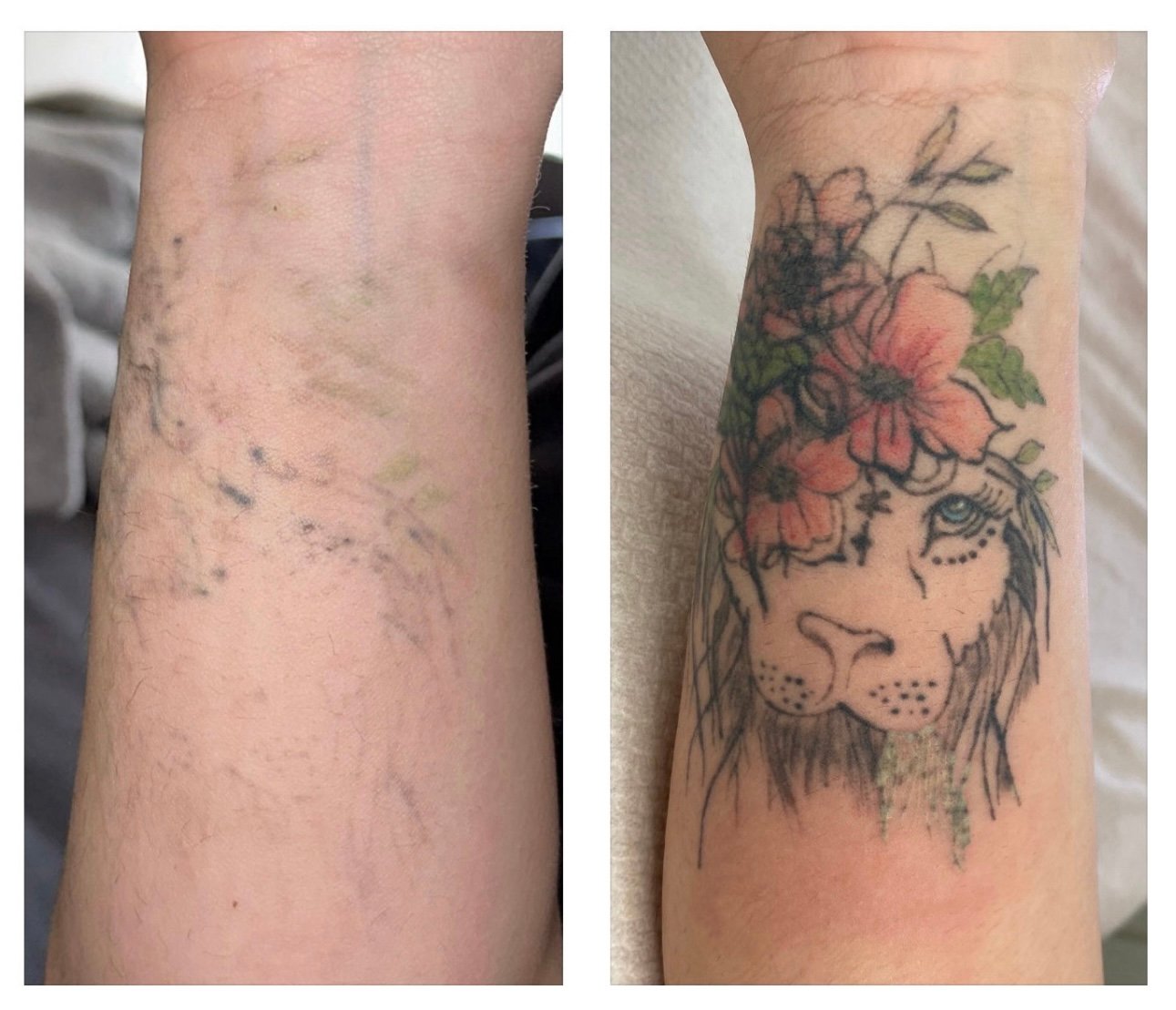 |
Laser Tattoo Removal in Tel Aviv Complete Guide
How Many Sessions Are Needed To Remove A Tattoo?
Different Colors Require Different Laser Wavelengths
Professional colored tattoo removal often requires multiple wavelengths because each color absorbs light differently.
The 1064 nm Nd:YAG wavelength is primarily used for darker pigments such as black and deep blue ink. This wavelength penetrates deeply into the skin and is considered one of the safest options for darker skin tones because melanin absorbs less of this energy.
For red, orange, and certain warm pigments, the 532 nm wavelength is usually more effective because these colors absorb shorter wavelengths more efficiently. However, cosmetic tattoo pigments and mixed inks can behave unpredictably depending on their chemical formulation.
Blue and green pigments are often among the most difficult colors to remove with standard laser systems. For these resistant shades, the Ruby 694 nm laser becomes especially important. Ruby laser technology has a strong affinity for blue, turquoise, and green pigments that frequently respond poorly to conventional wavelengths.
At Laser House TLV, Ruby laser technology is used in complex multicolored tattoo and PMU cases where resistant pigments require a more specialized approach.
Video color Tattoo Removal Prosess
Video Blue Color Tattoo Removal by Ruby Laser
Yellow Pigments And Why They Are Difficult To Remove
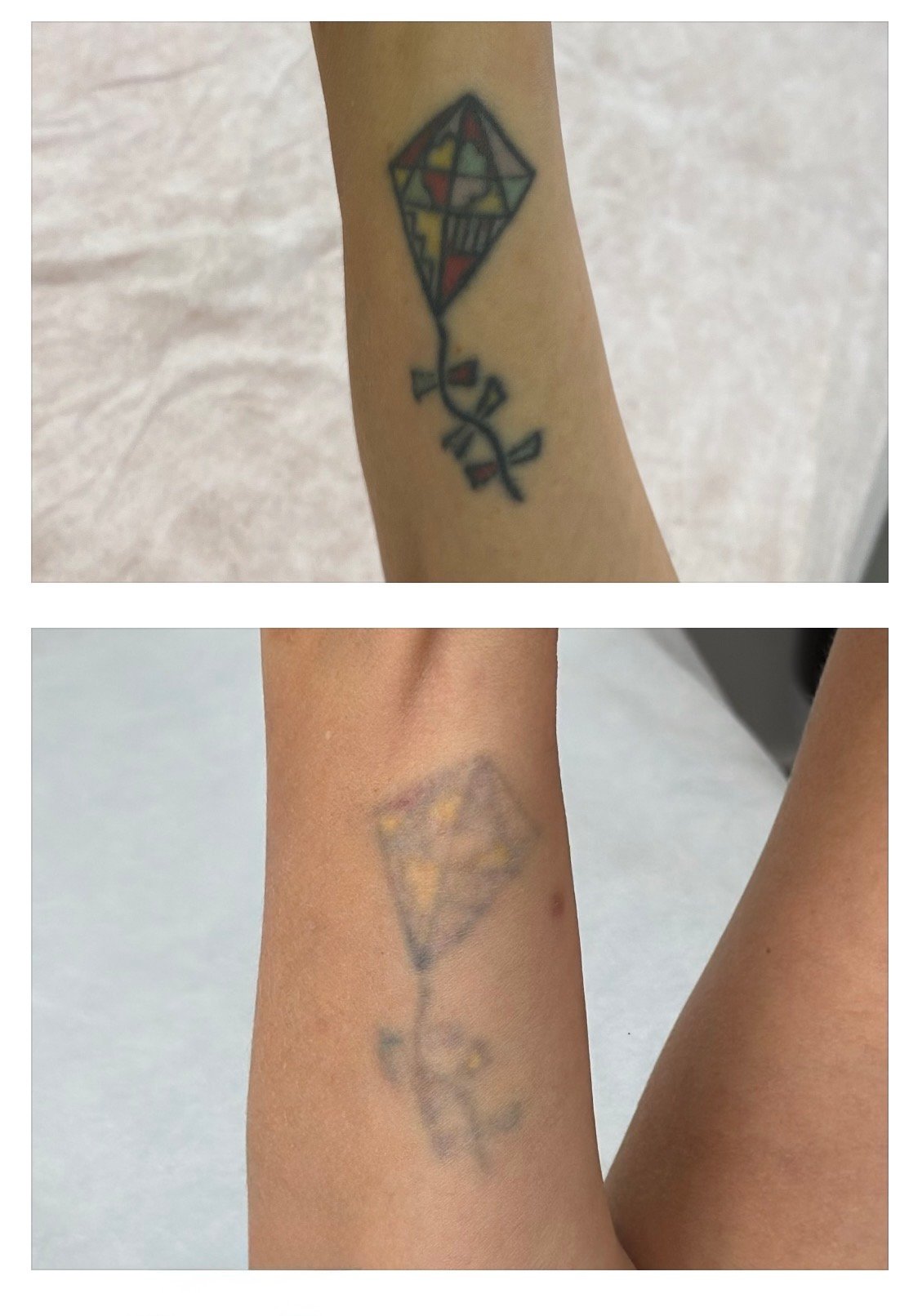
Yellow tattoo pigment is considered one of the most resistant colors in laser tattoo removal. This is largely because yellow reflects a significant amount of laser energy and absorbs light poorly compared to darker pigments.
Certain pastel or fluorescent yellow inks may respond very slowly even after multiple sessions. In some cases, yellow pigment may only partially fade due to its chemical stability and reflective properties.
For this reason, realistic expectations and profe
 |
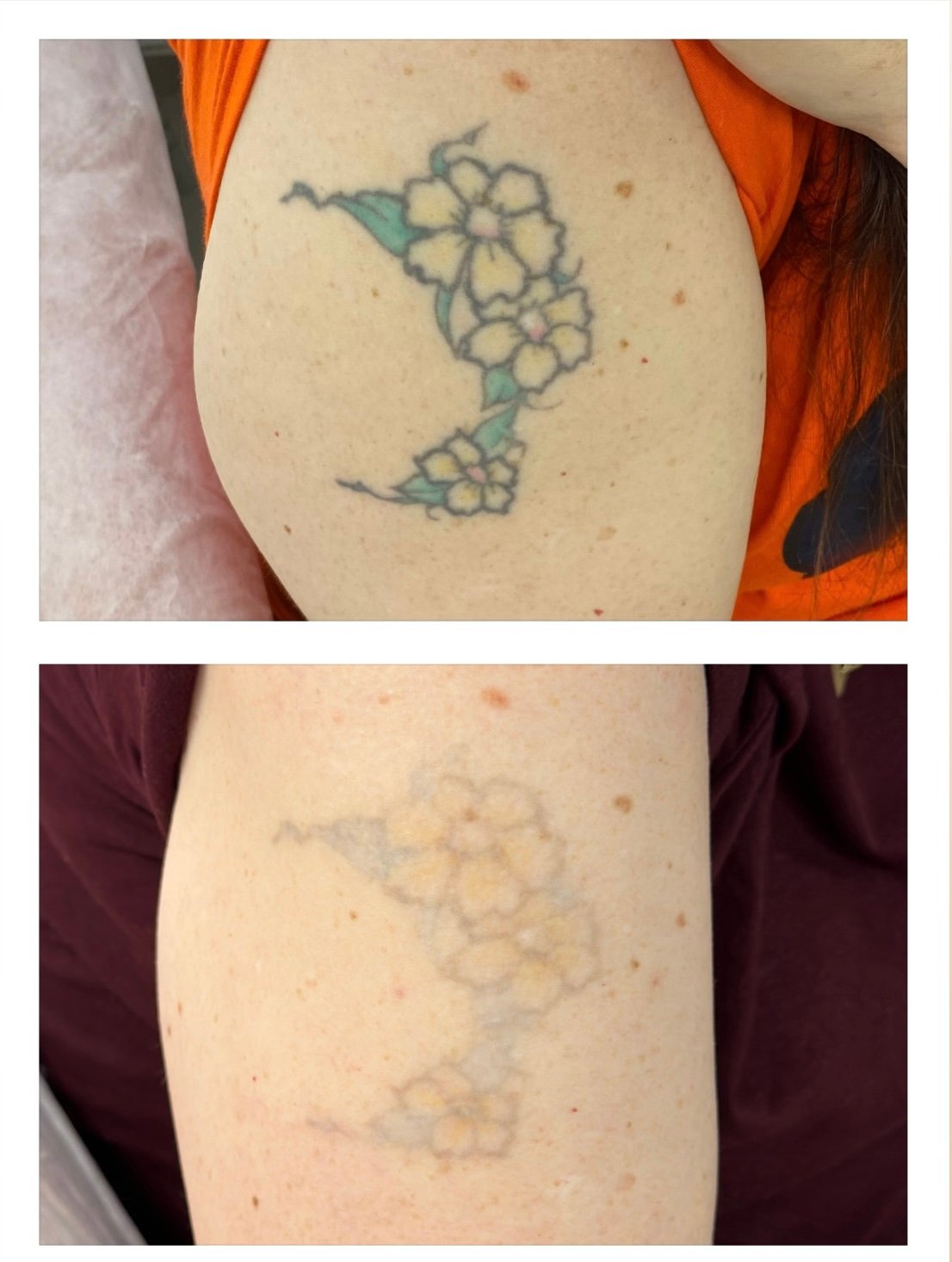 |
ssional assessment are extremely important before beginning treatment of yellow-colored tattoos.
Titanium Dioxide And White Pigments
One of the most important subjects in modern tattoo and PMU removal is titanium dioxide.
Titanium dioxide is commonly found in white pigments, beige shades, pastel inks, camouflage tattoos, and cosmetic tattoo formulations. Under laser exposure, this ingredient may temporarily change color instead of immediately fading.
Rather than disappearing instantly, the pigment can darken and shift toward gray, bluish, or greenish tones. This reaction is known in laser medicine and occurs because the chemical structure of the pigment changes after exposure to laser energy.
This does not necessarily mean the treatment failed. It means the pigment now requires a different removal process and additional sessions in order to continue gradual fading safely.
Pigments containing titanium dioxide often require more patience, longer treatment intervals, conservative laser settings, and careful monitoring of skin response throughout the removal process.
Why Do Eyebrows Turn Green ? Laser Eyebrow Tattoo Removal Guide
Lip Permanent Makeup Removal: Why Lip Color Can Change
Allergic And Inflammatory Reactions To Tattoo Pigments
In recent years, temporary allergic and inflammatory reactions to tattoo pigments have become increasingly common worldwide.
Certain pigments, especially red, yellow, metallic, and cosmetic tattoo inks, may temporarily activate the immune system during laser removal procedures. After laser fragmentation, the body becomes more reactive to the pigment particles as they begin to break down and circulate through the lymphatic system.
Some clients may temporarily experience redness, itching, mild swelling, sensitivity, or slightly raised texture in the treated area. In most cases, these reactions are temporary and manageable with proper aftercare and professional monitoring.
Understanding the body’s immune response is an important part of modern tattoo removal, especially when working with colored pigments and cosmetic tattoos.
Allergic Reactions During Tattoo Removal: Why Its Happen and What You Should Know
Why Treatment Intervals Matter
Laser tattoo removal continues long after the procedure itself is completed. Once the pigment particles are fragmented, the immune system requires time to gradually clear them from the skin.
Treating too aggressively or too frequently may increase irritation, inflammation, post-inflammatory pigmentation, delayed healing, or unnecessary skin stress.
Proper intervals between sessions allow both the skin and immune system to recover more effectively while supporting gradual pigment clearance in a safer and more controlled way.
Laser Tattoo Removal: Why Choosing the Right Technology and Clinic Matters
Top Mistakes After Tattoo Removal
Why Can Tattoo Removal Stop Working After Many Sessions?
Professional Tattoo Removal Is Also About Skin Quality
Modern tattoo removal is not only about removing pigment. Preserving healthy skin structure is equally important.
At Laser House TLV, treatments are planned with a strong focus on controlled laser parameters, precision energy delivery, and minimizing unnecessary thermal damage to surrounding tissue.
In selected cases, advanced fractional technologies may also be integrated into treatment plans to support collagen remodeling, improve skin texture, and help reduce the appearance of previous tattoo-related skin damage.
Why Choosing the Wrong Laser Can Damage Your Skin
Laser Tattoo Removal in Tel Aviv Complete Guide
Colored Tattoo Removal At Laser House TLV
Laser House TLV specializes in advanced tattoo and PMU removal using professional medical laser technology and individualized treatment protocols tailored to pigment type, skin condition, and immune response.
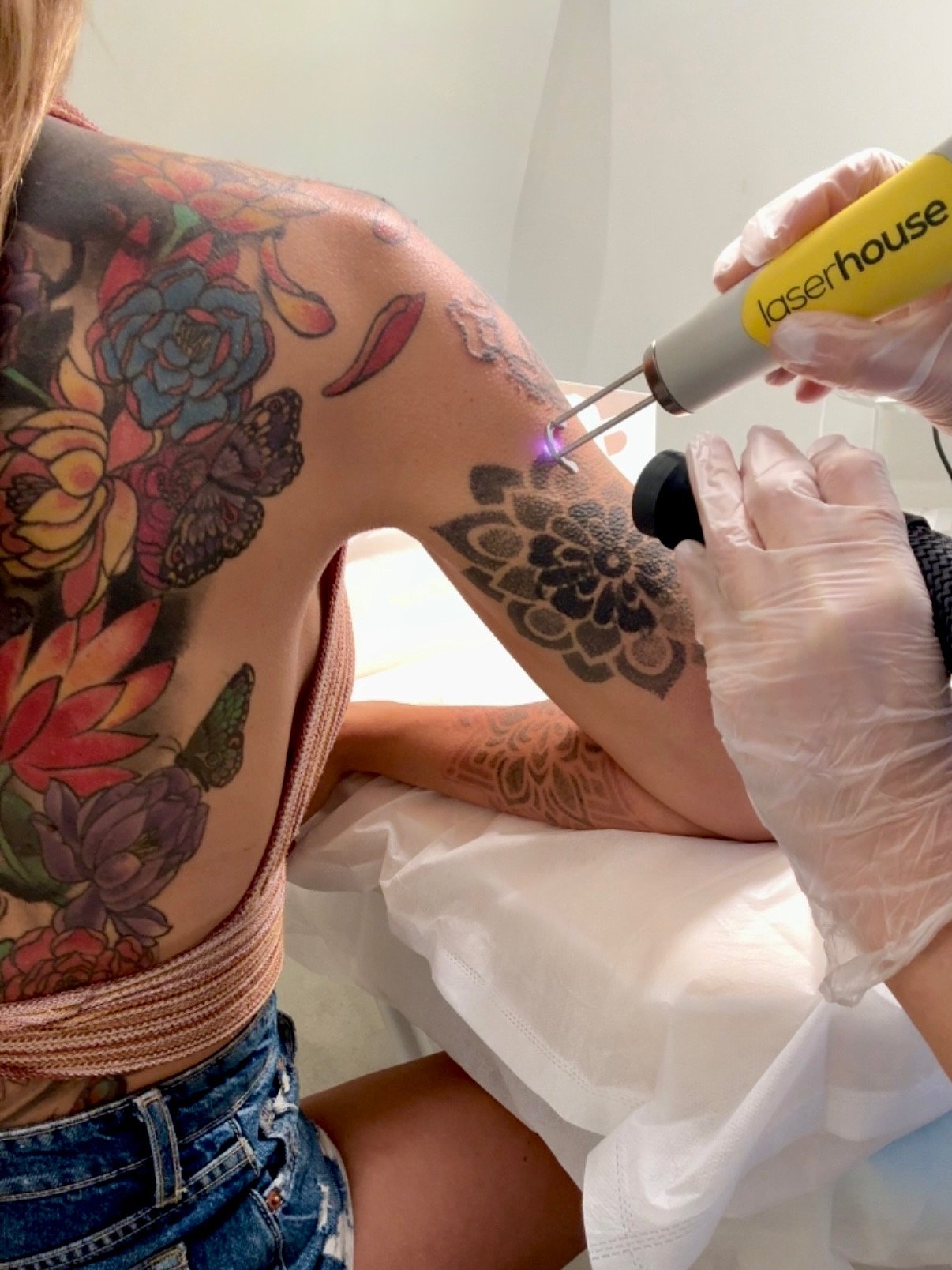
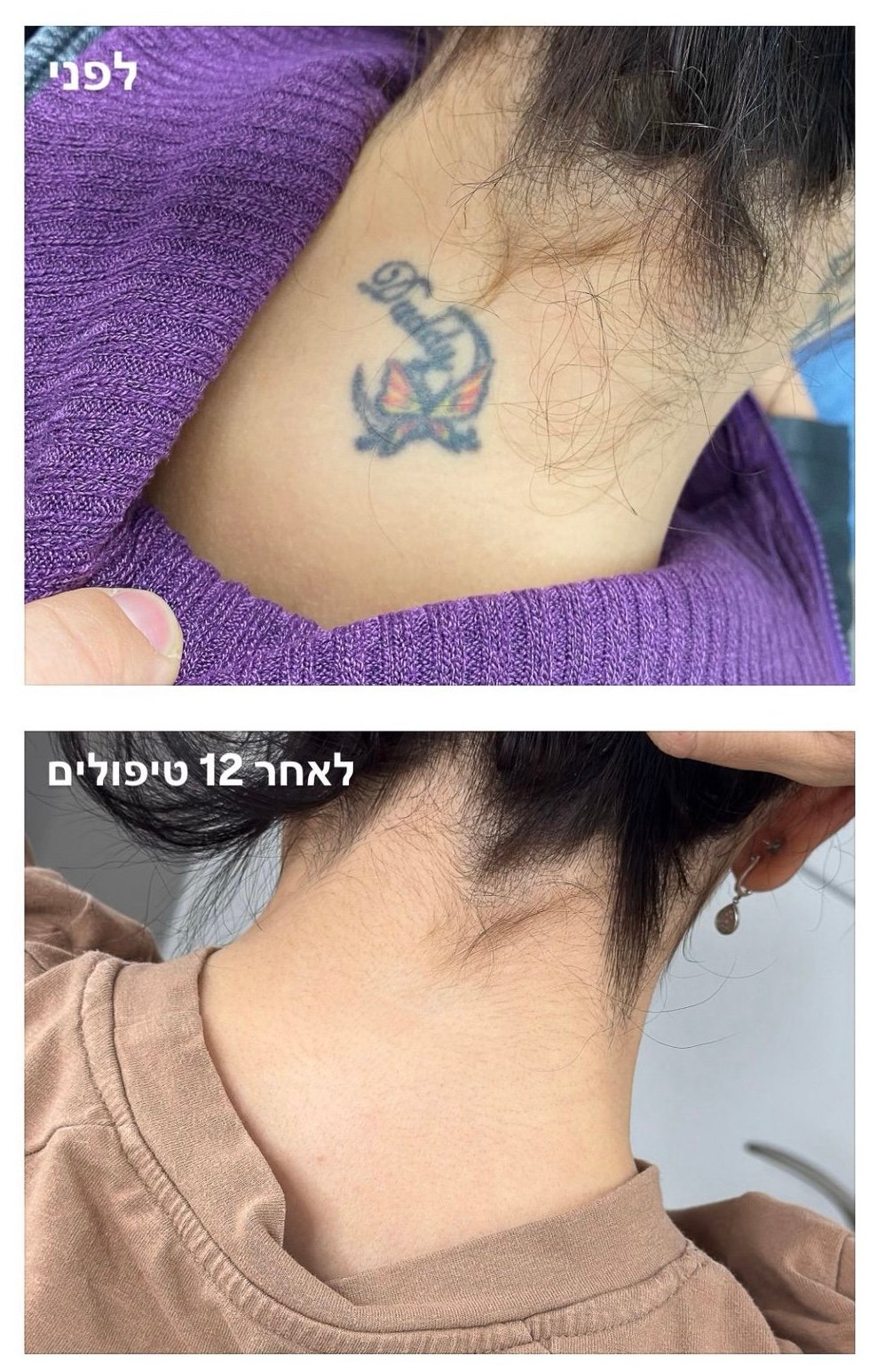
Our clinic works with multiple laser wavelengths, including Ruby laser technology for resistant blue and green pigments, allowing more precise treatment of difficult multicolored tattoos and cosmetic pigments while maintaining a strong focus on skin preservation and long-term skin quality.
 |
 |
