Tattoo Removal in Tel Aviv: The Complete Guide
Tattoo removal takes time: plan for a gradual course
Laser tattoo removal is a process, not a single appointment. Some tattoos fade over a shorter course; others can take two to three years or longer. Before you begin, it helps to understand the likely stages, the uncertainty and the time your skin will need between visits.
Weekly treatment of the same area is not a routine shortcut. The skin needs time to heal, and the body continues processing fragmented pigment between sessions. Appointments are usually separated by weeks or months, with the interval selected for your skin, tattoo and response. The laser and treatment technique matter, but neither can promise a fixed completion date.
How many sessions will I need to remove my tattoo?
How many sessions might your tattoo need? Let’s work it out together. The Kirby Desai table below gives you a starting point. Once we’ve looked at your tattoo and skin, we’ll talk through a plan that fits you. From our experience at Laser House TLV, removal often takes around 7 to 17 sessions*, though some tattoos need fewer and others more. Think of this as a guide, rather than a promise of an exact number.
* The expected number of sessions is assessed individually at the clinic based on your tattoo and skin. The estimate may be revised as removal progresses.
Your skin type, the location on your body, whether the tattoo is black or coloured, and the composition and amount of ink all matter. We also assess the age of the tattoo, your age and your individual immune response. Older tattoos that have already faded may need fewer sessions, but age alone does not guarantee faster removal.
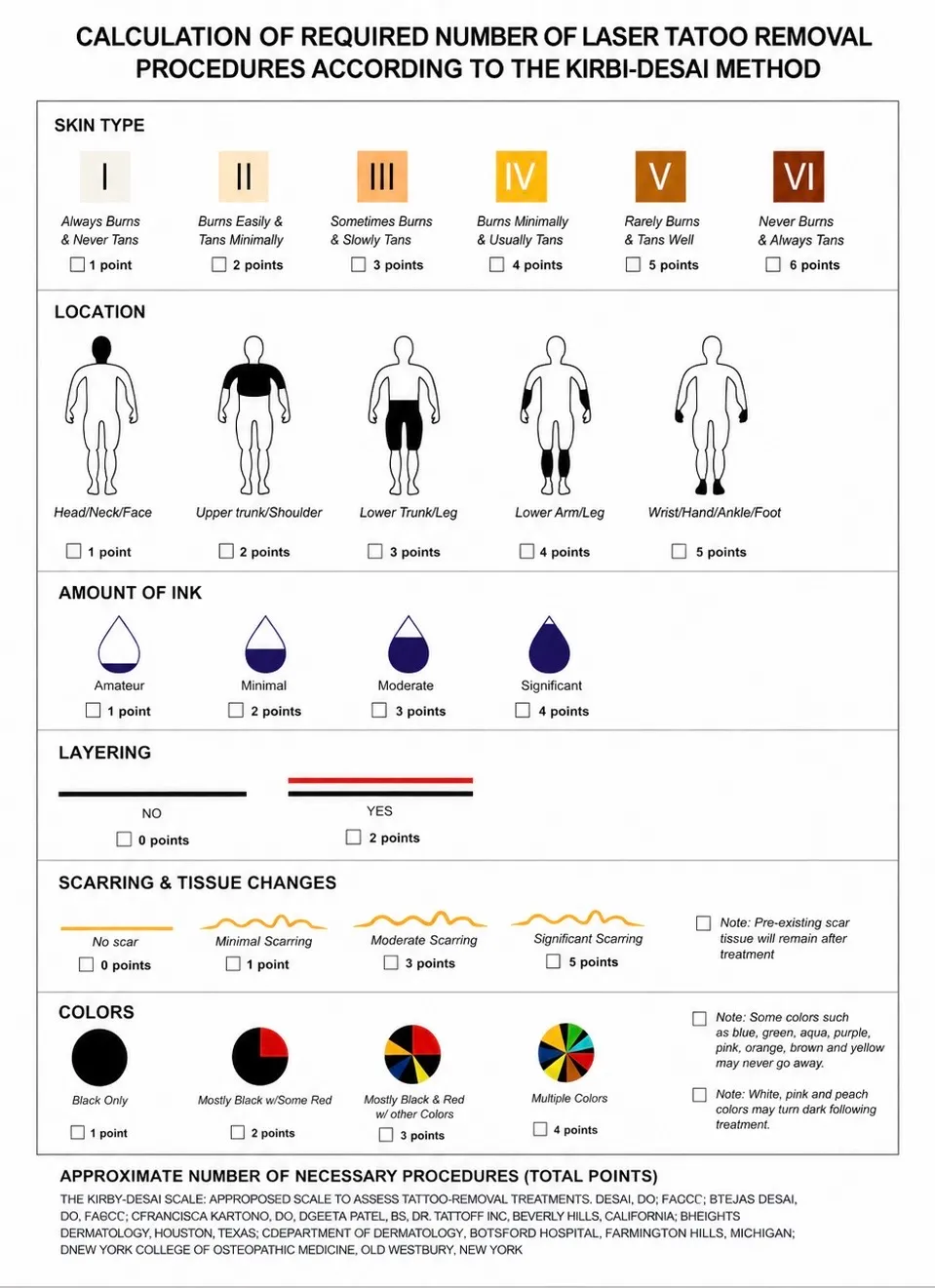
View the scores as text
| Factor | Original scores |
|---|---|
| Fitzpatrick phototype | I: 1; II: 2; III: 3; IV: 4; V: 5; VI: 6 |
| Body area | Head/neck: 1; upper trunk: 2; lower trunk: 3; proximal limb: 4; distal limb: 5 |
| Ink colours | Black alone: 1; mainly black with some red: 2; mainly black/red with additional colours: 3; multiple colours: 4 |
| Ink amount | Amateur: 1; minimal: 2; moderate: 3; significant: 4 |
| Scarring / tissue change | None: 0; minimal: 1; moderate: 3; significant: 5 |
| Tattoo layering / cover-up | Absent: 0; present: 2 |
Published in 2009, the scale was examined retrospectively in 100 patients at one clinic using Q-switched treatment. It is not a universal standard and cannot automatically predict a modern picosecond course. Fitzpatrick phototype concerns the skin’s response to sunlight, not ethnicity. Tattoo age and previous treatment history are assessed separately and receive no points in the original scale; an older tattoo is not automatically easier to remove.
Which technology is right for my tattoo?
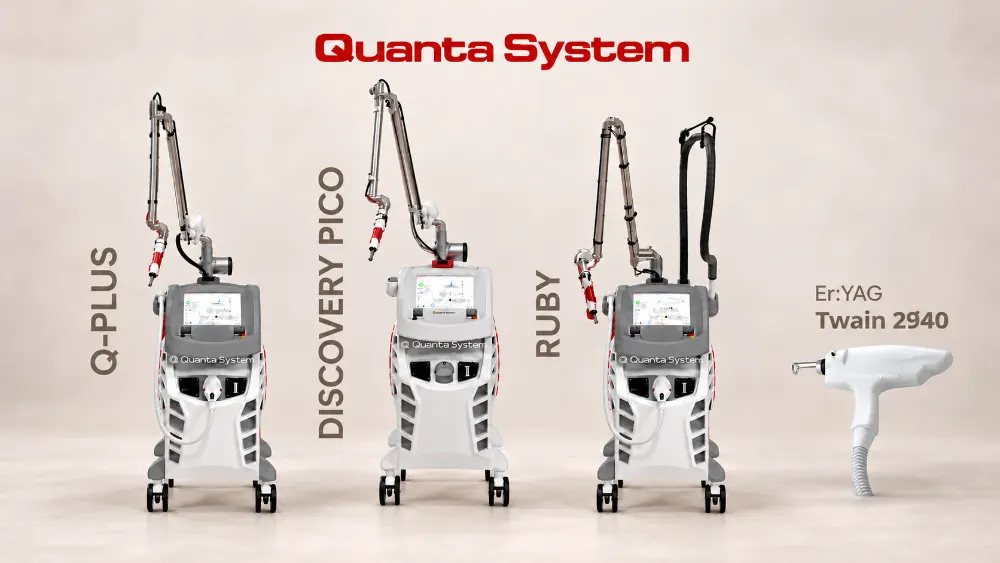
The choice starts with an assessment. At the clinic, we look at your tattoo colours, the condition of your skin and any previous treatments. Based on this assessment, the practitioner will choose the technology and treatment plan for your case. We use Quanta System laser systems, including a Ruby laser, so we can combine technologies when needed.
How laser tattoo removal works
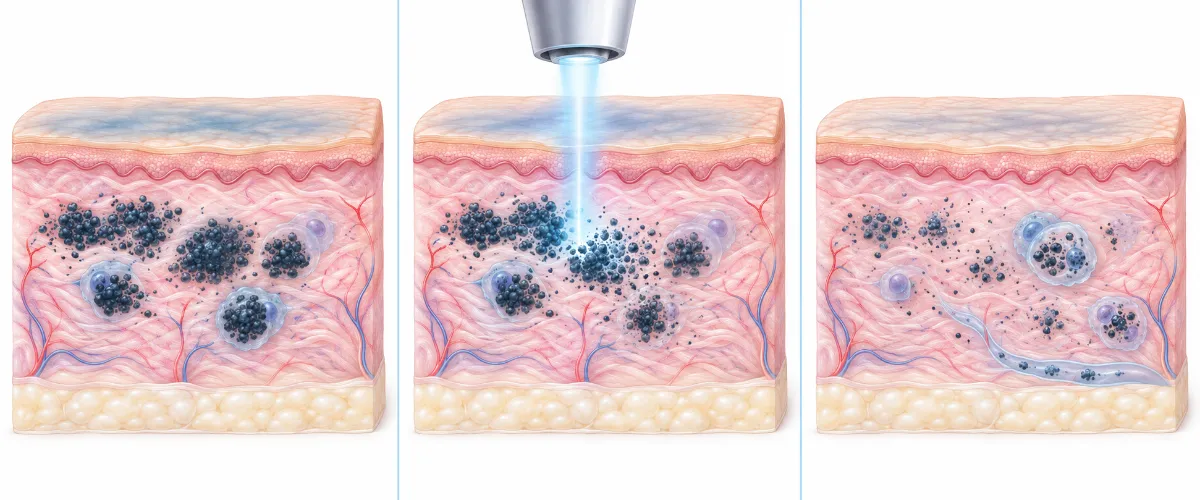
Tattoo pigment sits within the skin. Short laser pulses act on the pigment and fragment it into smaller particles. The body’s immune processes then help clear some of these fragments gradually. This is why fading can continue between appointments and why the visible result is assessed over time.
How laser tattoo removal works, step by step
A treatment does not remove every pigment particle at once. Different inks and skin types require different choices, and some pigment can remain despite a course of treatment.
How to read the photographs on this page
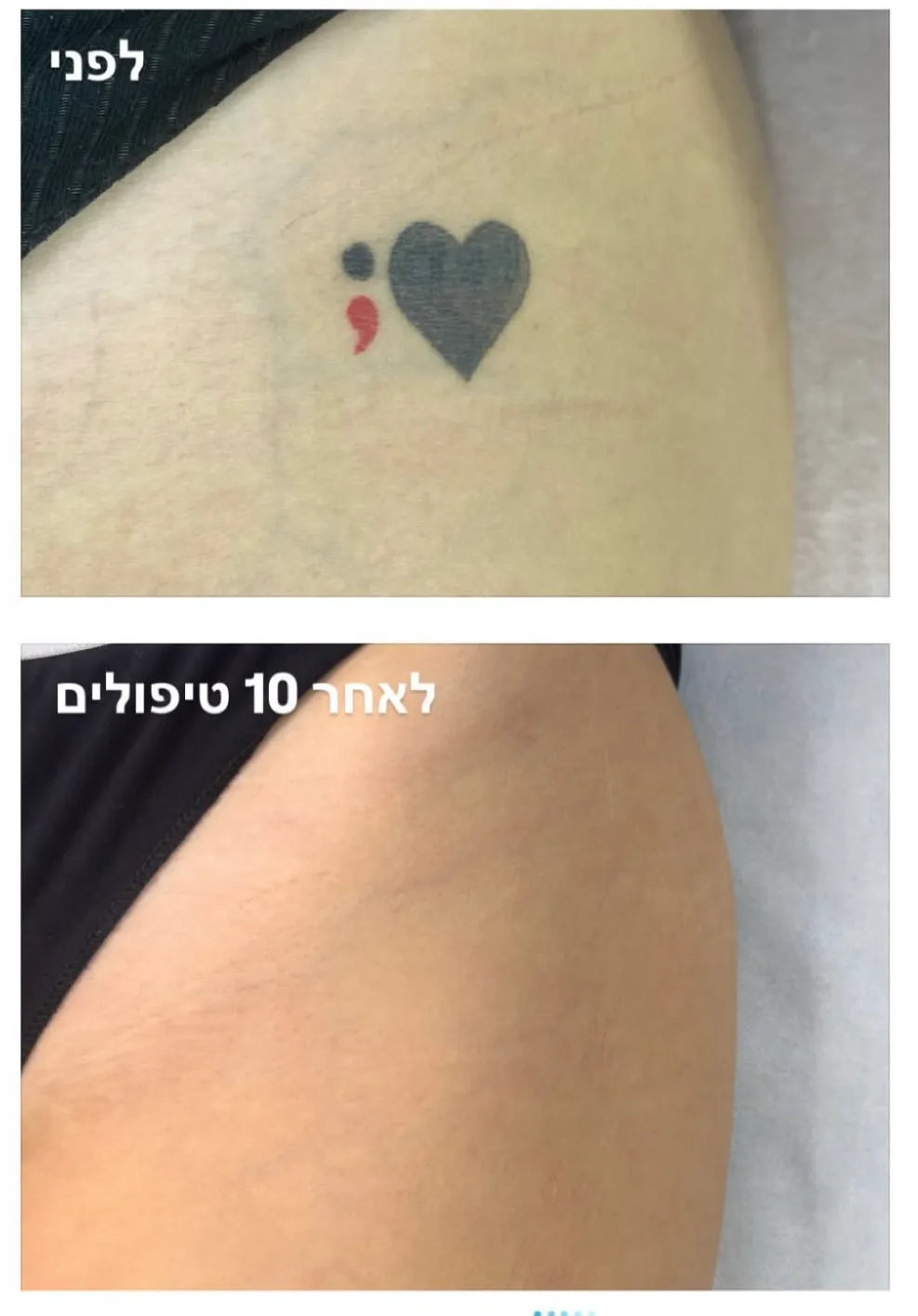
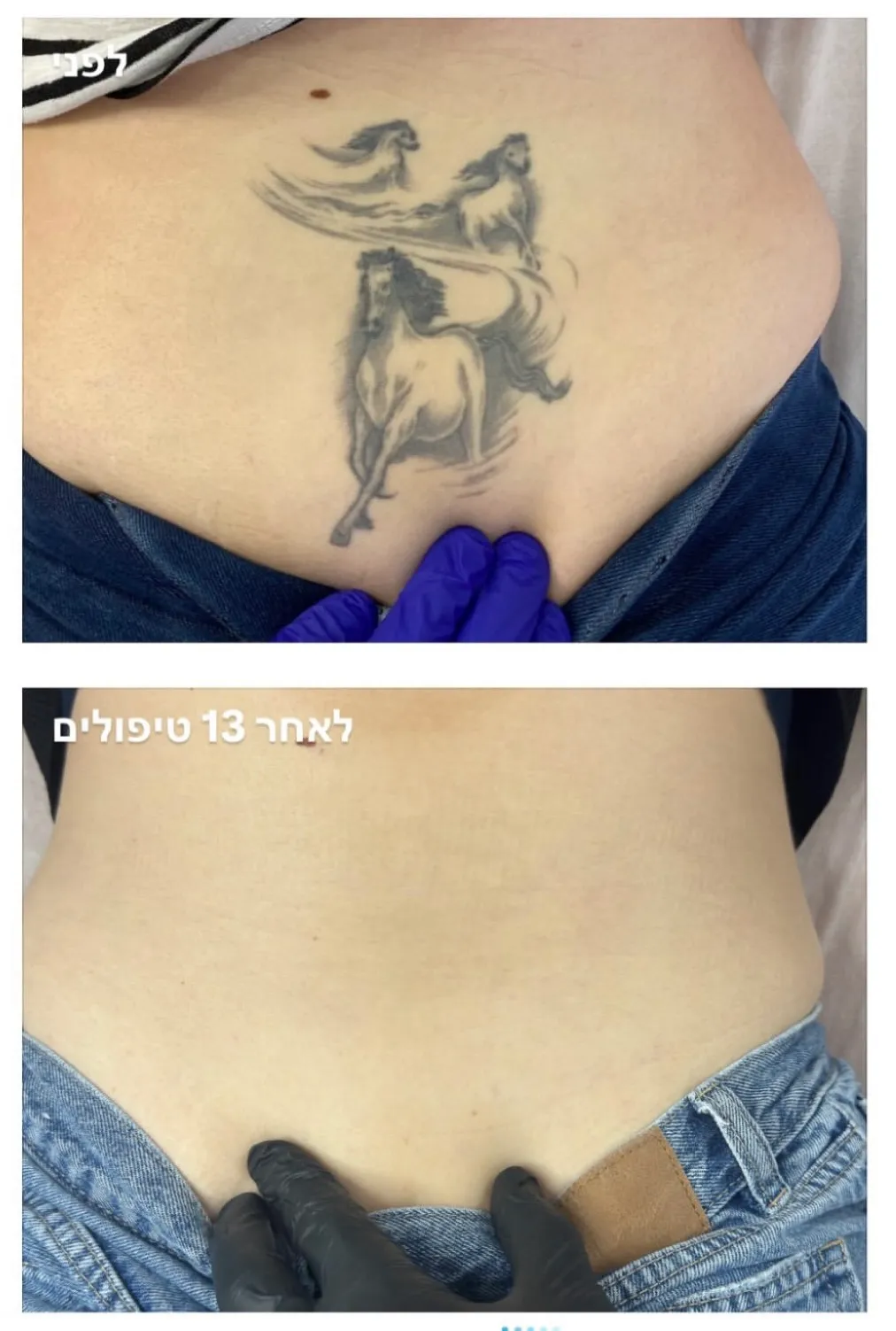
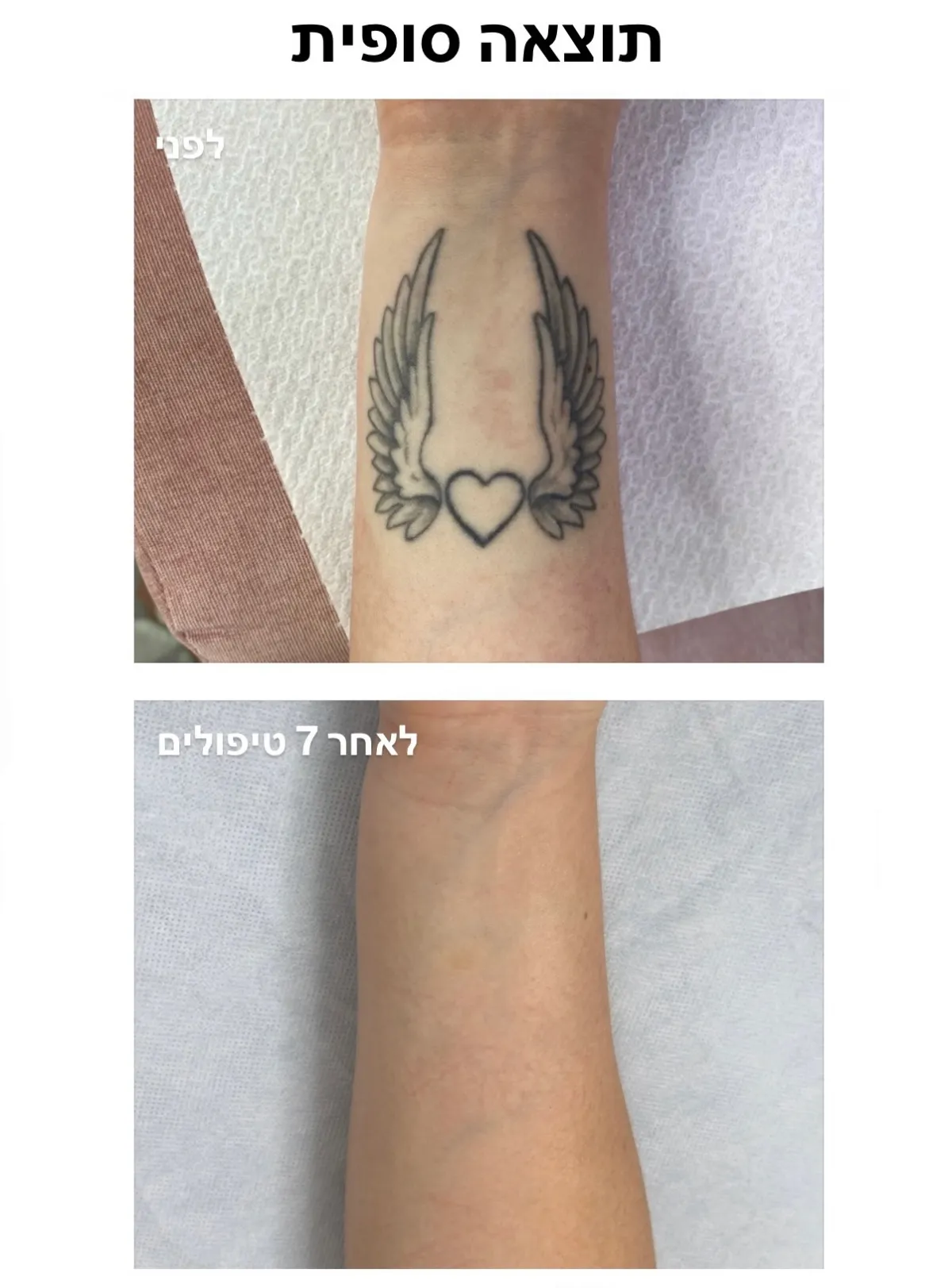
The galleries below show different people at different treatment stages. A session count applies only to the case in its caption. Ongoing treatment is not presented as a final result; completed cases are labelled separately.
Can I remove only part of a tattoo?
It may be possible to target a selected part of a tattoo while keeping another part. The treatment area and boundary are assessed individually. In this Laser House TLV case, the rose on the back of the hand fades while the wrist lettering remains visible. This case does not guarantee the same result or scar-free skin for everyone.
A rose tattoo: one course, gradual change
This clinic case involved a rose tattoo on the back of the hand and a course of 12 procedures, with intervals of two months. The change was gradual across that particular course. It is one person’s experience, not a schedule or session target for every tattoo.
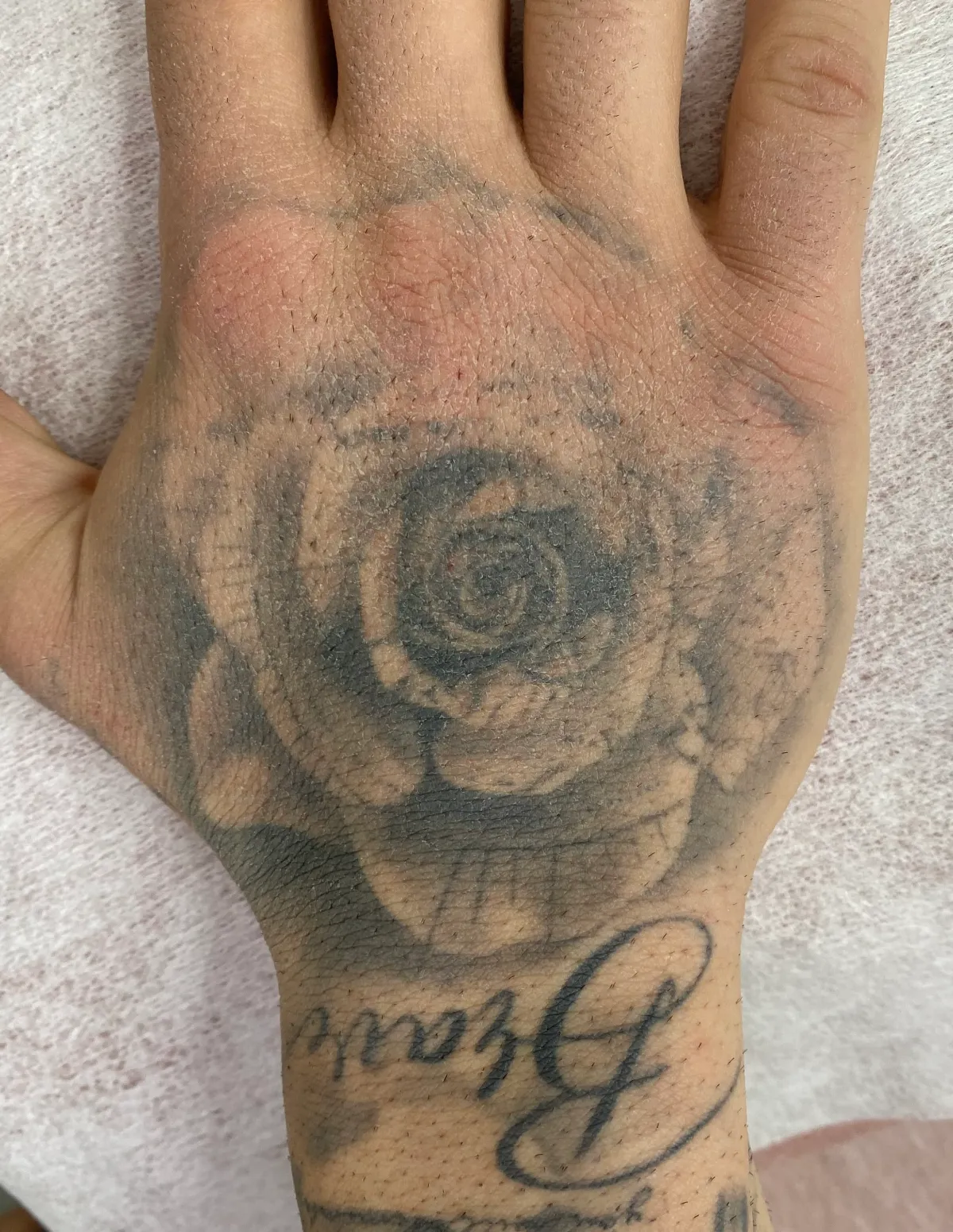
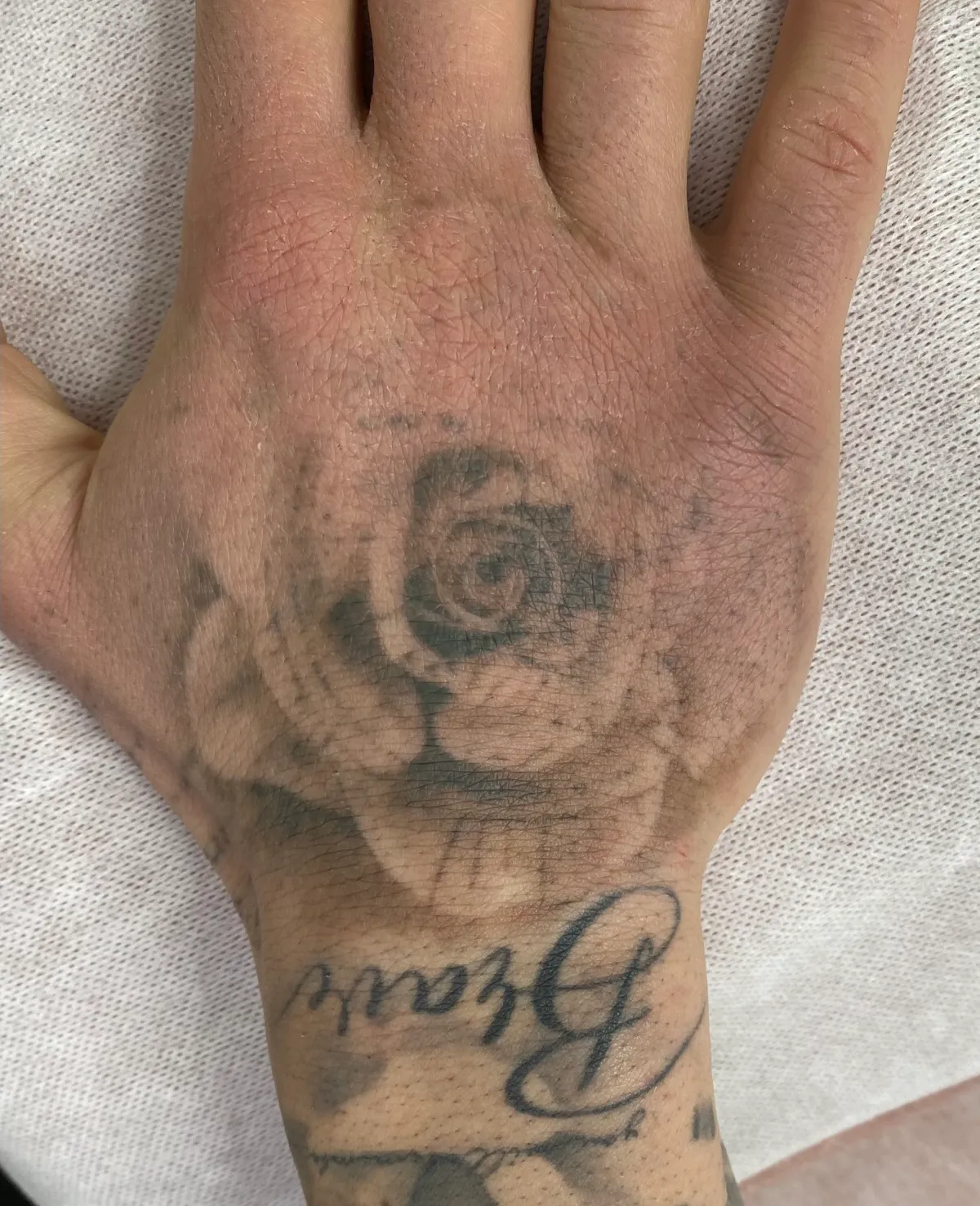
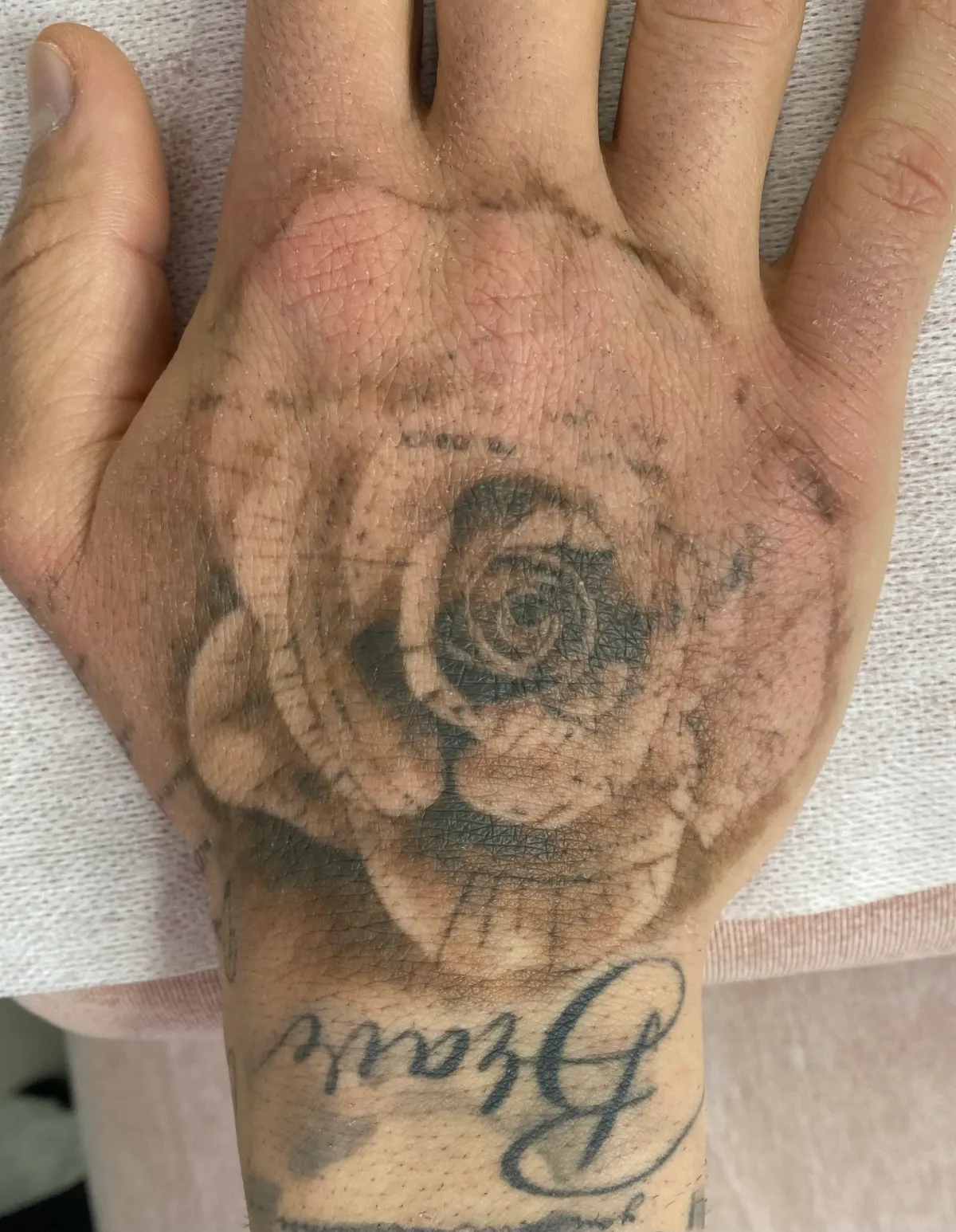
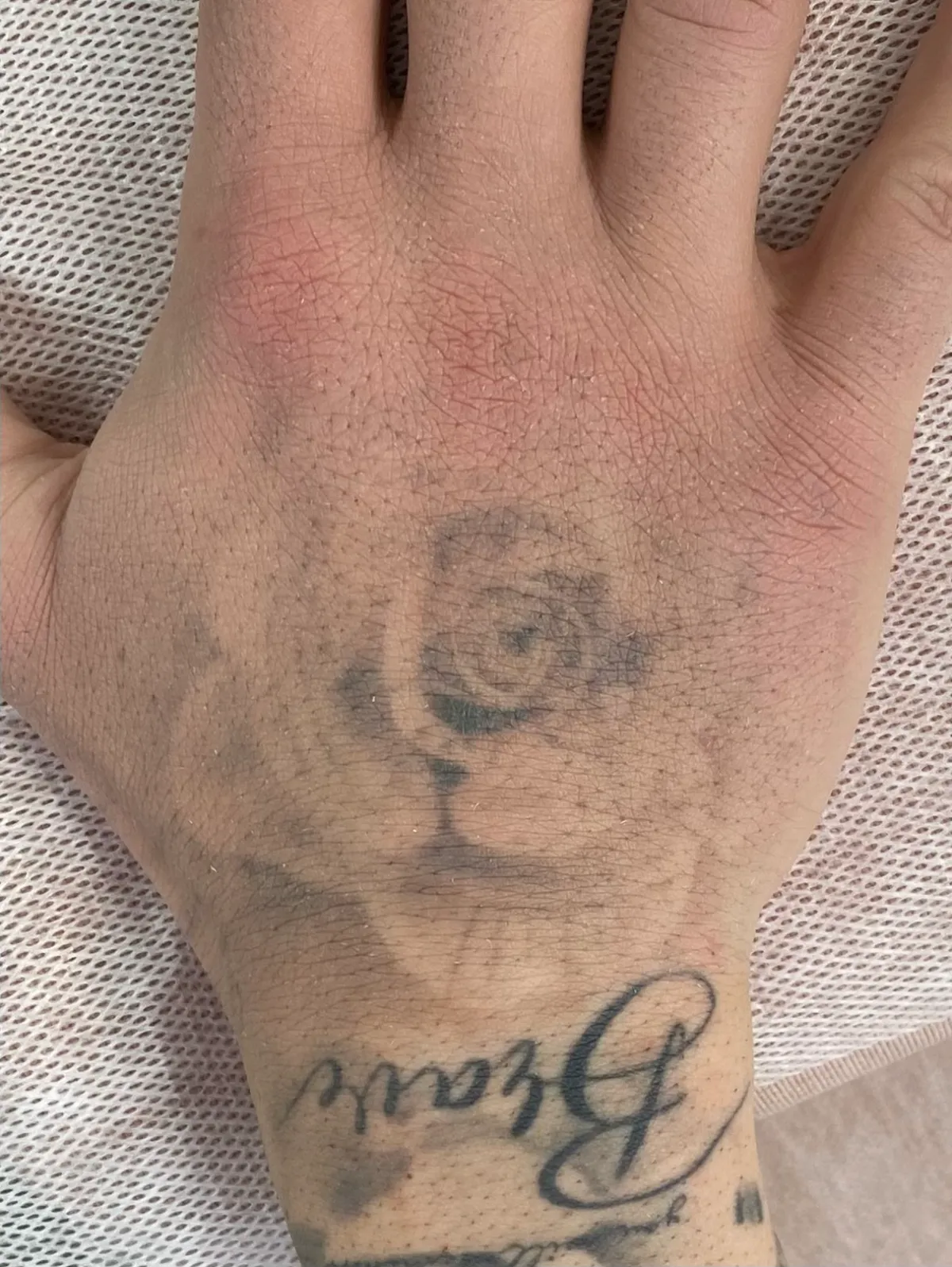
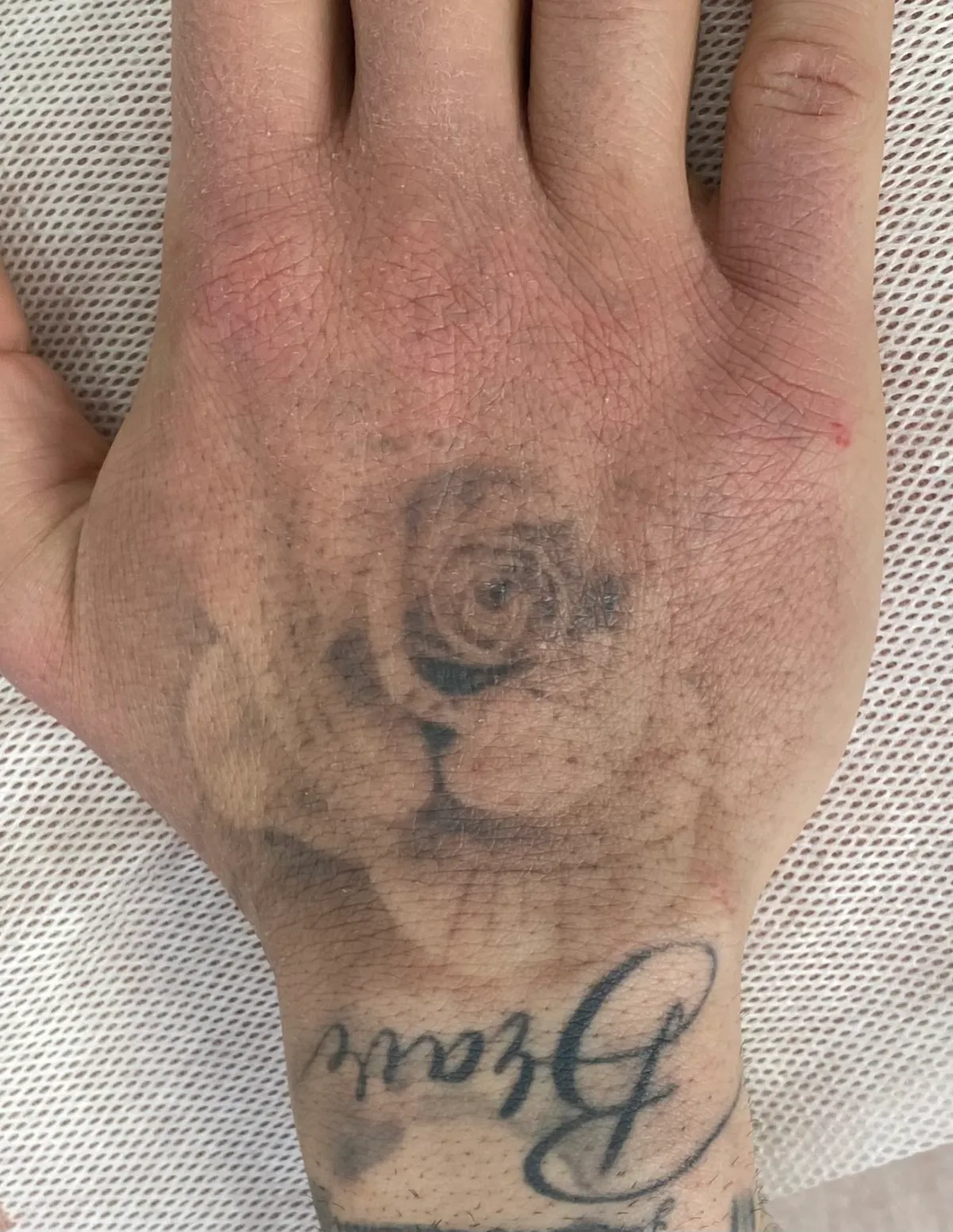
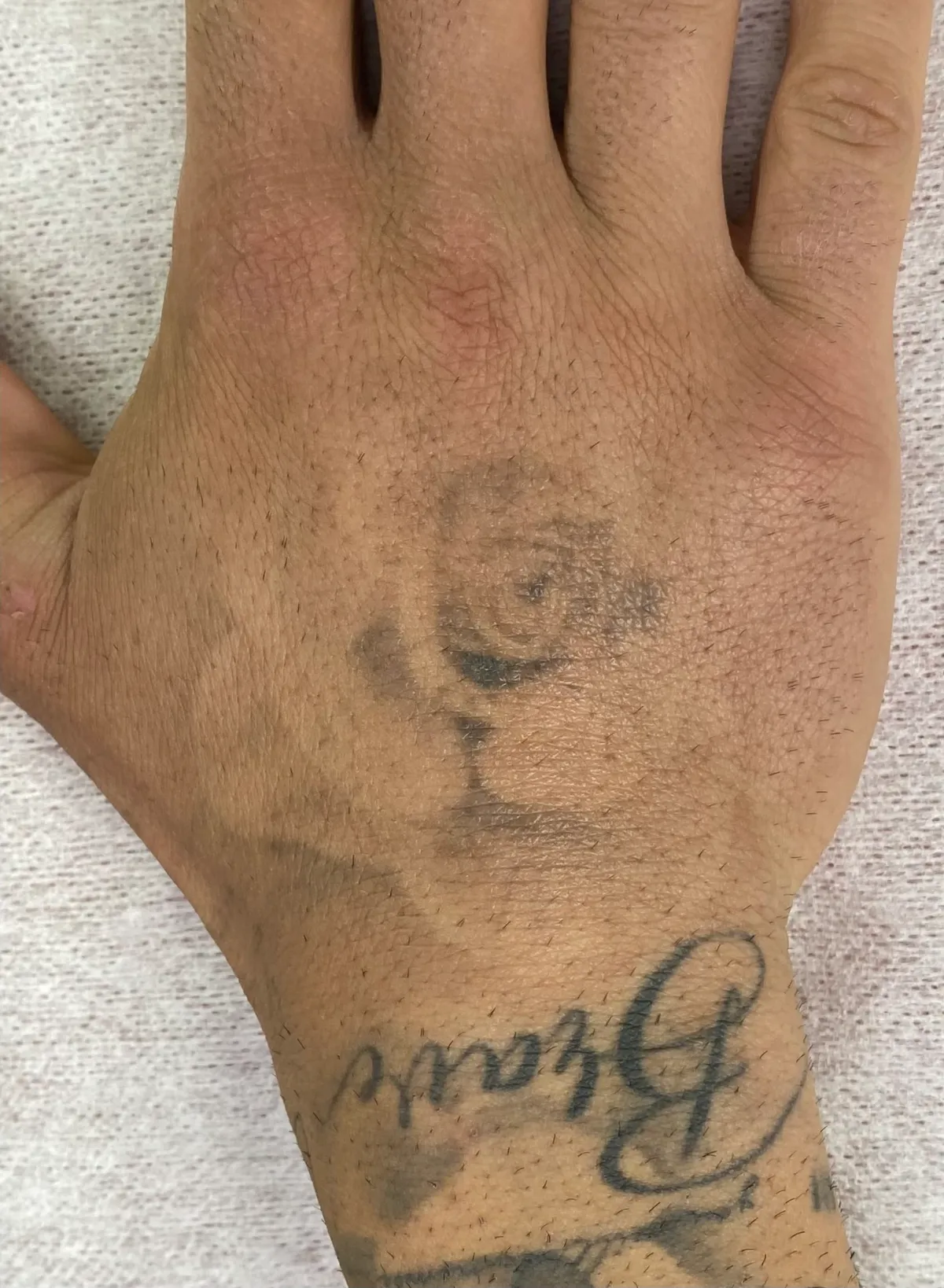
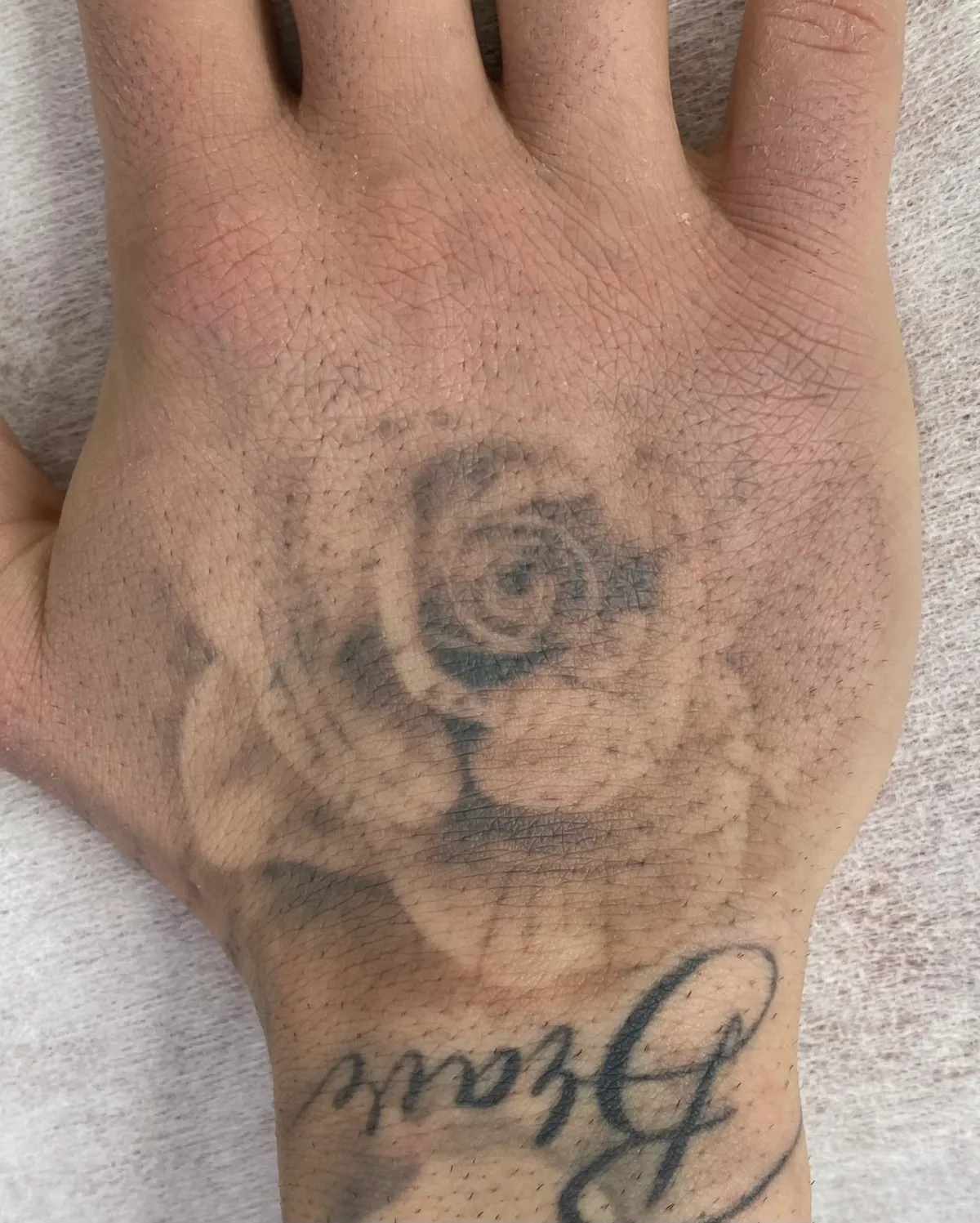

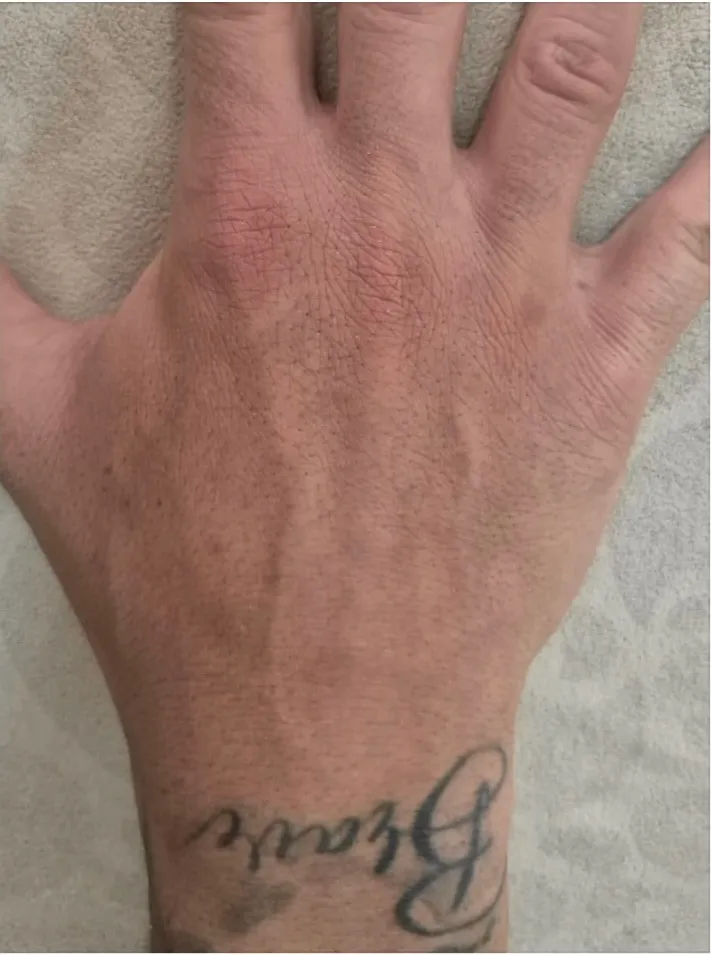
These photographs show the gradual fading of the rose while another part of the tattoo remains. They document the same case; individual photographs are not labelled as specific treatment sessions.
What's included in the treatment?
- Skin and tattoo diagnosis. We check your skin type, the ink colours, the depth and density of the tattoo and any previous treatments, and choose the laser and the treatment plan accordingly.
- Explanation before you start. Before the treatment we give you a short presentation: how the process works, what to expect and how to care for your skin at home.
- Skin cooling during the treatment. A cold-air system reduces discomfort and protects the skin.
- Soothing cream after the treatment. Every session ends with a soothing cream on the treated area to calm the skin and support healing.
- Ice to take with you. You leave with a wrapped ice pack, so you stay comfortable for the next hour and a half.
- Fractional treatment, if needed. When needed, you can choose to add a fractional treatment as a paid option. The choice is yours, after an explanation and a personal recommendation.
How much does a session cost?
Wondering what to budget for your tattoo removal? A small tattoo is approximately ₪300 per session*, while a sleeve or back is around ₪2,000 to ₪3,000 per session*. You can pay per session or choose 4 for the price of 3, 7 for the price of 5, or 10 for the price of 7. For package options and two clear savings examples, see our tattoo removal pricing guide.
* All prices are indicative and depend on whether the tattoo is black or coloured, pigment density and amount, scars and other individual factors. Our specialist confirms the final price after an in-clinic assessment.
** On request, fractional laser treatment can be added to tattoo removal as an optional paid add-on. In our experience, it can help speed up the process and reduce the risk of changes in skin texture. Tattoos with scarring may need an additional fractional procedure, priced separately. The final price is given only after an in-clinic examination and assessment of scarring, ink colours and the condition of the skin.
Why different tattoos fade at different rates
Size is one factor, but it cannot predict the number of sessions on its own. Ink composition, colour, density and depth, the location on the body, layering or cover-ups, existing scarring and individual response all influence the course.
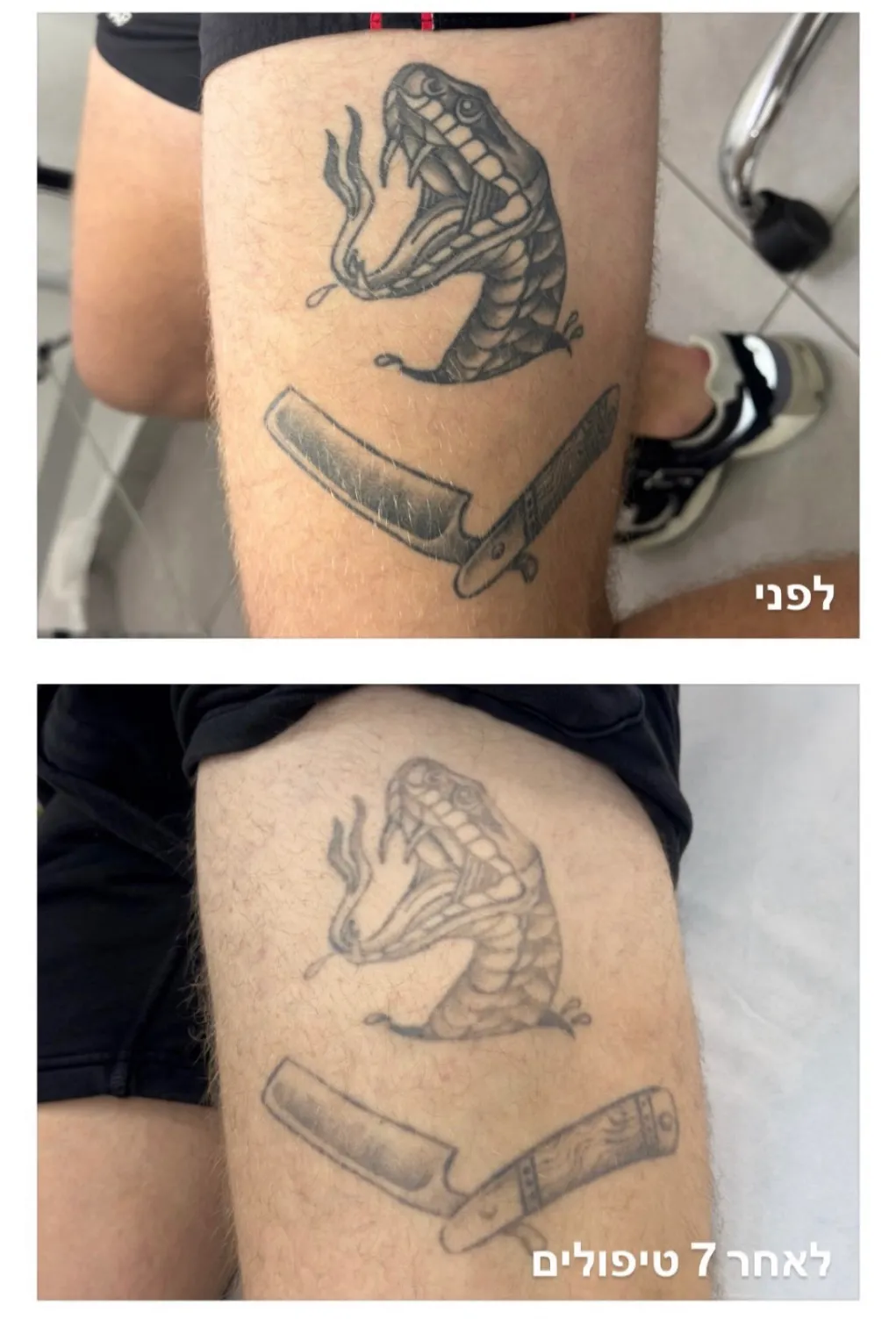
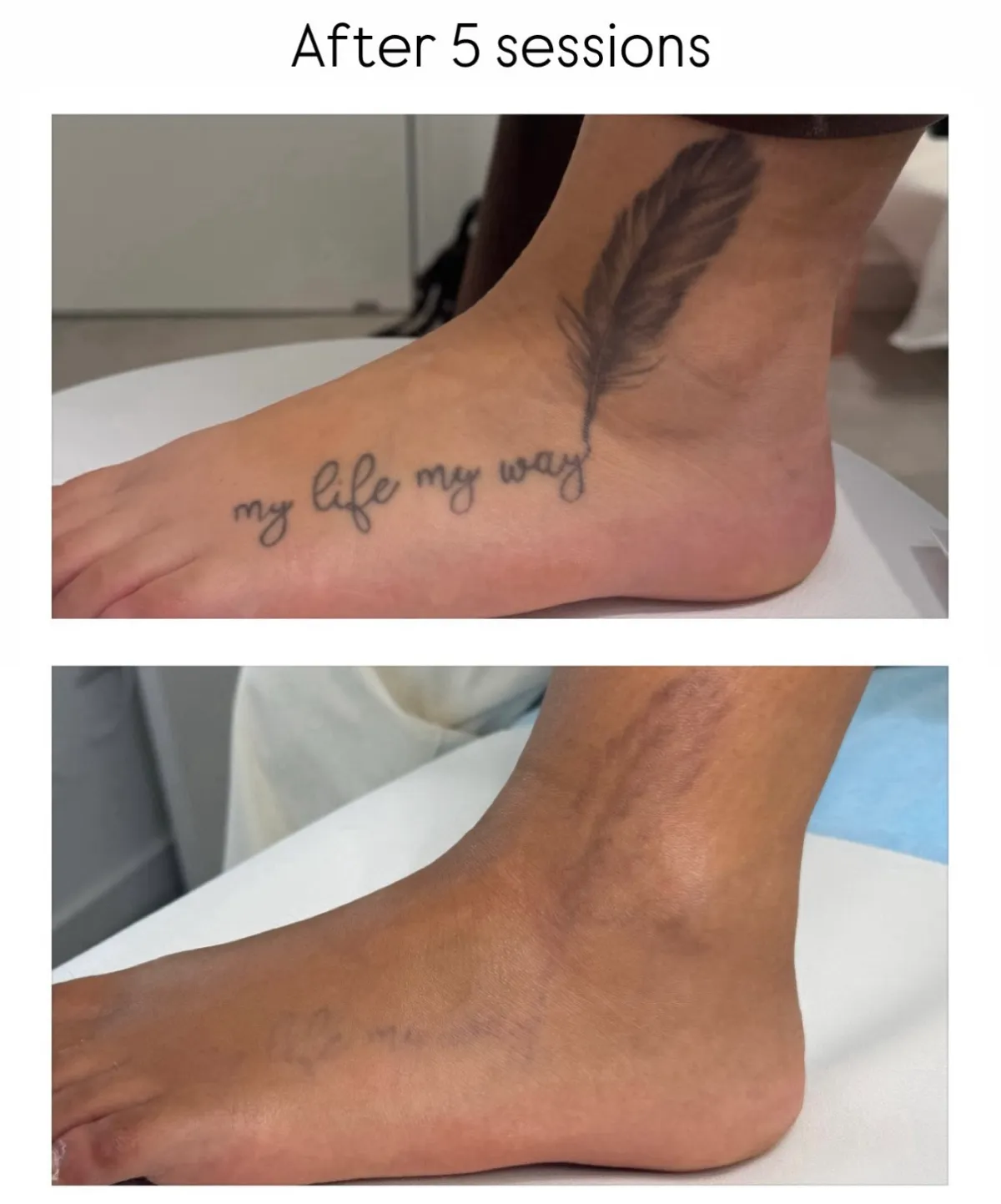
Here are three cases after 9, 7 and 5 sessions. The fourth comparison, after 12 sessions, appears below under “Near the end of treatment”. The session counts are different, so this is not a controlled comparison at the same treatment stage. They illustrate variation rather than predict how another tattoo will look.
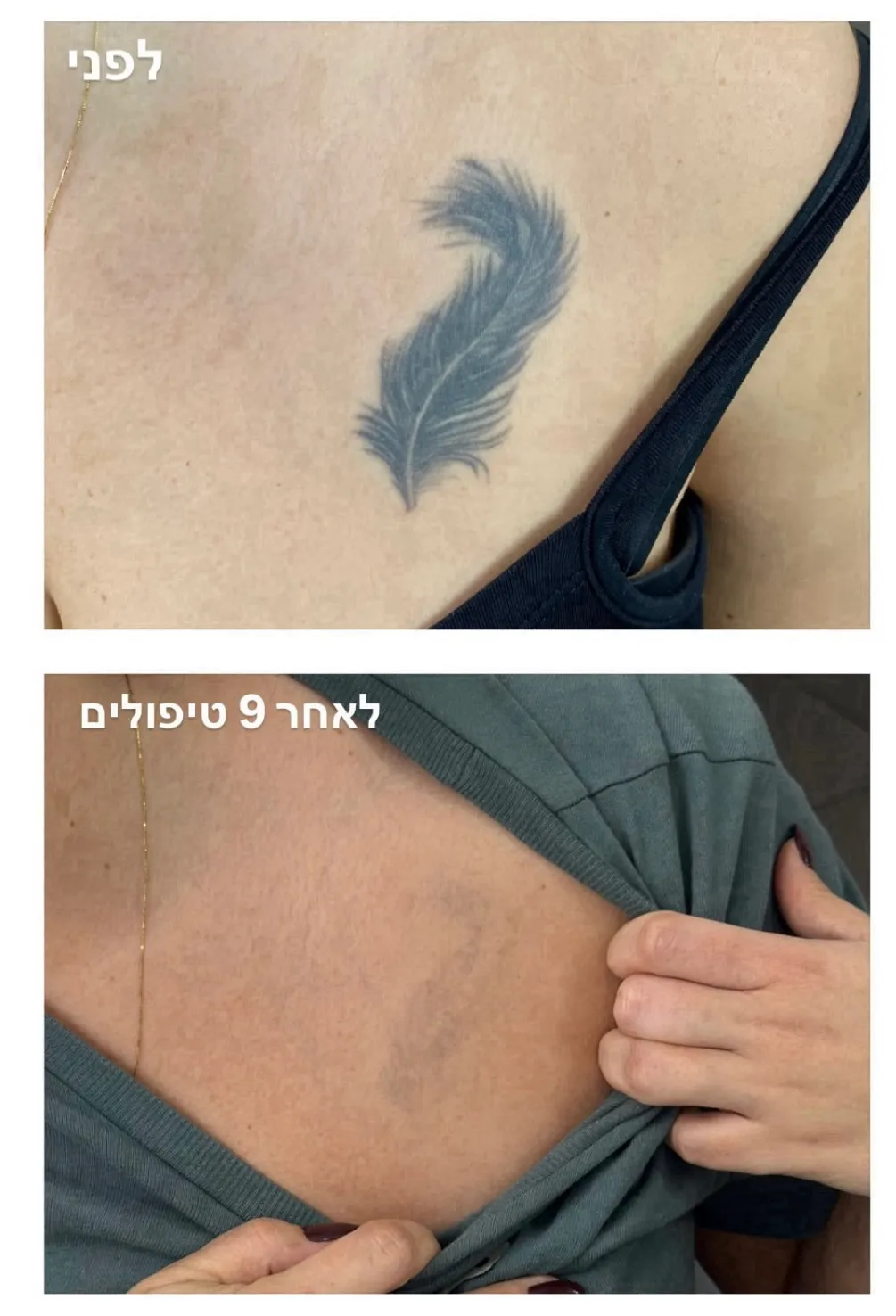
White pigment mixed into an ink can complicate its response. Some pale formulations may darken with laser exposure, and their subsequent response varies. We cannot identify an ink’s full composition from a photograph or promise how many additional sessions it will need.
After one session: two separate clinic examples
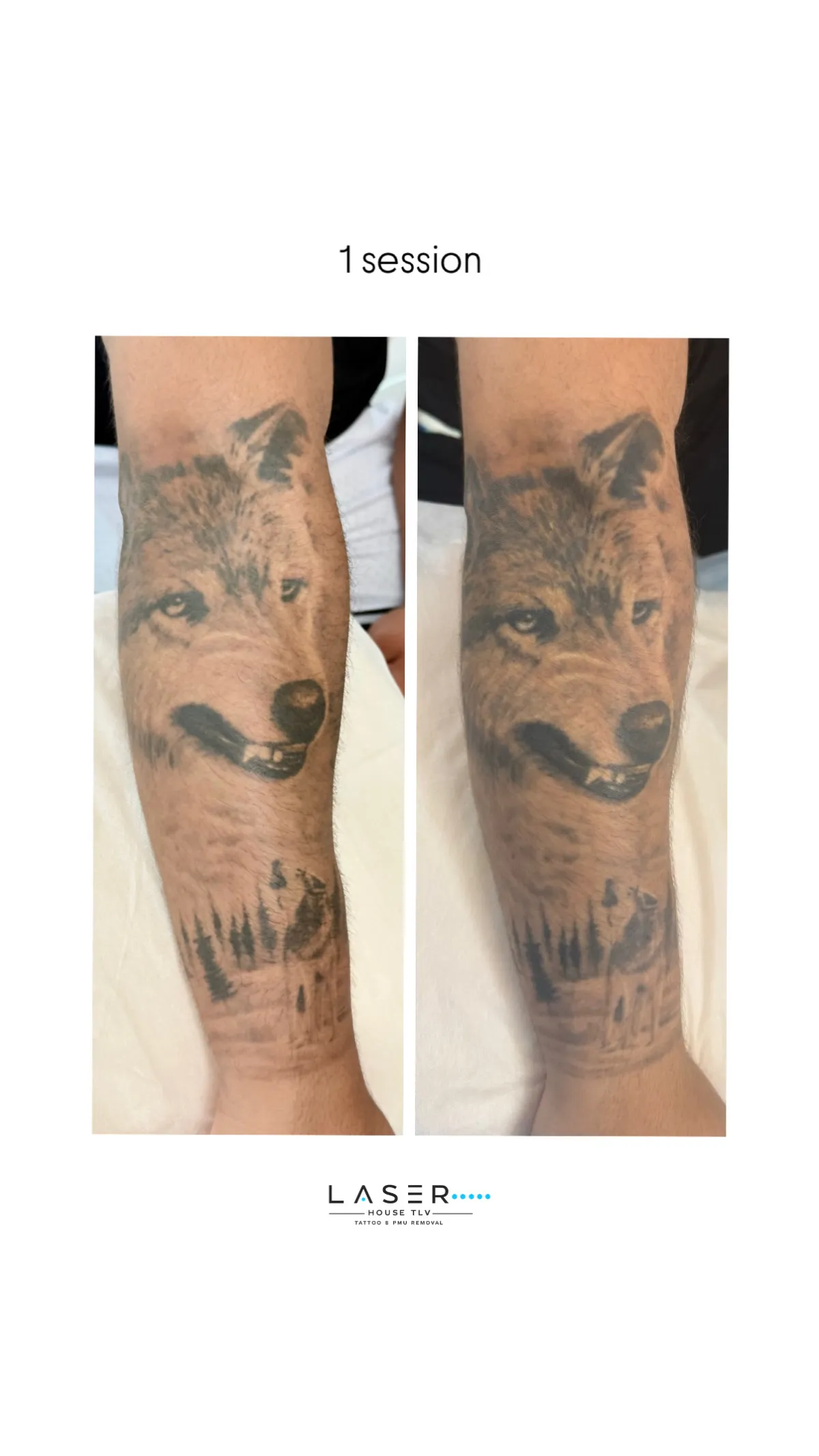
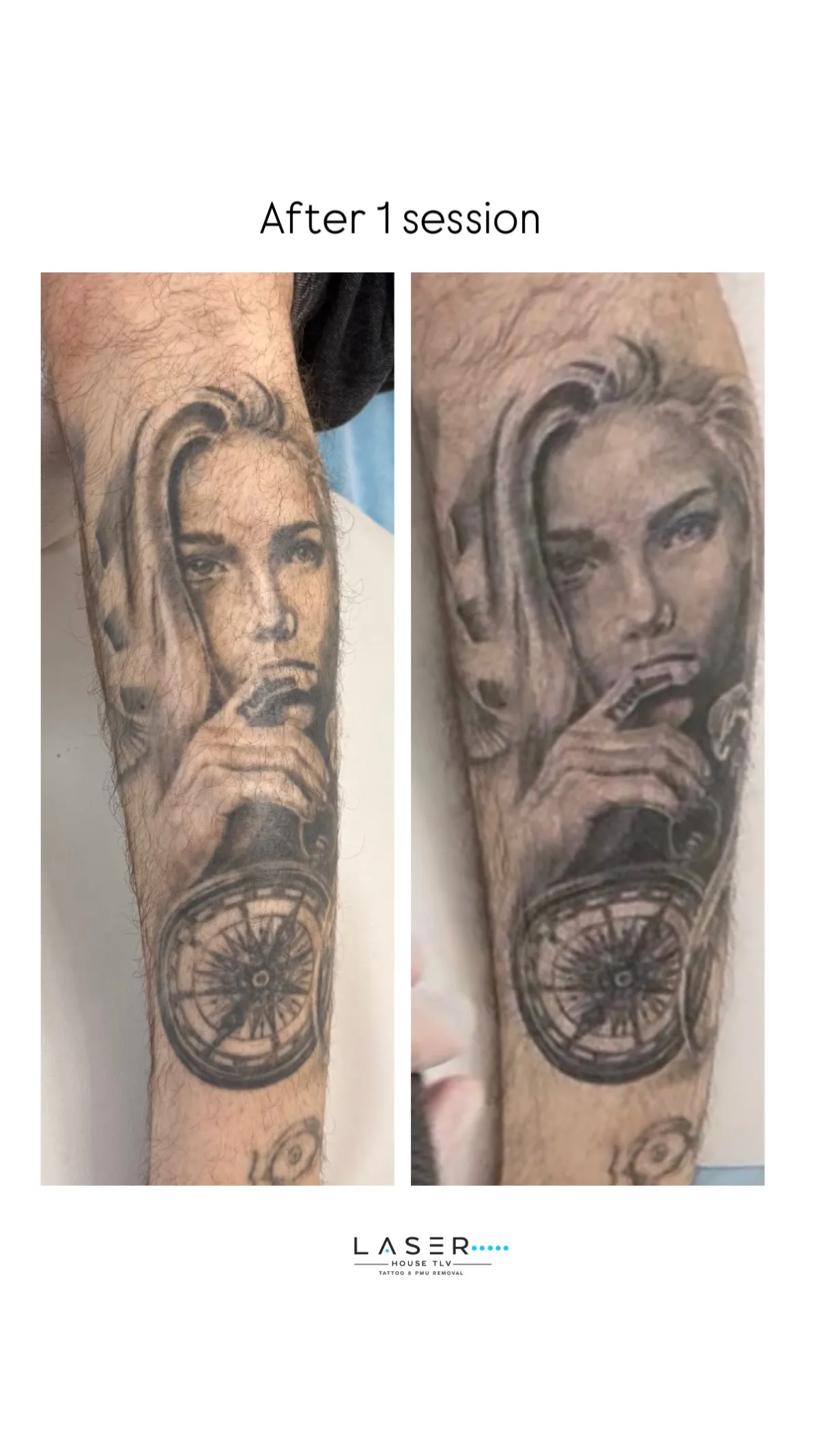
These photographs show visible fading after one procedure in two different clinic cases. They document the pigment and the visible appearance of the skin in those cases, without predicting another person’s result. The photographs show progress, not the appearance immediately after treatment.
A separate case: after two sessions
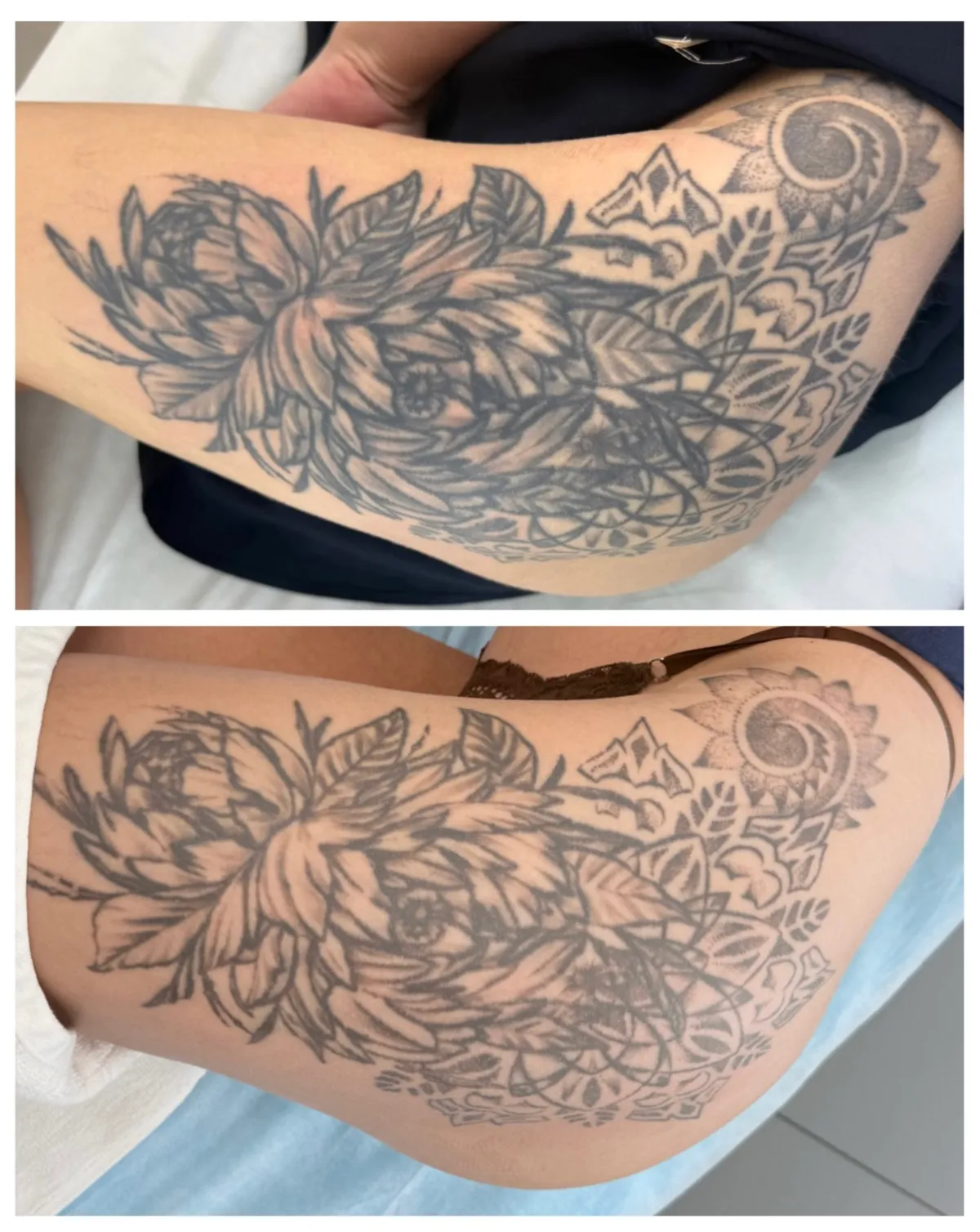
Does a small tattoo come off faster?
Not necessarily. A small tattoo on the hand may need a longer course than a larger tattoo on the shoulder. The amount and depth of the ink, its formulation, the location and the person’s response all matter. A smaller area can make the appointment shorter without making the full removal course shorter.
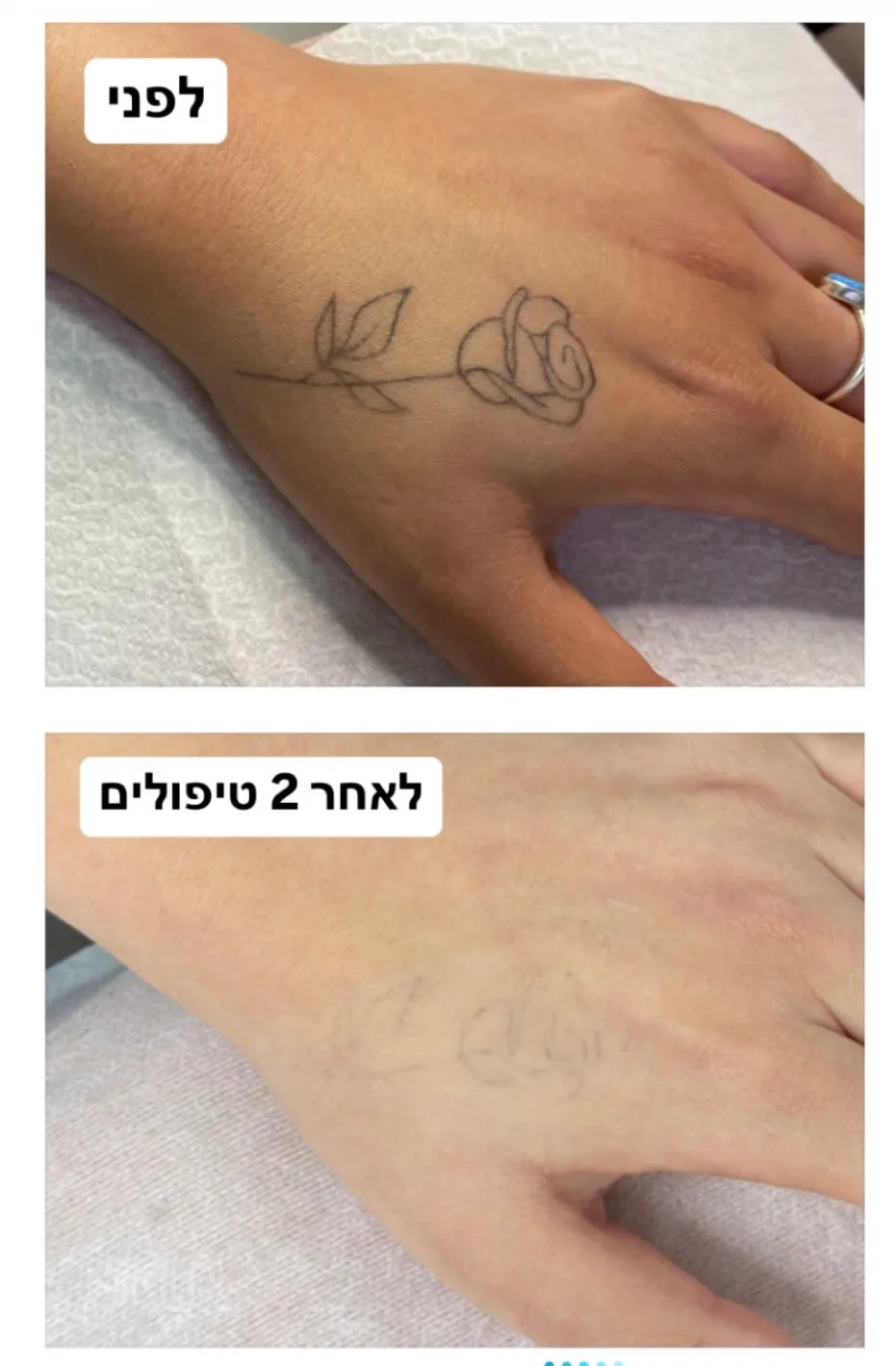
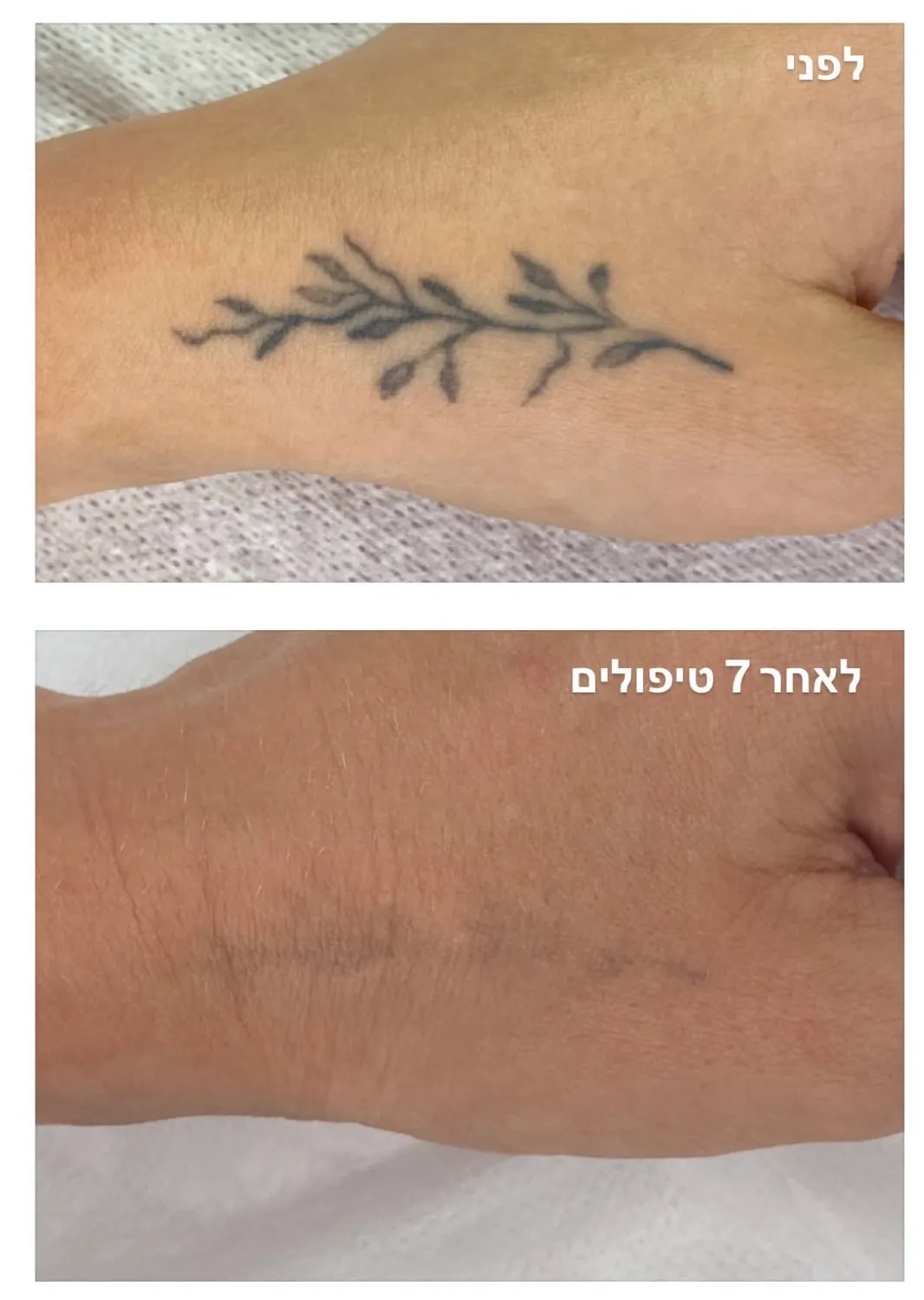
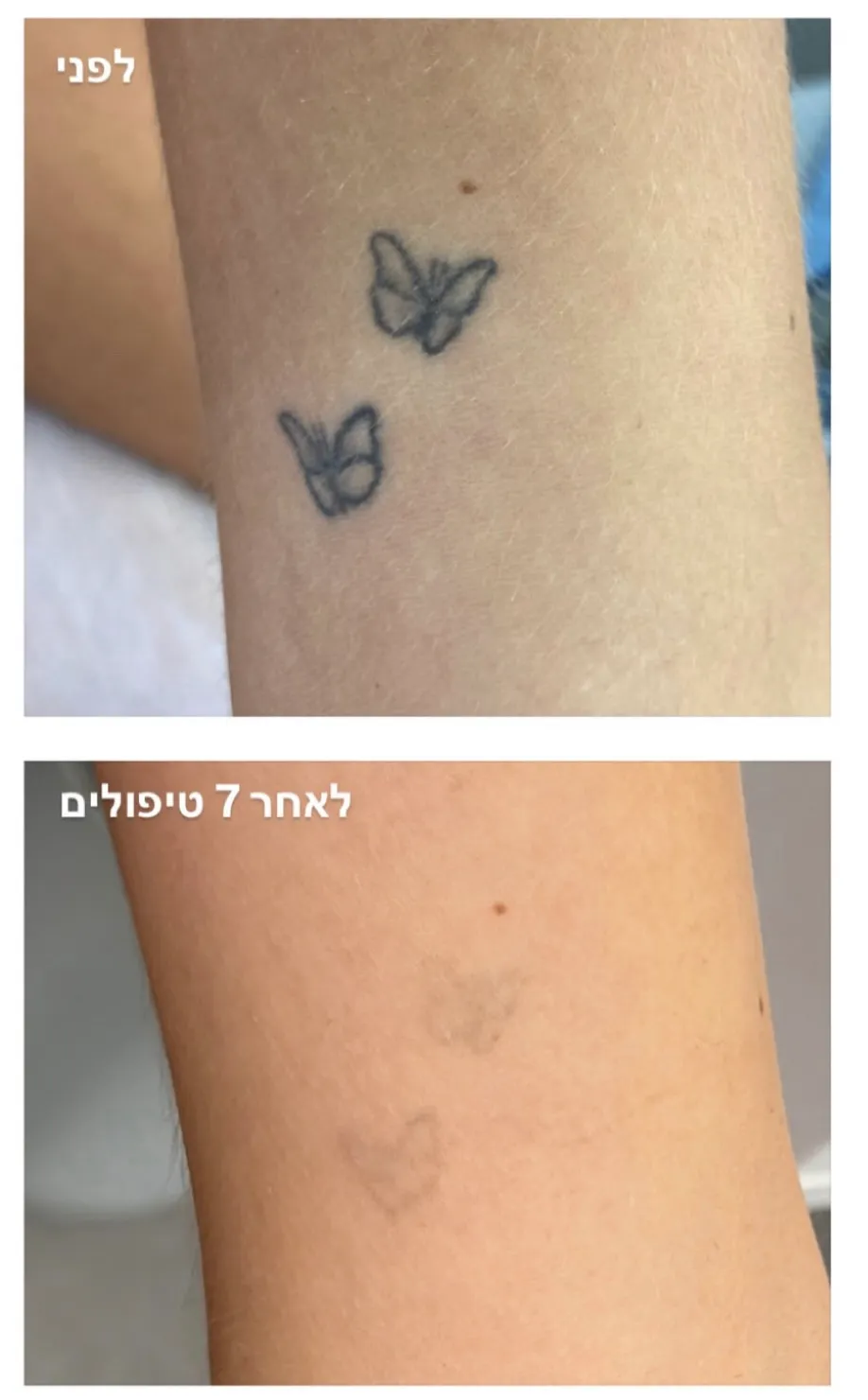
These three separate cases show a small rose after 2 sessions, a leafy design after 7 and butterflies after 7. Small size alone cannot predict the number of sessions or guarantee quick removal.
Large tattoos can fade at different rates too
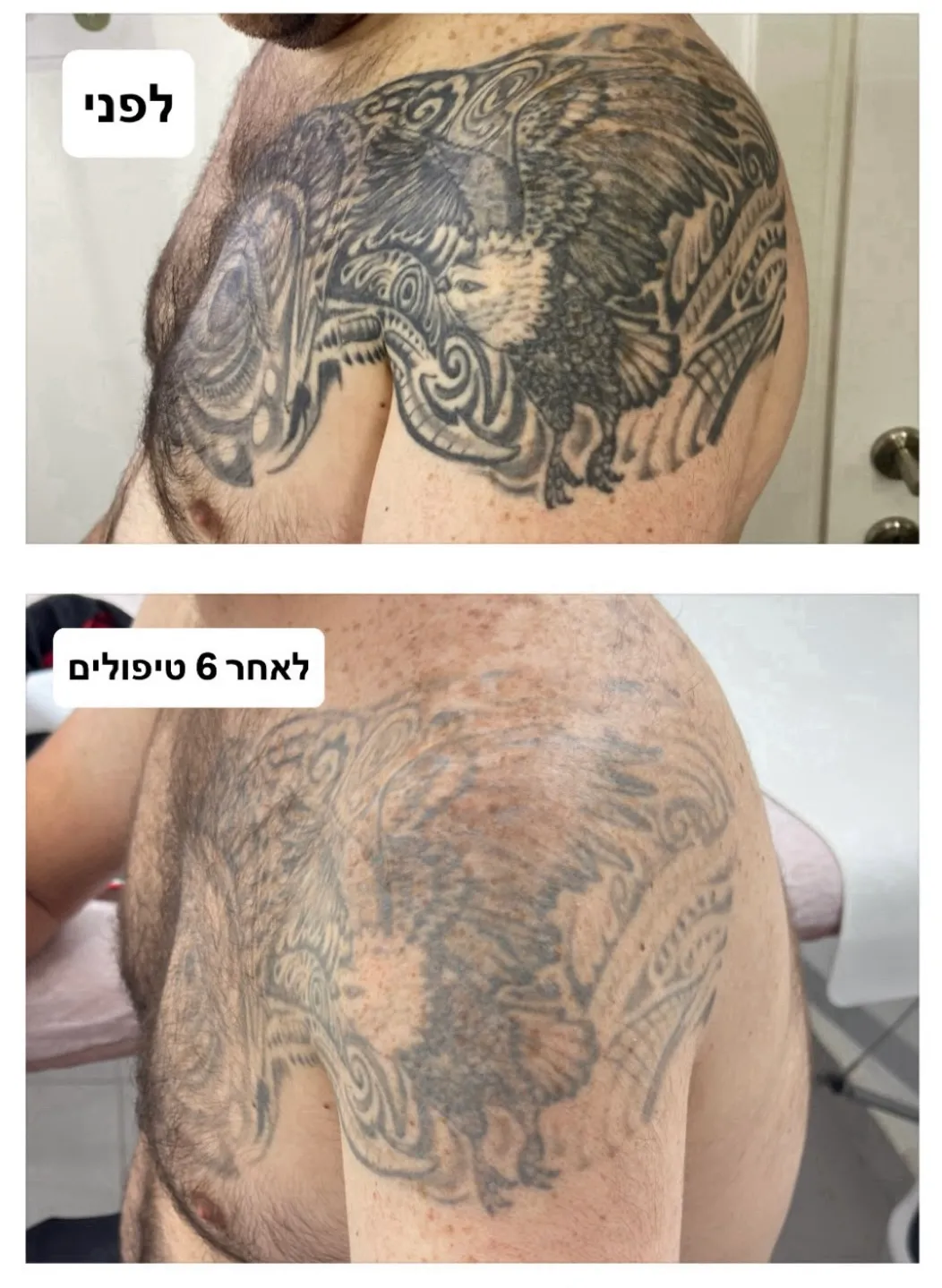
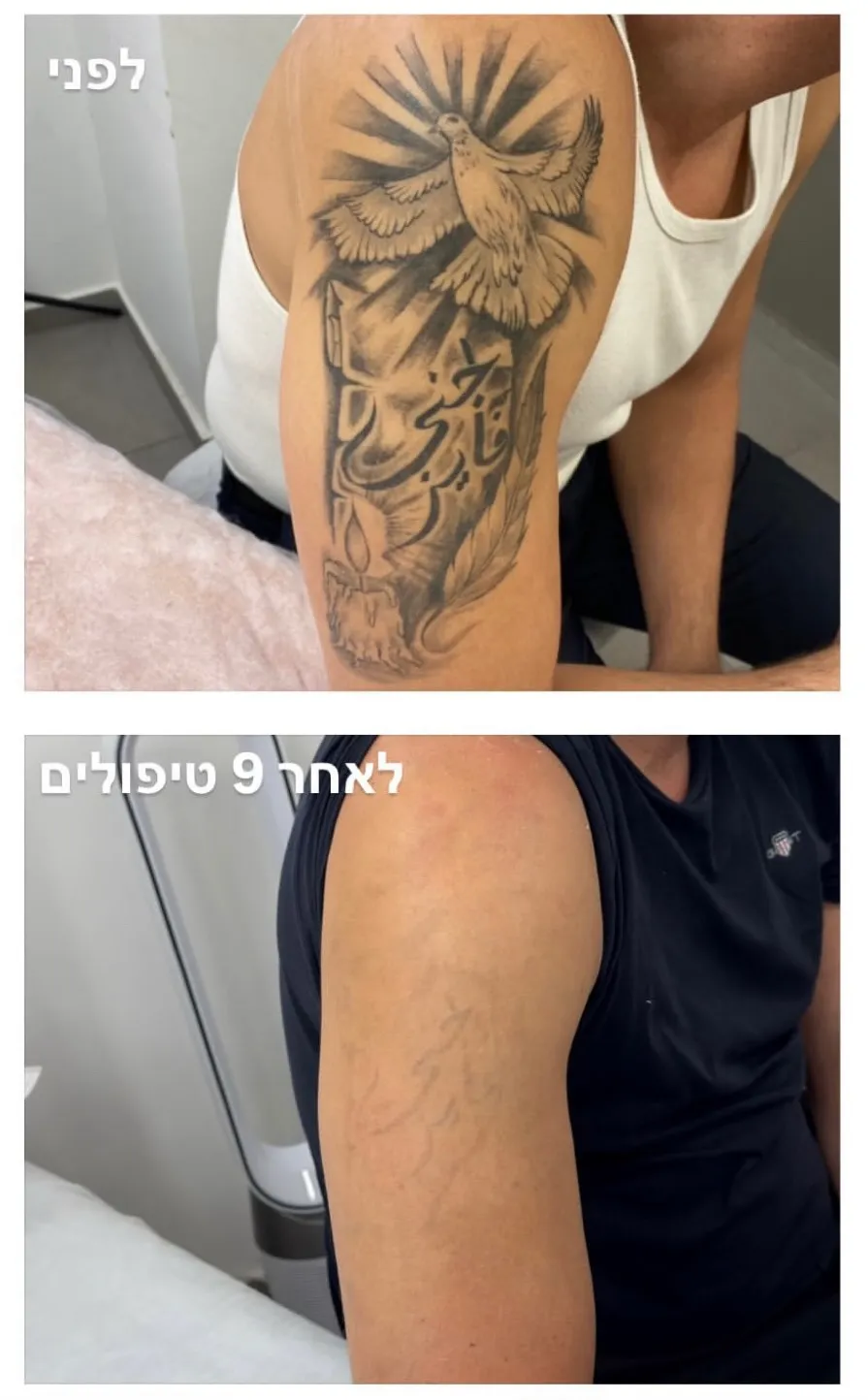
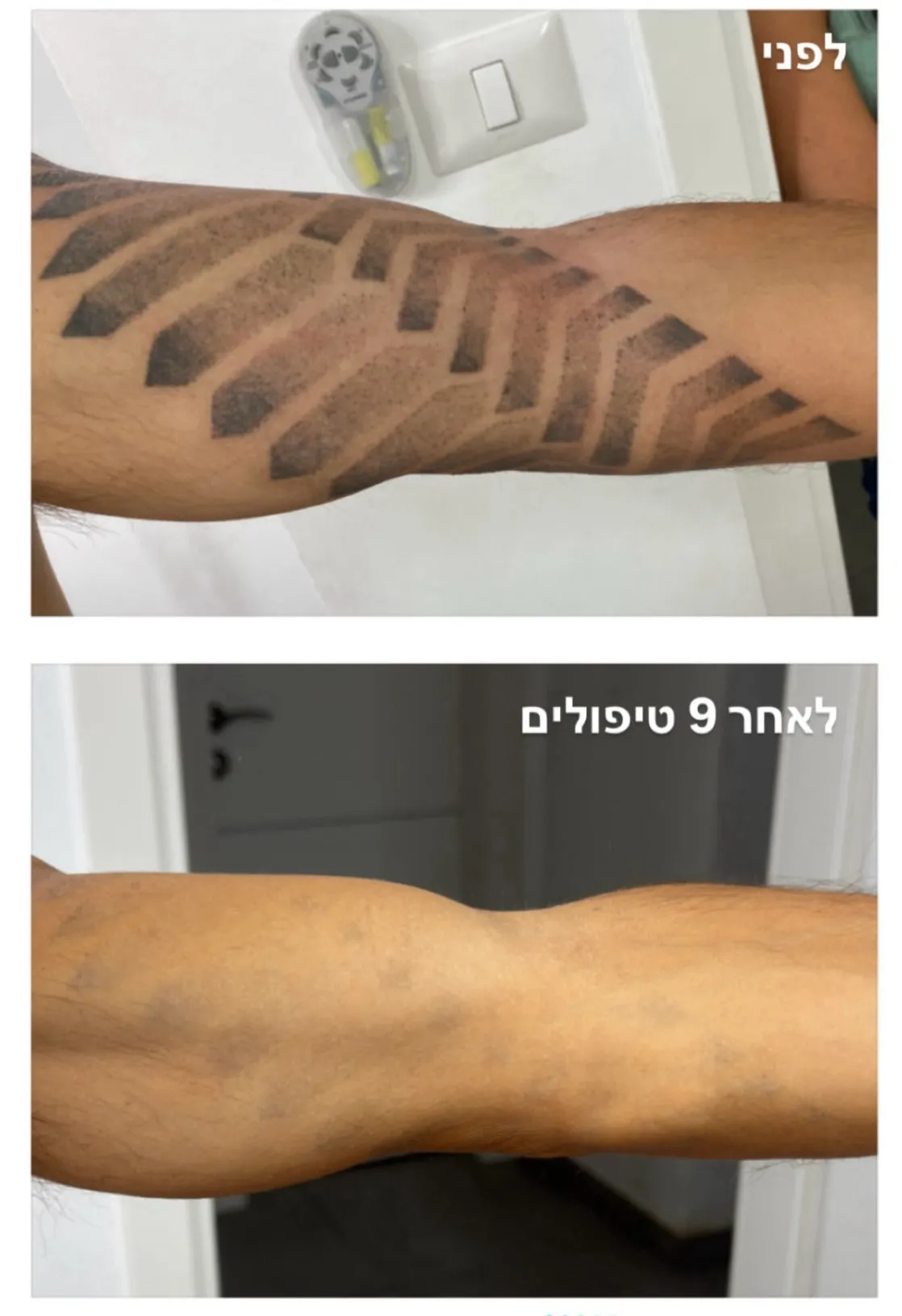
These three separate clinic examples show progress after 6, 9 and 9 sessions. In the third case, little of the original dark design remains visible. This does not establish a completion date for another tattoo. Size matters, alongside ink characteristics, location, skin and individual response.
When pigment remains and a longer course is needed
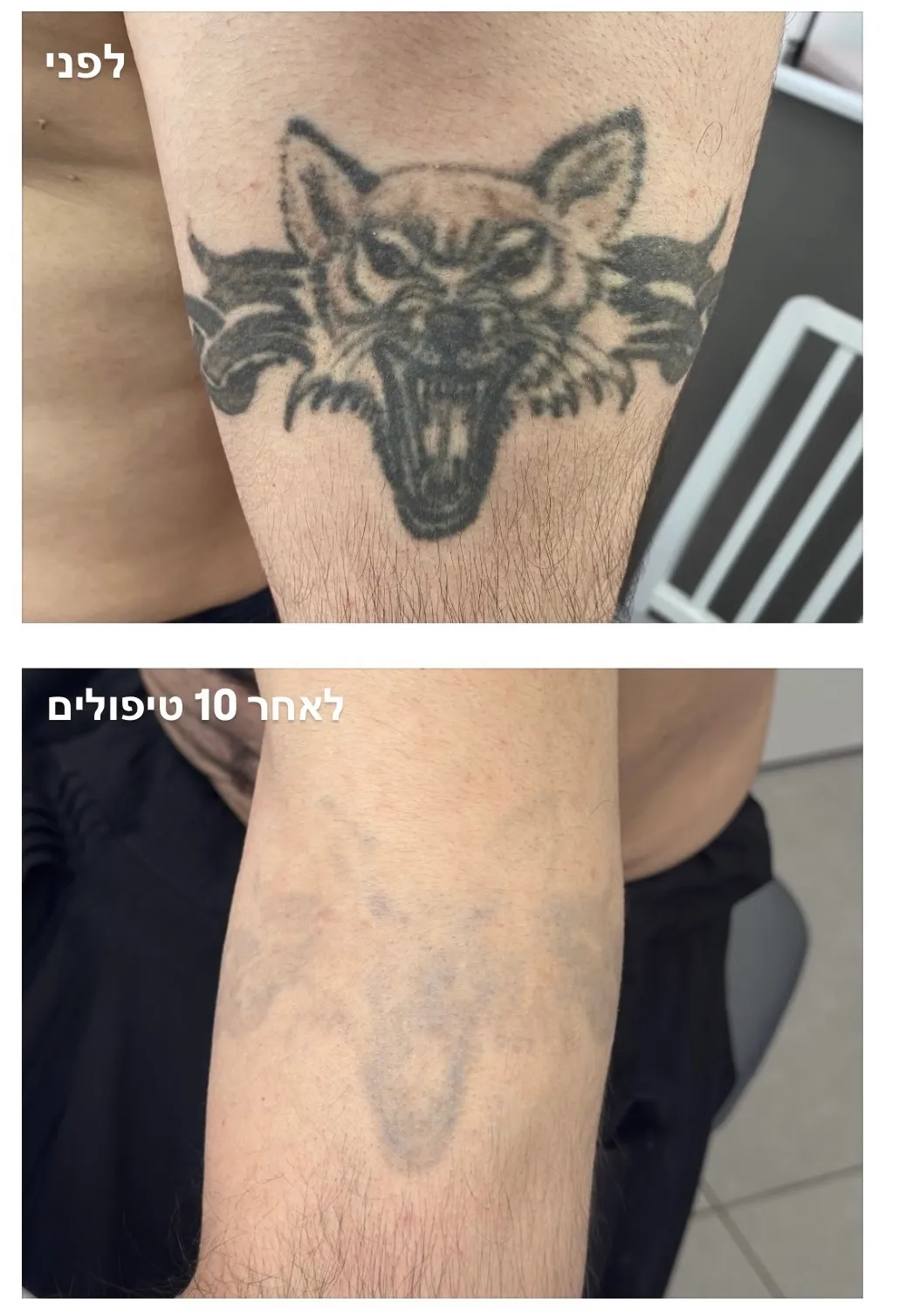
This case is still undergoing treatment after 10 sessions. The ink includes white pigment, according to the clinic’s case history. This may contribute to treatment difficulty, alongside other factors. Further treatment depends on assessment of the remaining pigment and skin.
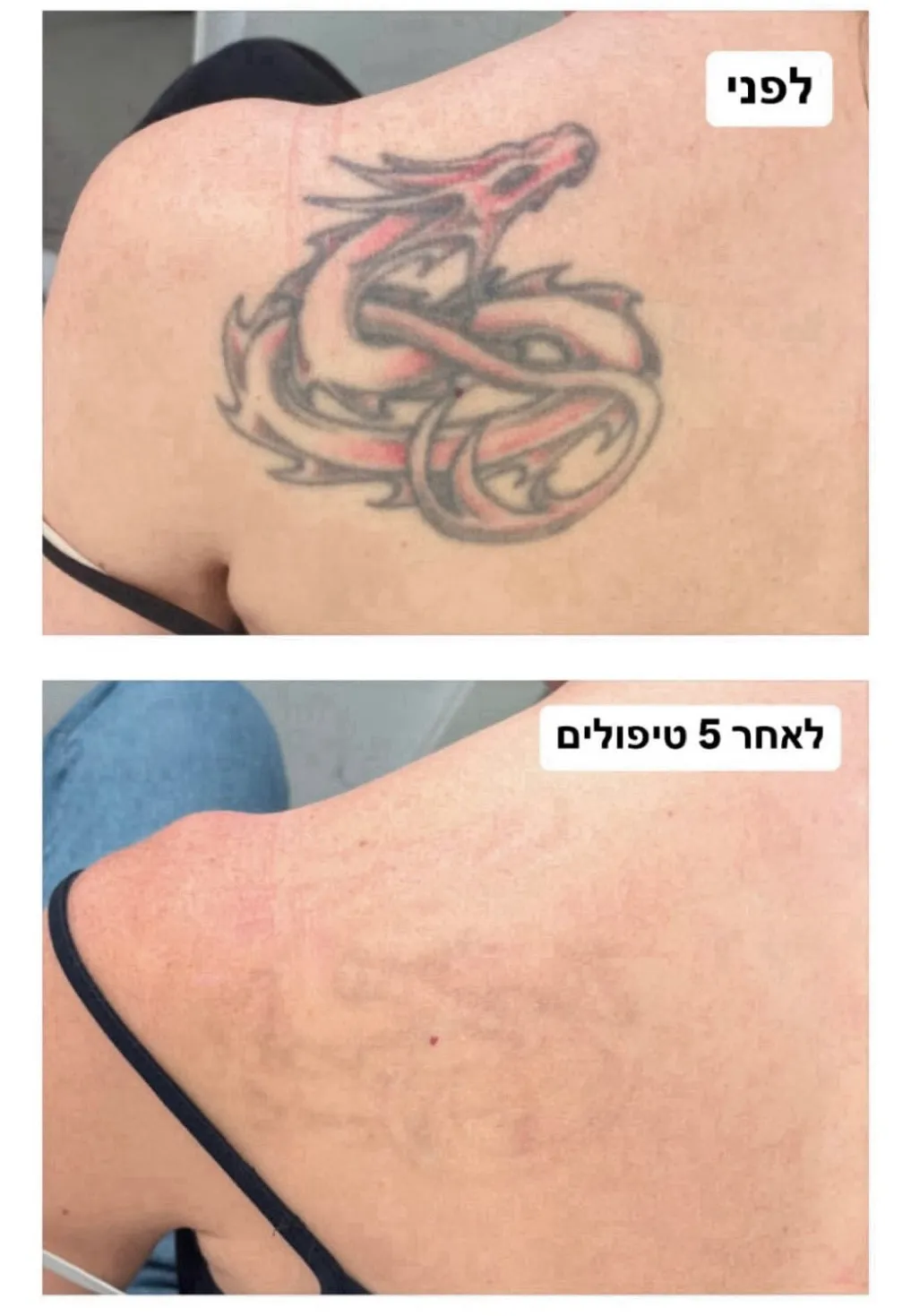
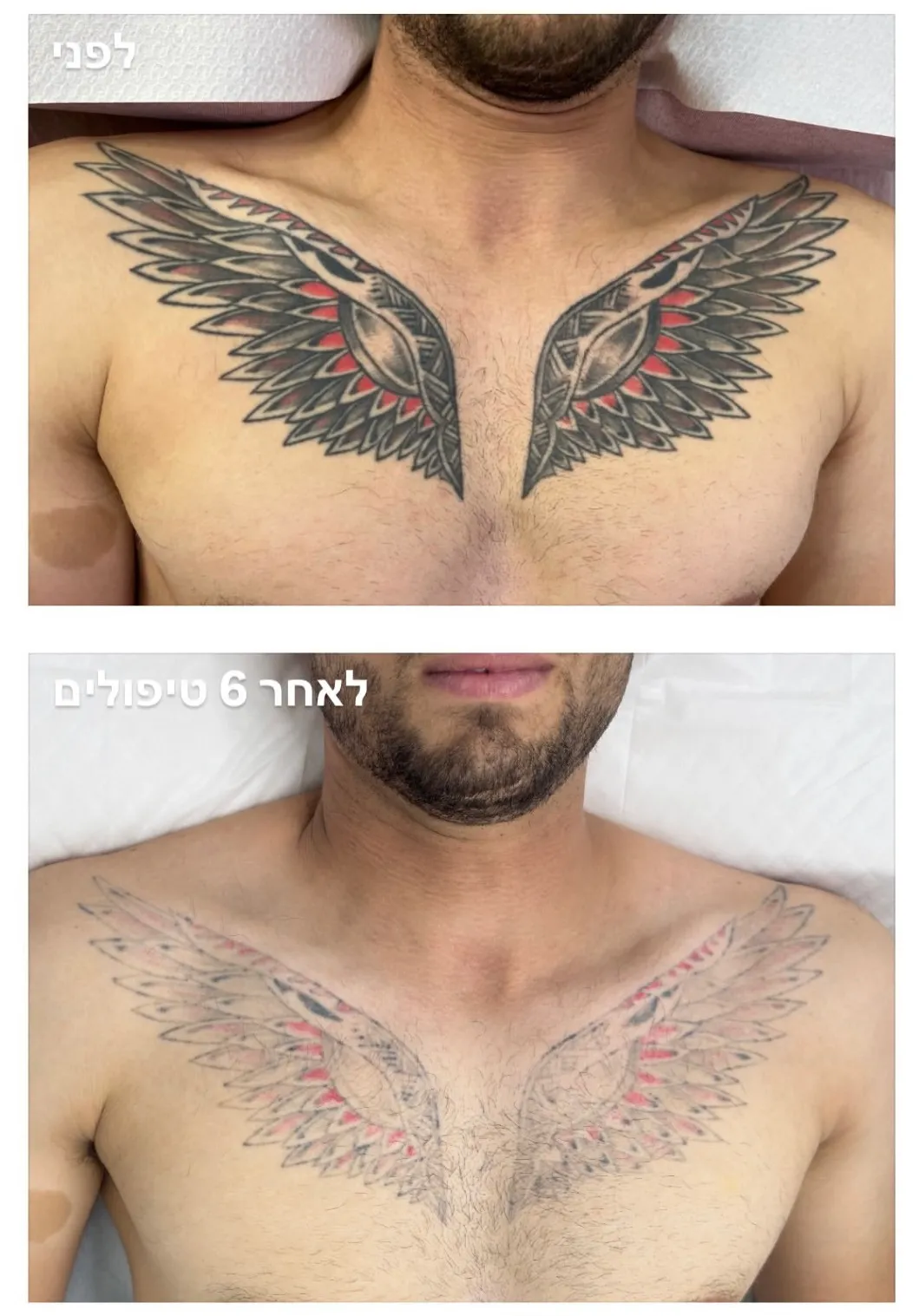
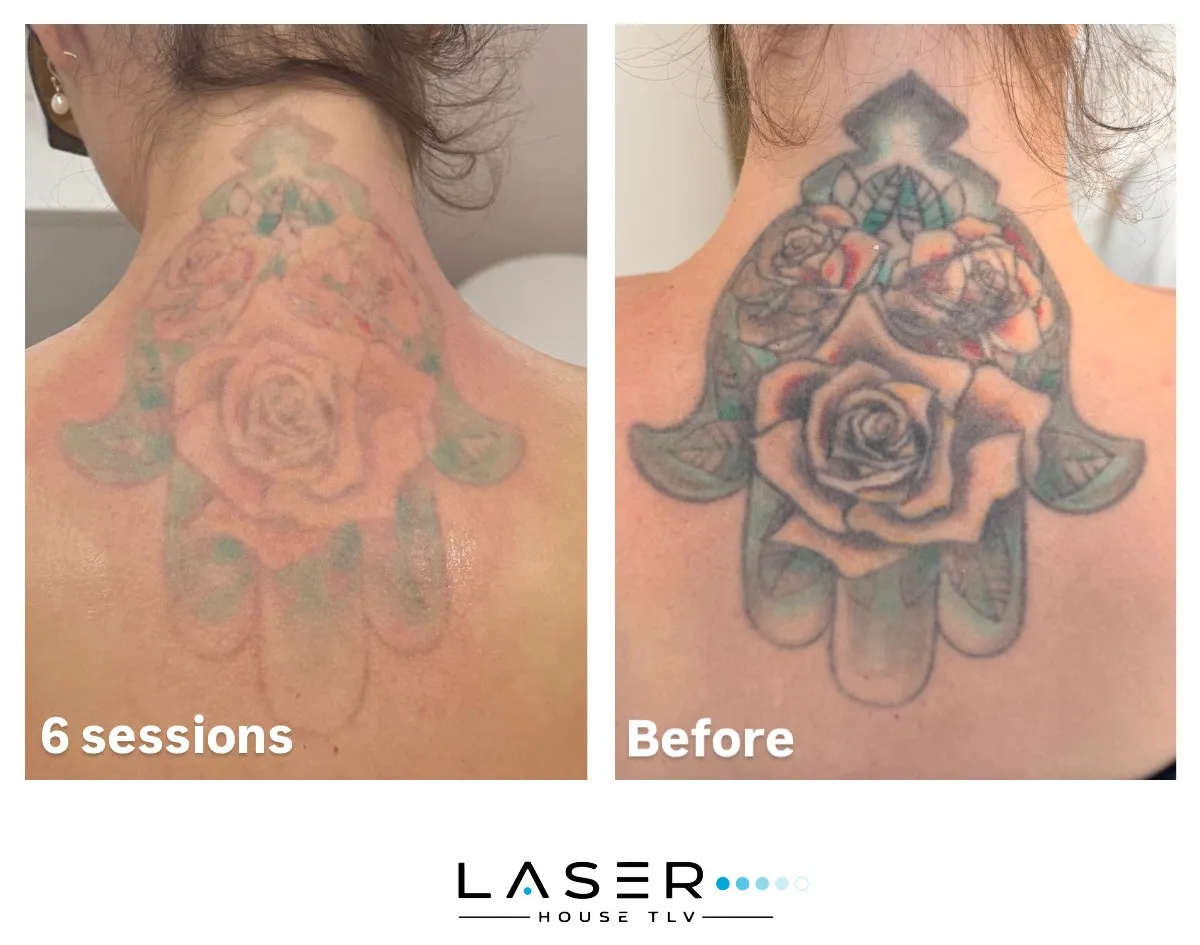
Coloured tattoos need an individual plan
A colour name alone does not describe an ink’s chemistry. Different formulations and mixtures can respond differently, even when two tattoos look similar. Wavelength selection and the response of the skin and pigment guide the plan, so the timeline cannot be promised from colour alone.
Three separate coloured-tattoo cases after 5, 6 and 4 sessions. Treatment is ongoing: these progress photographs document fading and the visible appearance of the skin in these cases. They do not promise that every colour will clear. In the third comparison, the view after four sessions is on the left.
Cover-up tattoos: removal or lightening for a new design
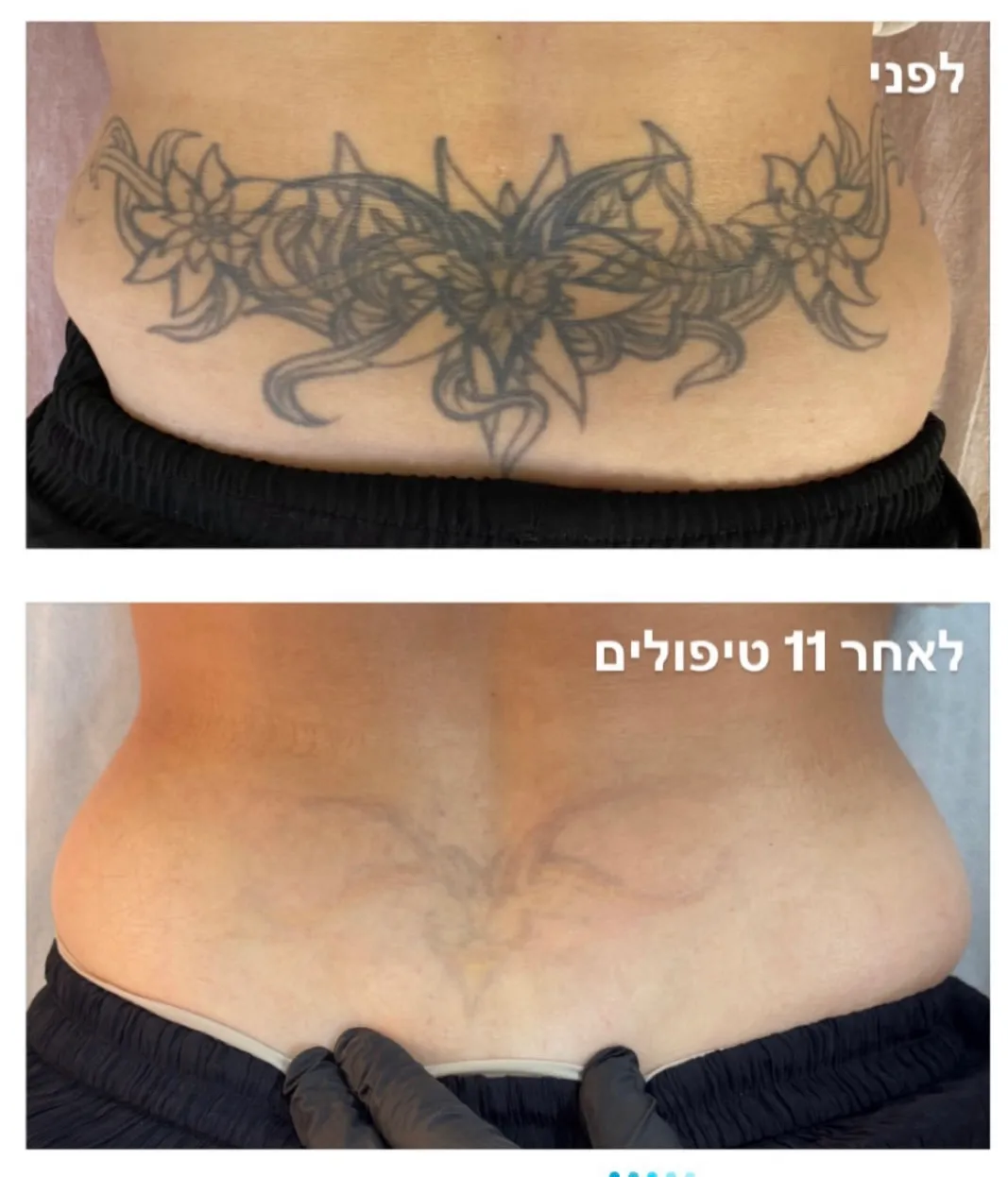
As the pigment in a cover-up fades, lines from the older design may become visible again. The old ink does not physically rise to the skin’s surface: it becomes easier to see as the covering pigment fades. Another goal may be enough lightening for a new tattoo rather than maximum removal. Agree that goal with the laser practitioner and tattoo artist after assessment of the skin and remaining ink.
When there is scarring or a change in texture
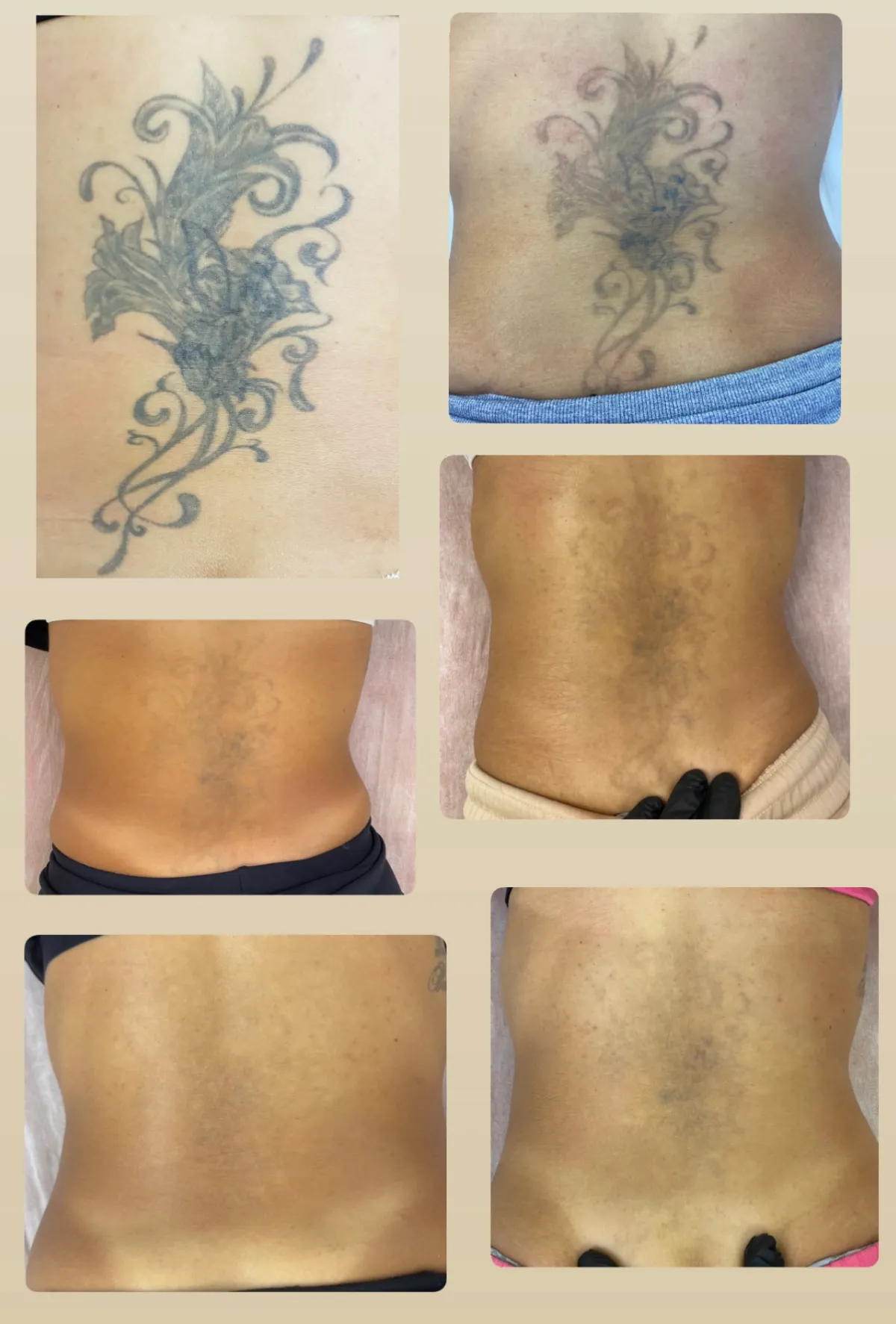
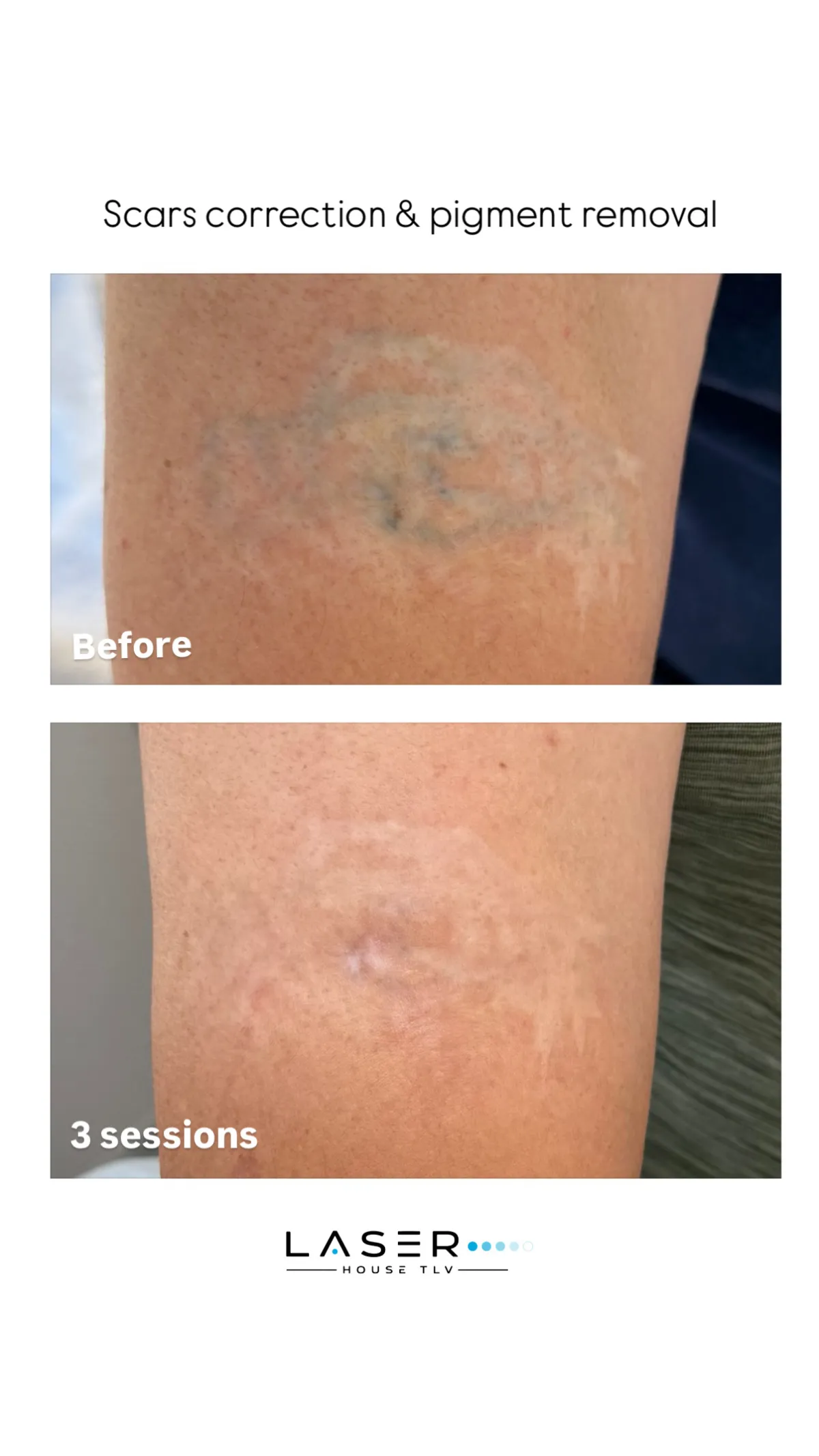
Remaining ink and a scar are different treatment questions. We assess the skin, its texture and any residual pigment before choosing an approach. This also applies when most of a tattoo was removed elsewhere and the person is now seeking improvement in the appearance or texture of the area.
Depending on the assessment, options may include fractional treatment with Quanta System 8DF or Er:YAG. These approaches are selected individually; they are not interchangeable with pigment removal, suitable for every scar or a guarantee of completely smooth skin.
Types of scars and treatment considerations · Fractional Quanta System 8DF · Er:YAG and skin changes after tattoo removal
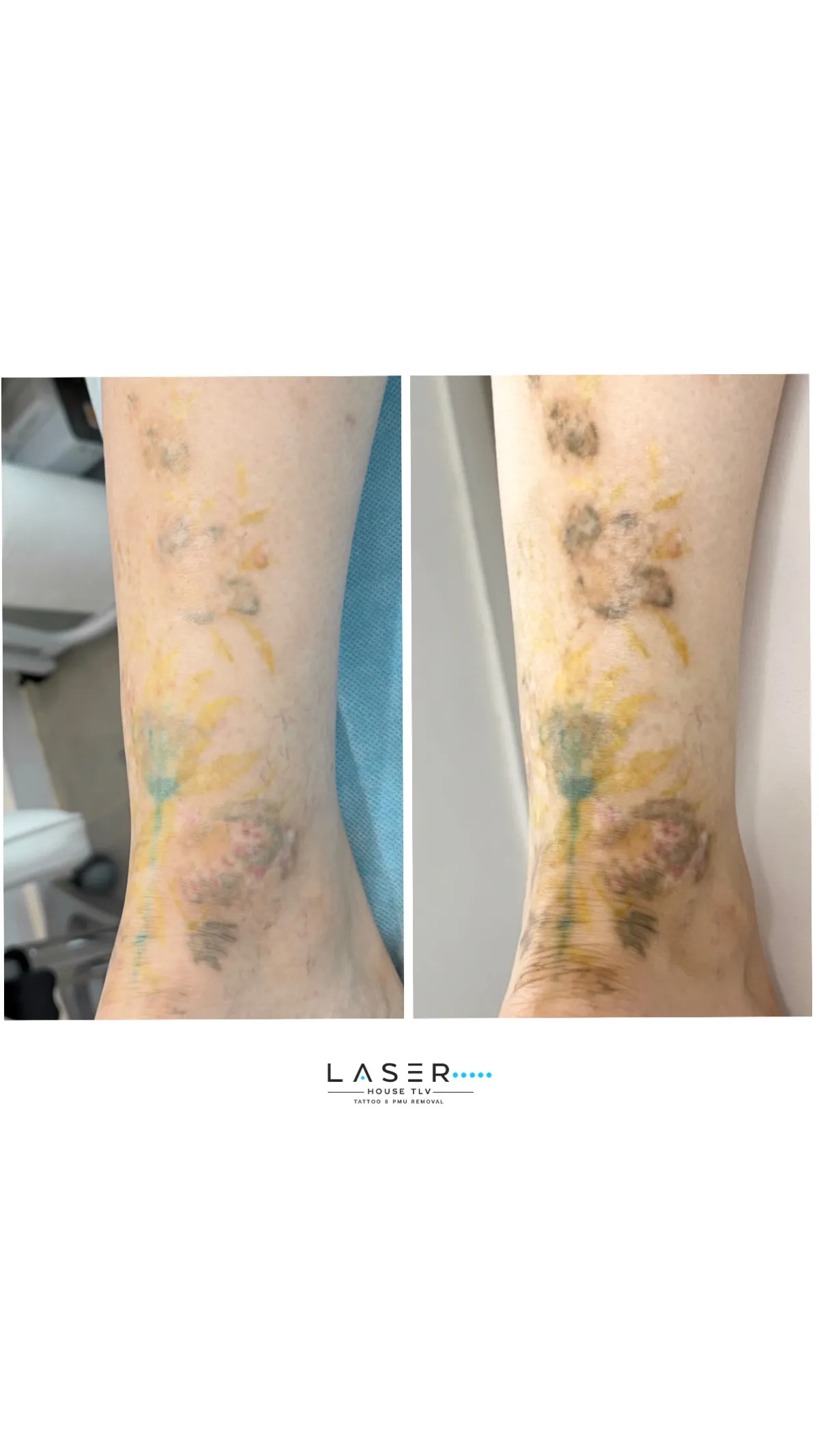
In the first two photographs, the patient came to Laser House TLV with scarring following unsuccessful tattoo removal at another clinic. We are treating the scar texture and remaining coloured pigment. The third example also shows ongoing treatment. These are progress photographs, not final results.

Understand the possible outcomes before starting
Some inks containing white or pale components can become grey or black after laser exposure because of chemical changes in the pigment. This does not happen to every such ink. Some yellow pigments respond to treatment; others fade poorly or remain. A change in colour may require reassessment, and complete clearance cannot be guaranteed.
Changes in the skin’s own colour are a separate issue: hypopigmentation means lighter skin, while hyperpigmentation means darker skin. These changes may improve over time but can persist. Burns, changes in texture and scarring are also possible risks to discuss before treatment.
A useful consultation considers your goal, the condition of the skin, the likely course and its limits. You should be able to make an informed decision without a promise that every tattoo will disappear completely or by a particular date.
Near the end of treatment
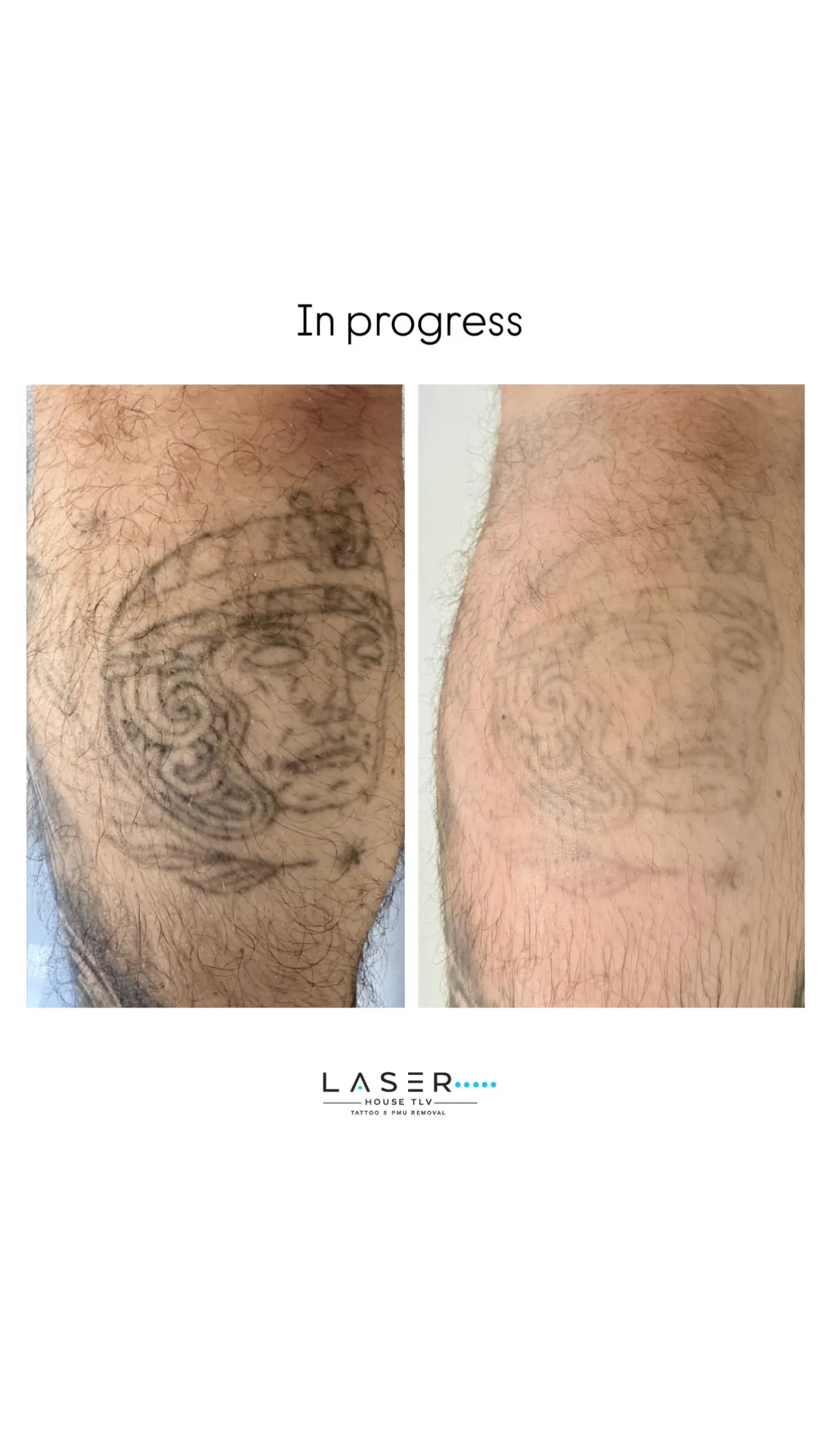
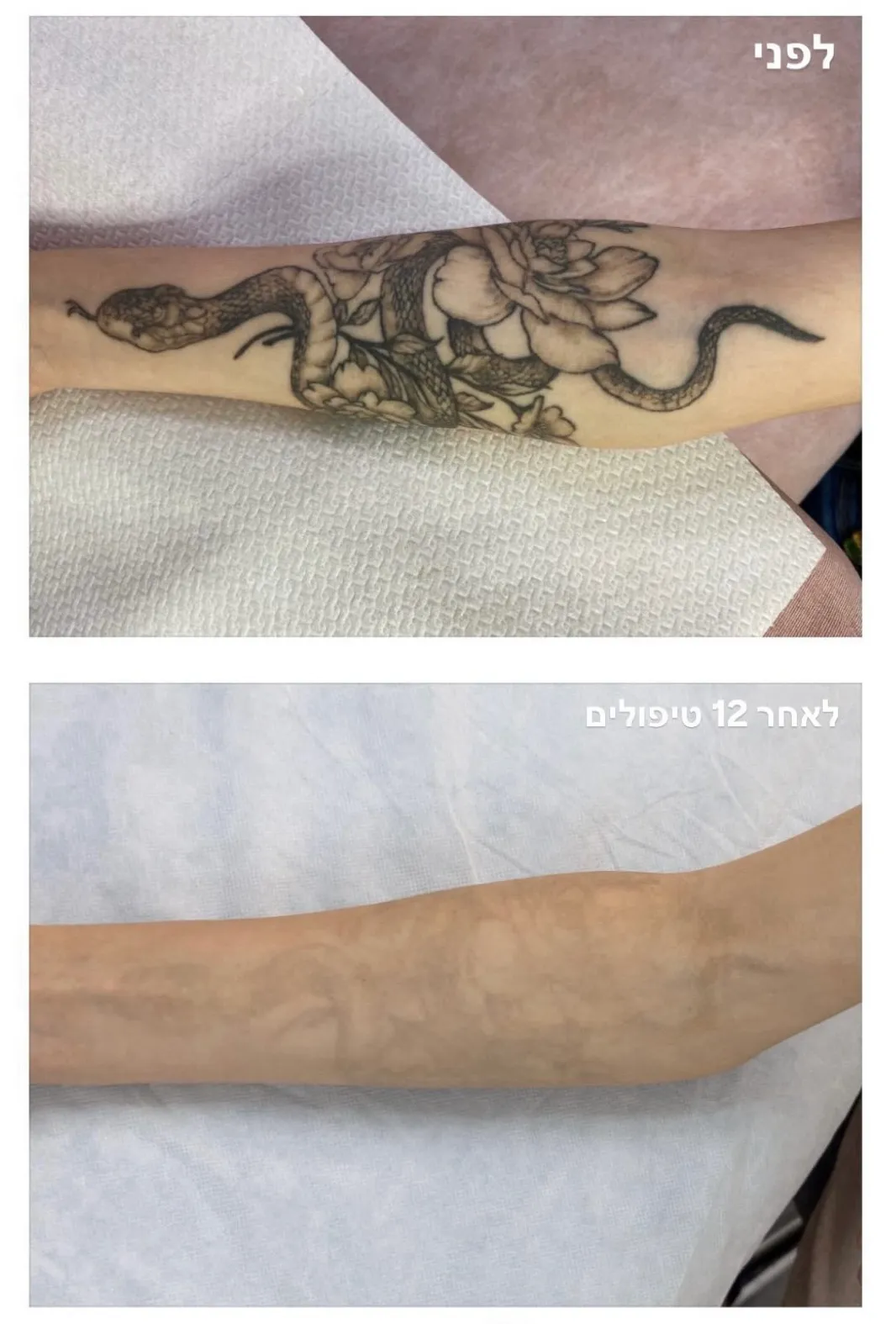
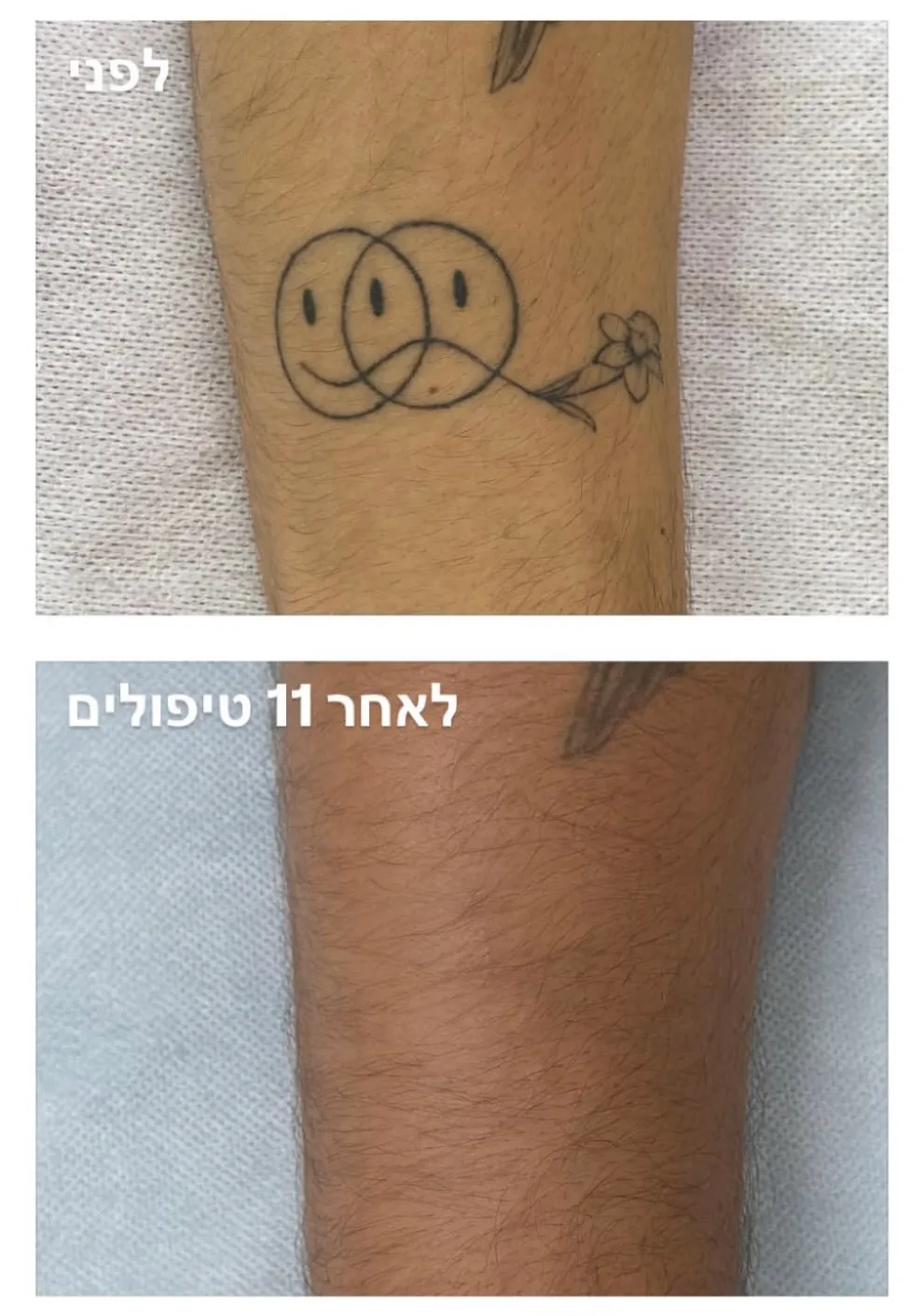
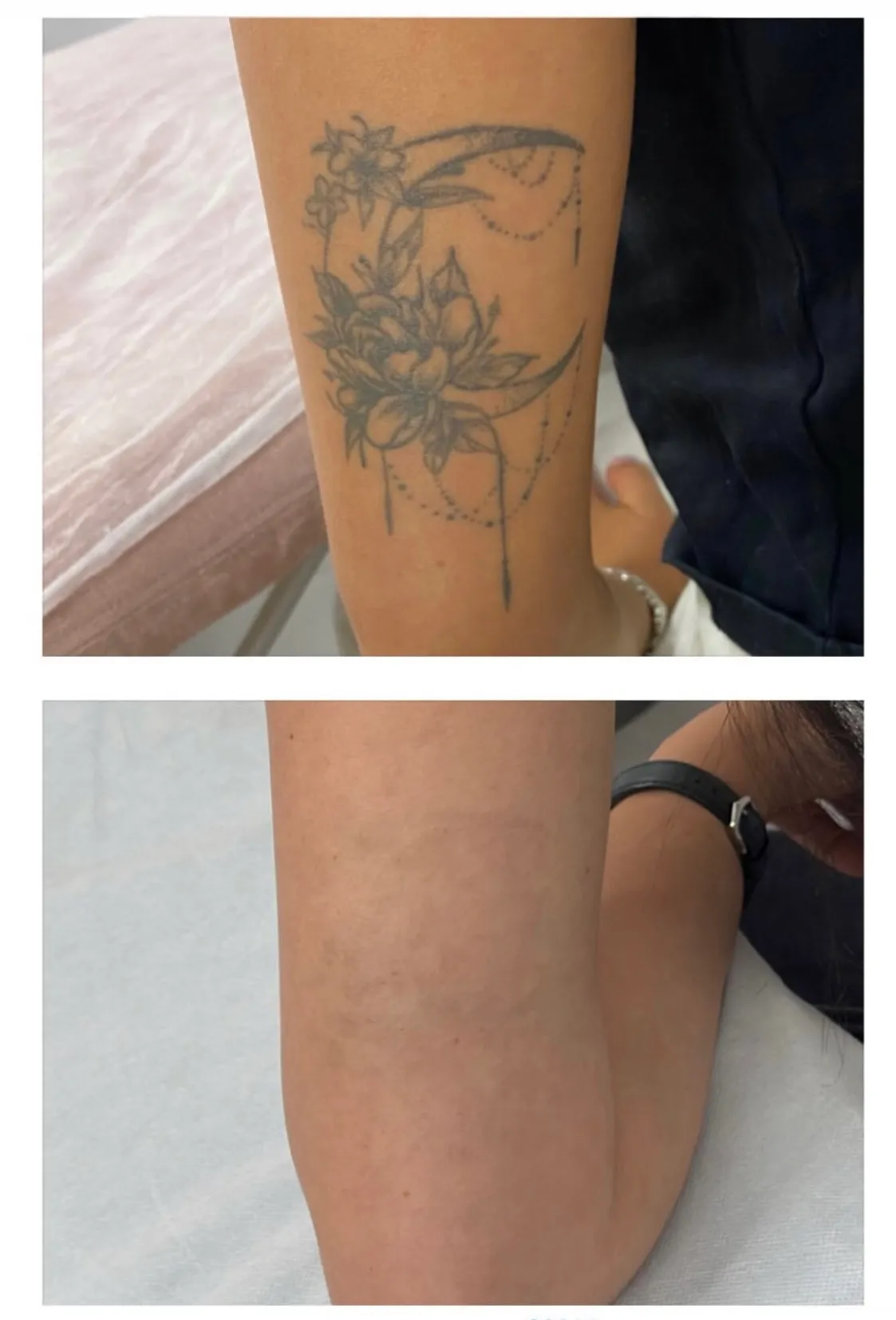
These four cases are still in progress. The practitioner’s current estimate is that one or two further sessions may be needed. This is an estimate, not a guarantee; the next steps depend on the remaining pigment and the skin’s response.
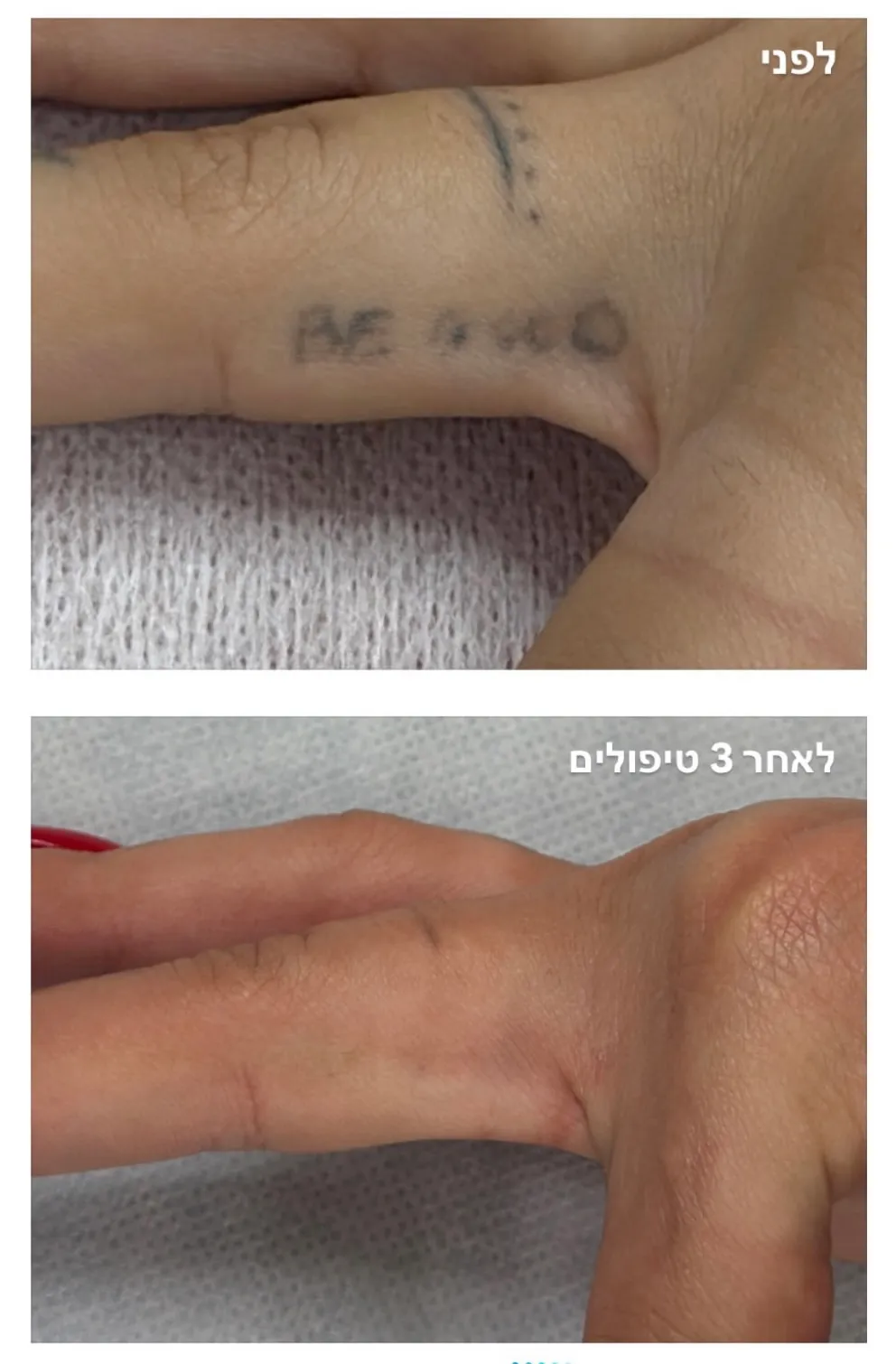
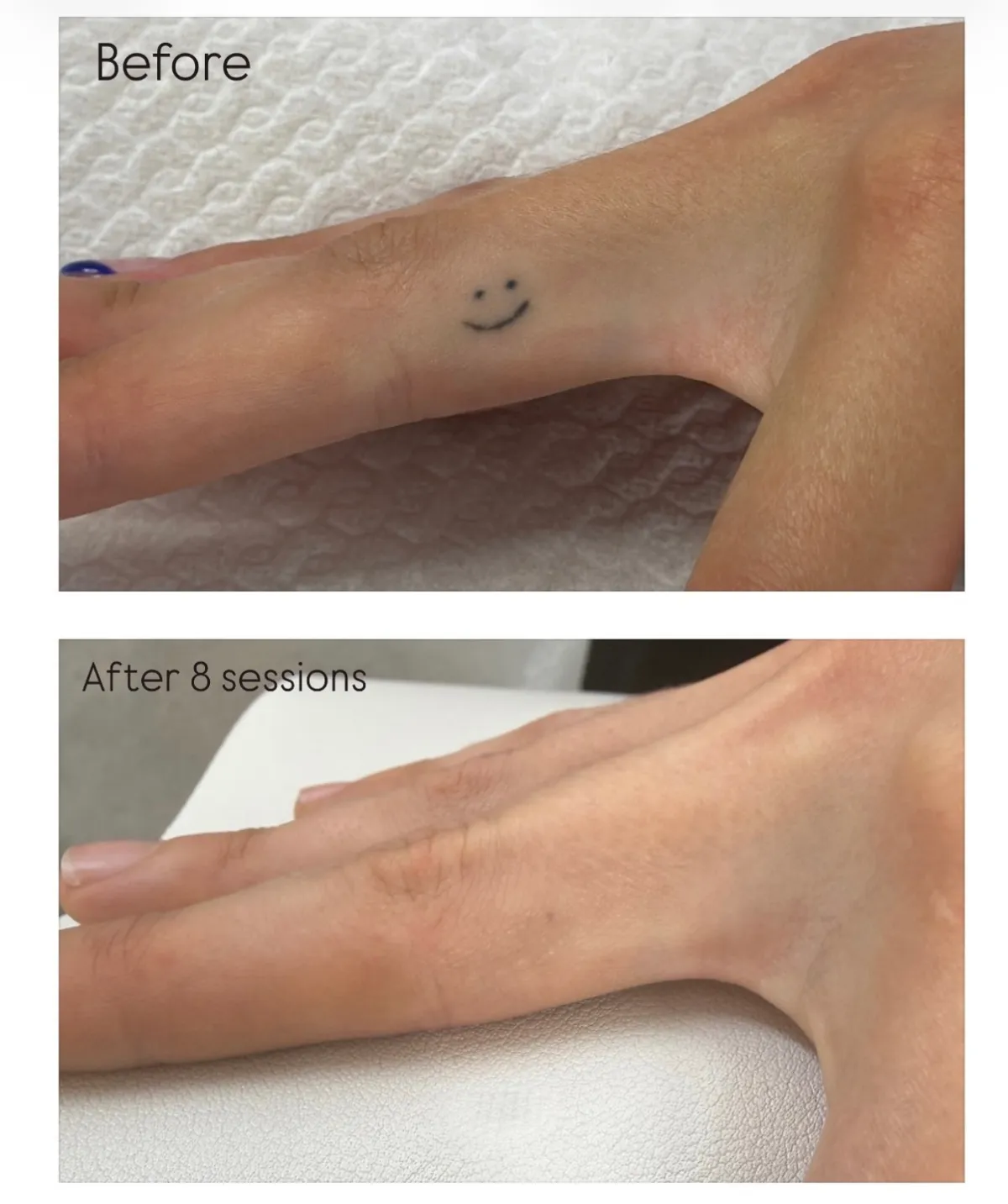
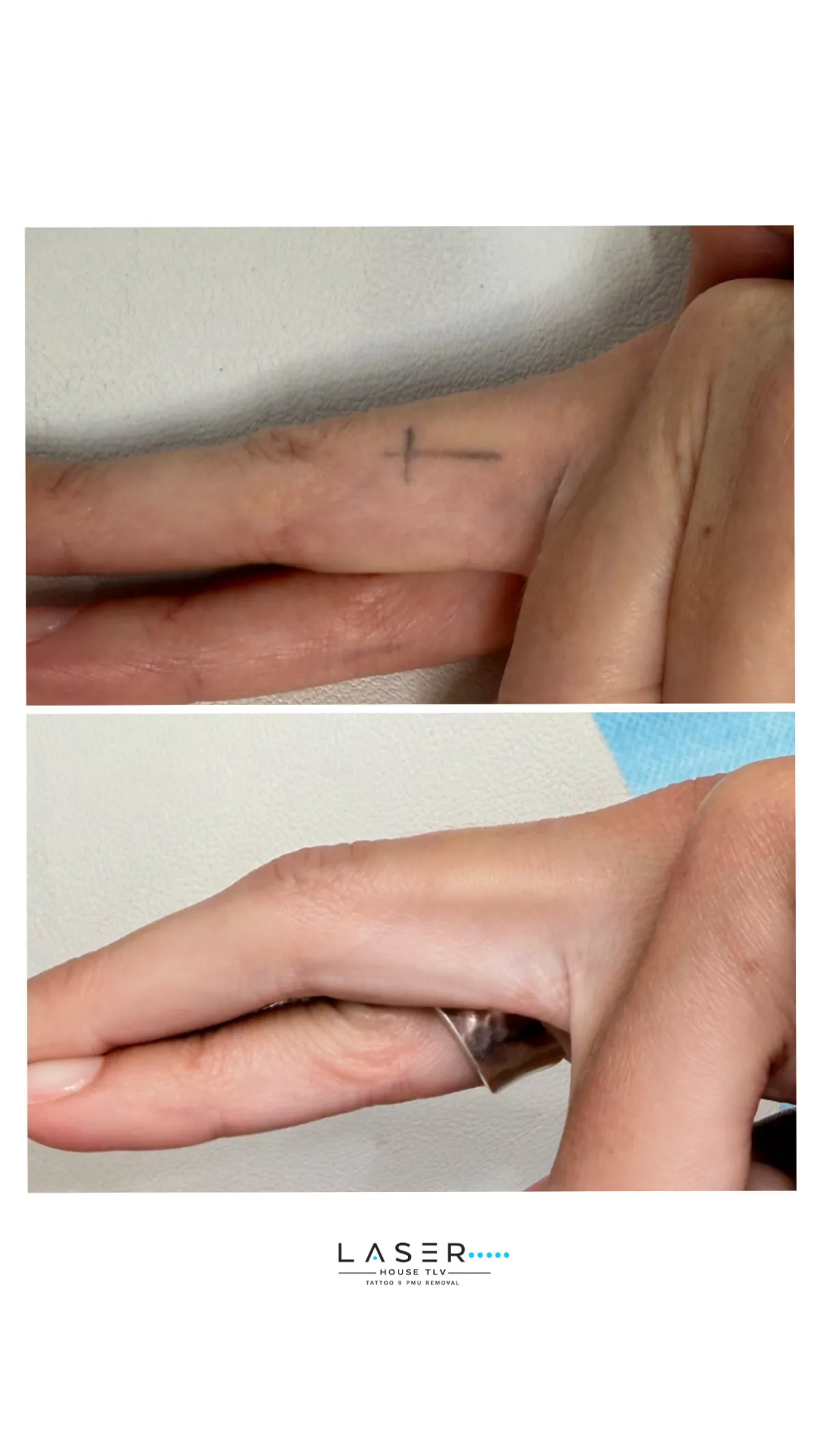
Small finger tattoos: completed cases
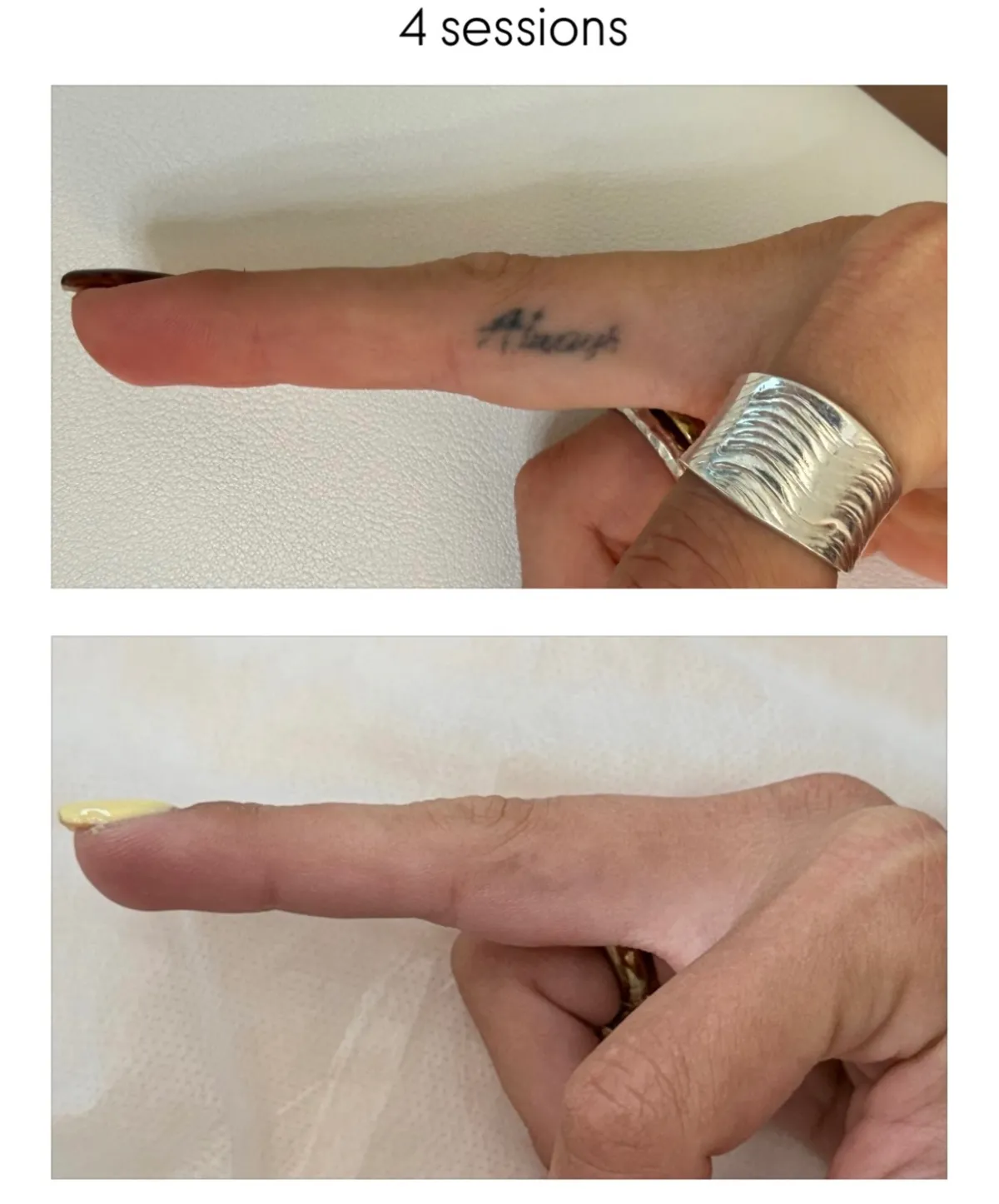
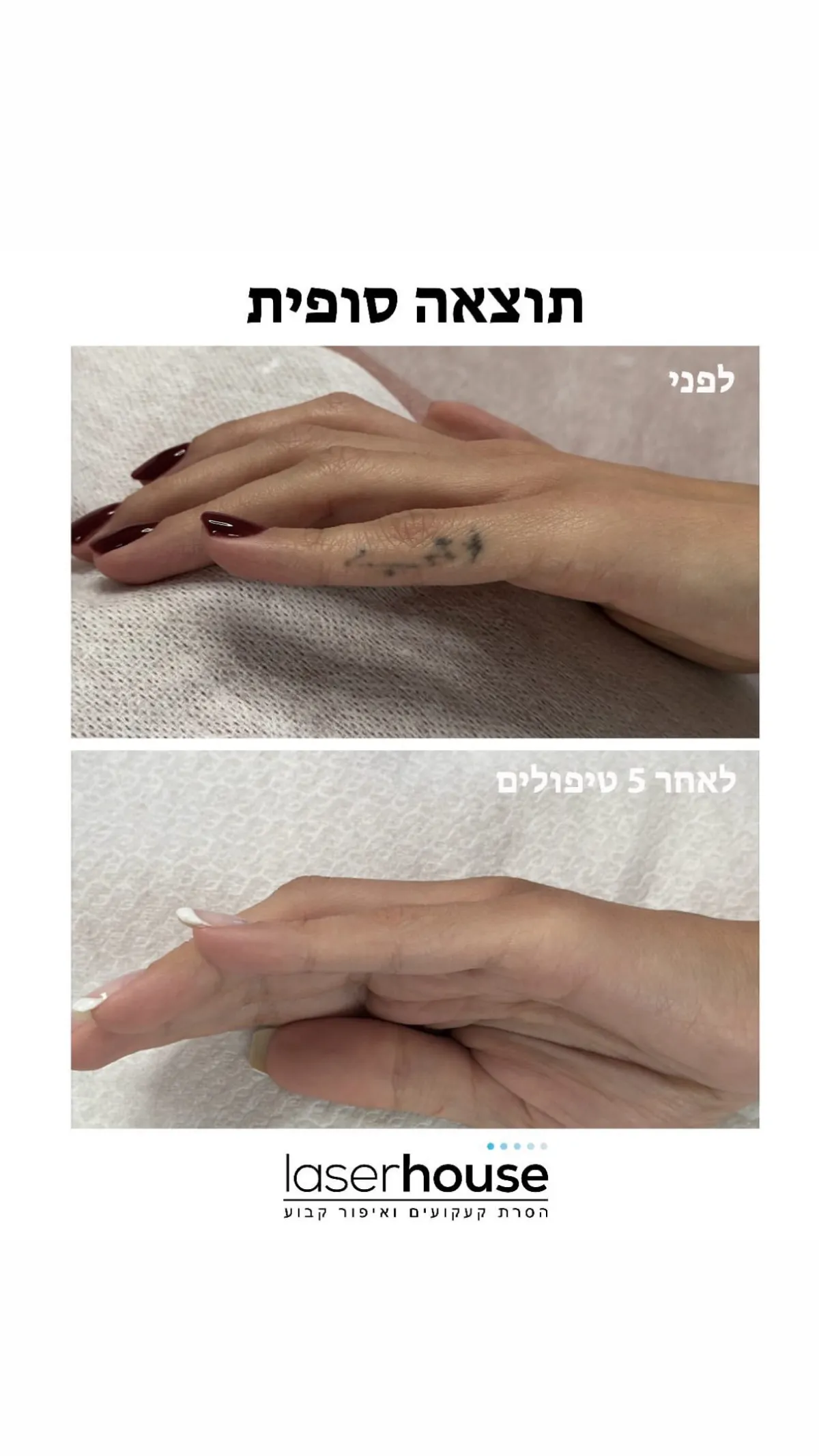
Even a tiny dot or a small line on a finger does not guarantee removal in one session. The clinic has confirmed these four cases as completed. Counts apply to each case individually. The first comparison is labelled 4 sessions.
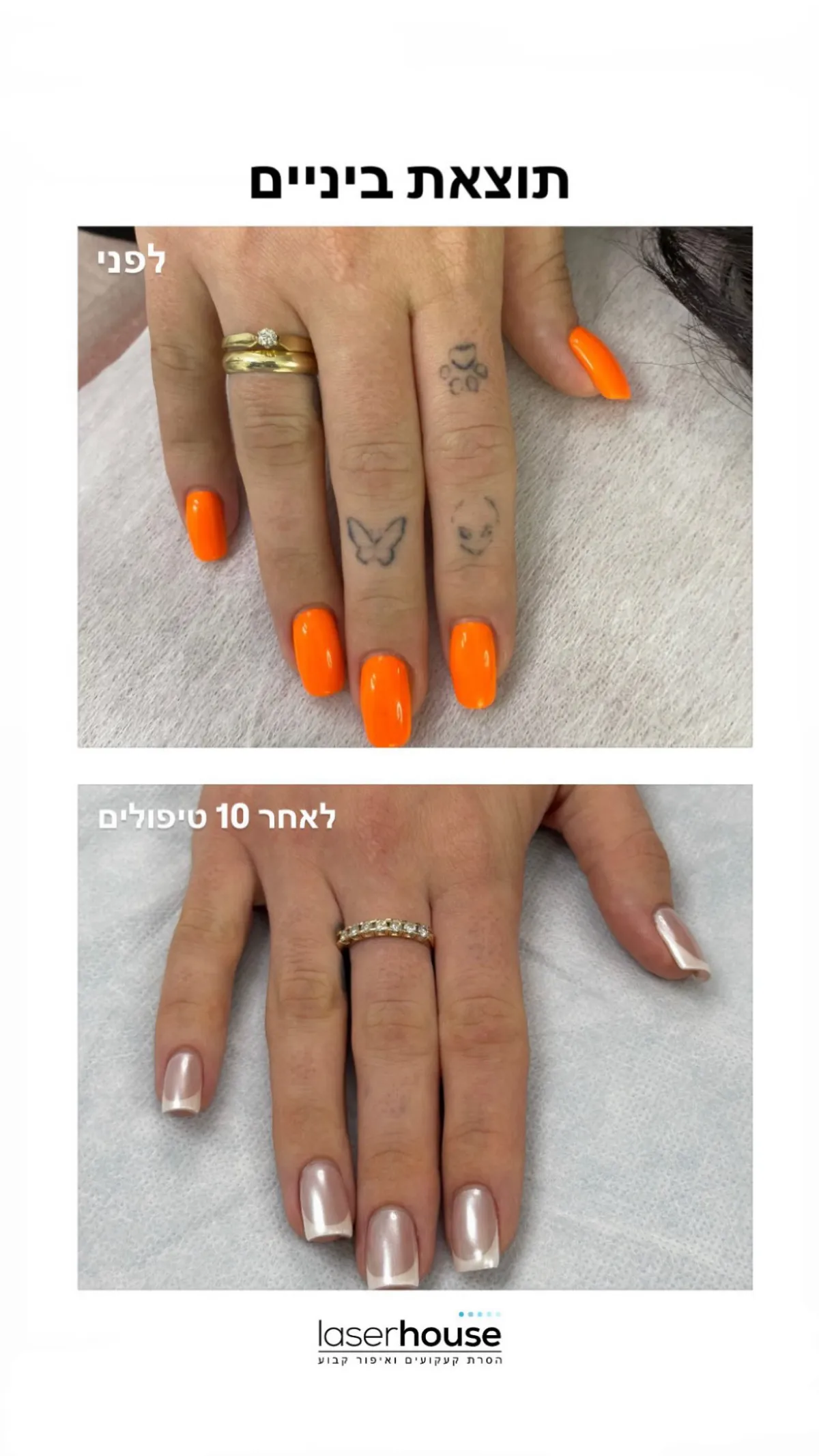
Hands and fingers: four more completed cases
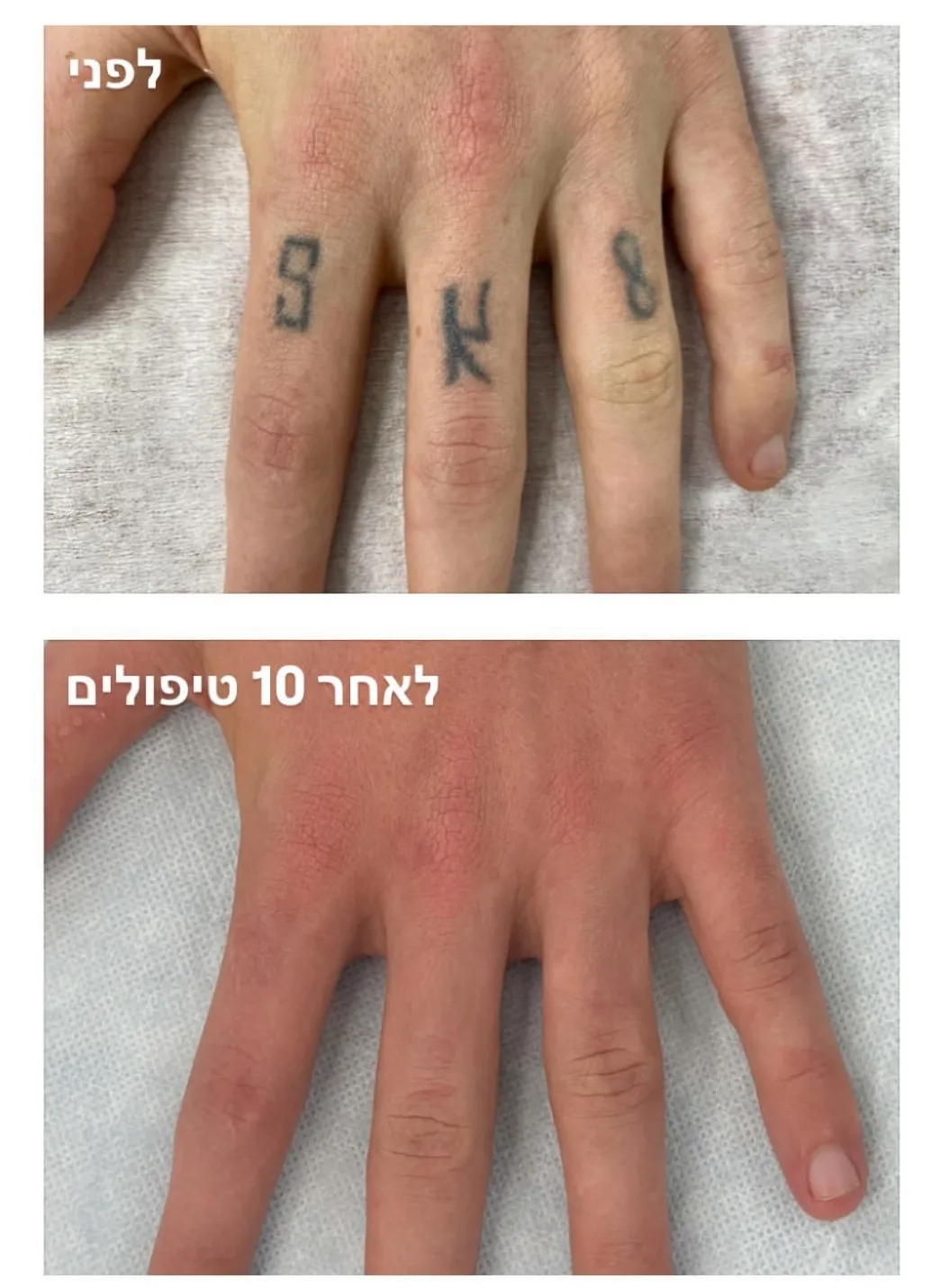
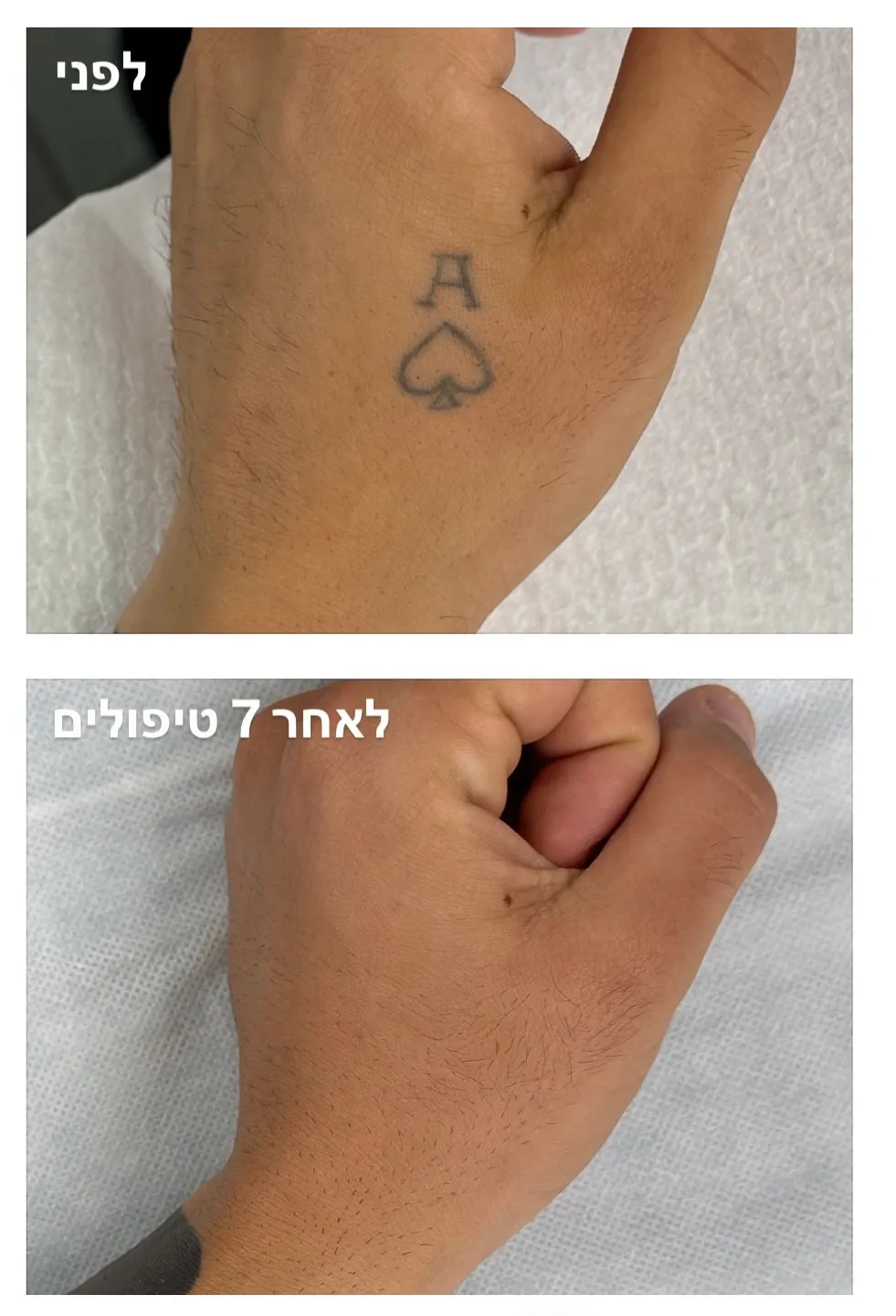
The clinic reports these cases as completed after 10, 10, 5 and 7 sessions respectively. The first comparison image carries an earlier label identifying it as an interim result. They show why a small treatment area can still need multiple visits; they do not establish a fixed count for another tattoo.
Equipment at the clinic
Final Result
Discuss your tattoo with Laser House TLV
Send a clear photograph for an initial conversation about your tattoo and your goals. An in-person assessment helps establish suitability and pricing. Photographs alone cannot confirm the ink formulation, exact session count or final outcome.