Fractional Laser for Scars and Difficult Tattoo Removal: How Quanta System 8DF Works
Fractional Laser for Scars and Difficult Tattoo Removal: How Quanta System 8DF Works
Tattoo removal is not always only about pigment.
In some cases, especially after multiple previous treatments, aggressive laser sessions or unsuccessful tattoo removal, the skin itself may become uneven, firm, scarred or fibrotic. When this happens, simply continuing to target the remaining ink may not be enough.
This is where fractional laser technology can become an important part of the treatment strategy.
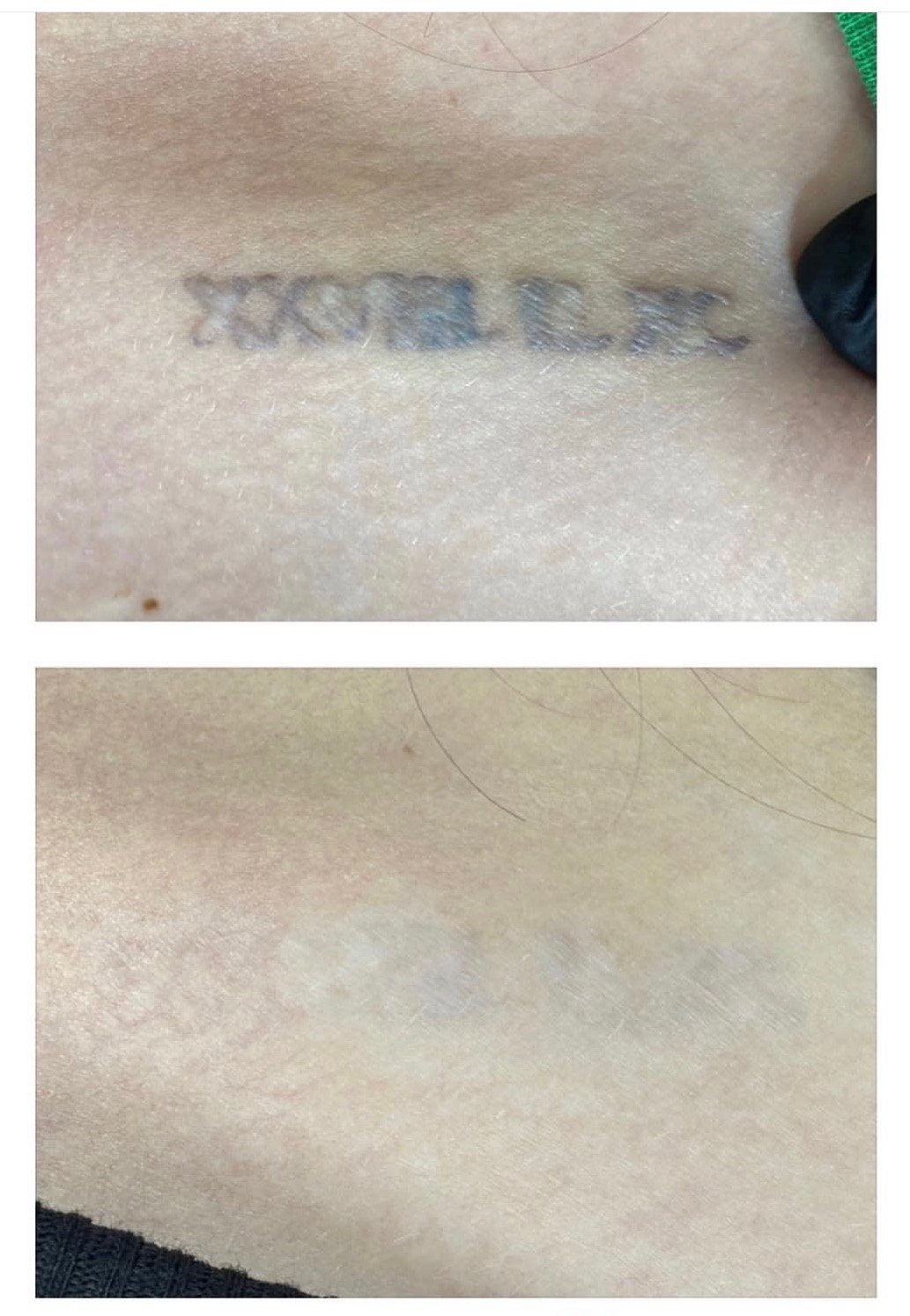
At Laser House TLV, fractional technology can be used in selected cases to improve skin texture, support scar remodeling and work with difficult or resistant tattoo removal cases.
Video Fractional laser 8DF
What is the Quanta System 8DF Fractional Handpiece?
The 8DF Fractional Handpiece by Quanta System is designed for fractional skin treatment.
According to Quanta System, its treatment applications include traumatic and acne scars, skin resurfacing, skin rejuvenation and resistant tattoo removal.
Unlike a standard tattoo removal handpiece that treats pigment directly, the 8DF works by dividing the laser energy into multiple microscopic treatment points.
This creates a fractional pattern across the skin rather than treating the entire surface continuously.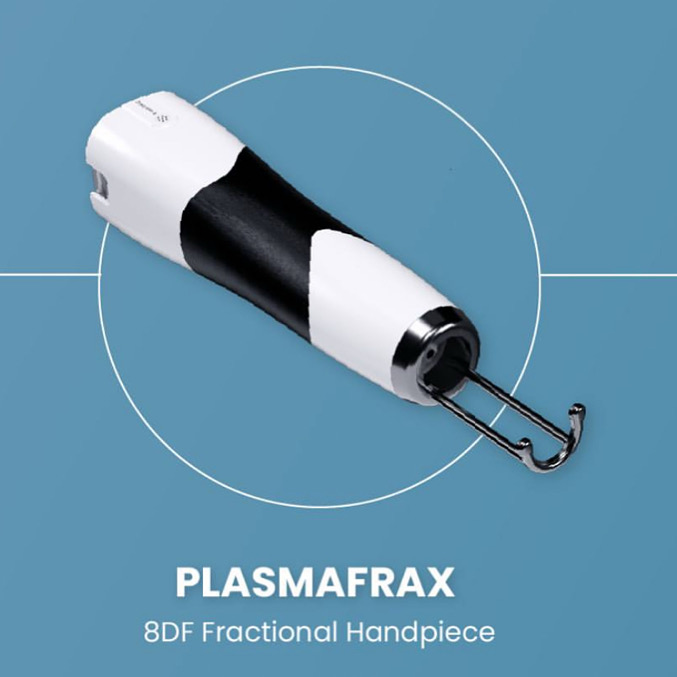
Why Can Tattoo Removal Stop Working After Many Sessions?
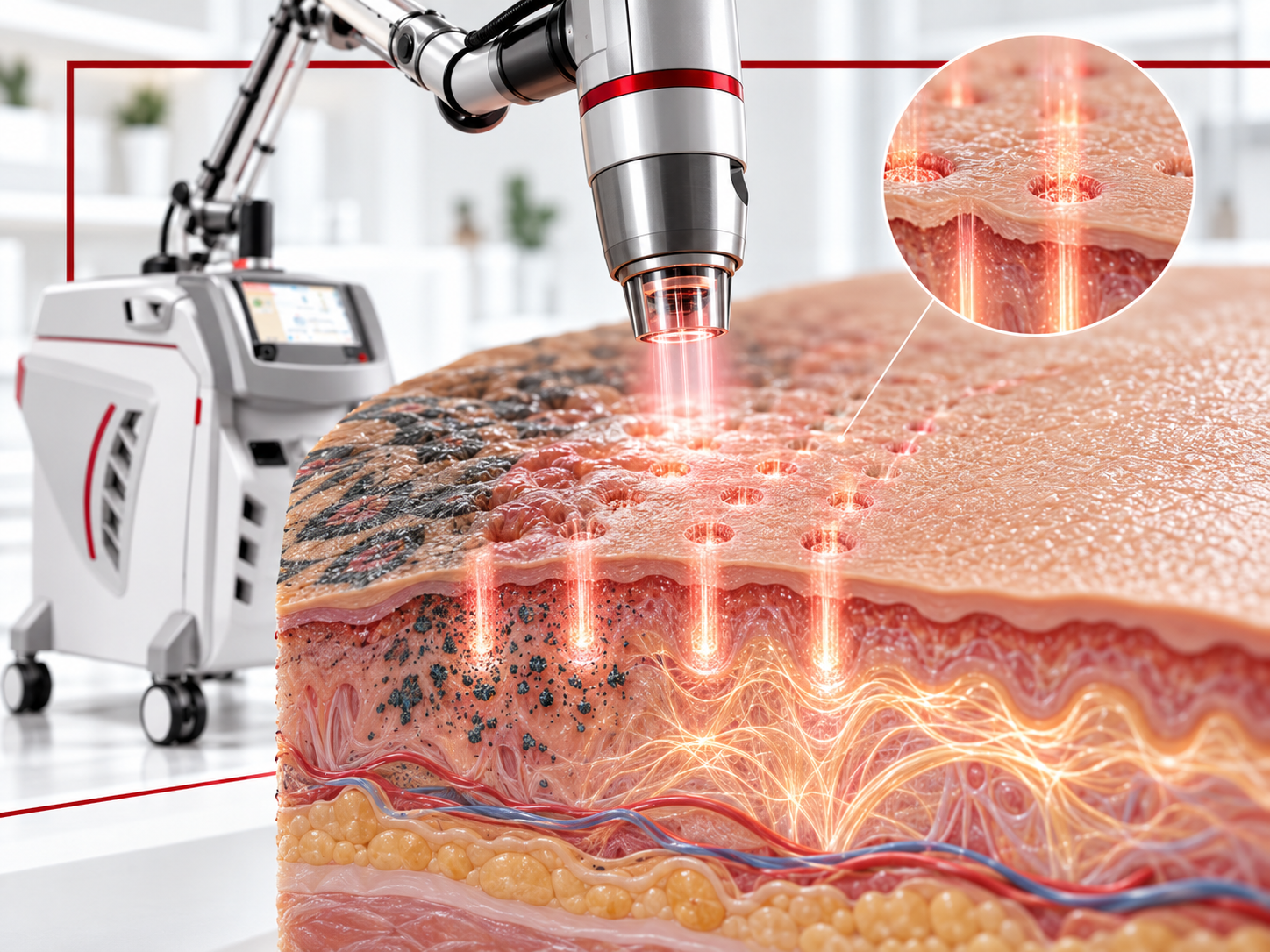
How does fractional laser treatment work?
Fractional laser energy creates many controlled microscopic treatment zones in the skin.
Between these treated areas, portions of untreated skin remain intact.
This fractional approach allows the skin to begin a controlled repair response while preserving surrounding tissue.
The result is stimulation of skin remodeling and collagen production.
Over time, the treated area may become softer, smoother and more even in texture.
This is especially useful when the problem is no longer only tattoo pigment but also the quality and structure of the skin.
Why can fractional treatment help after unsuccessful tattoo removal?
After repeated or overly aggressive tattoo removal treatments, some patients may develop changes in the skin such as:
Uneven texture
Fibrotic or firm tissue
Raised or irregular areas
Residual scarring
Reduced skin elasticity
Persistent pigment inside altered tissue
In these situations, the remaining ink may be located inside tissue that is no longer completely normal.
Continuing to repeatedly treat only the pigment may not address the structural problem.
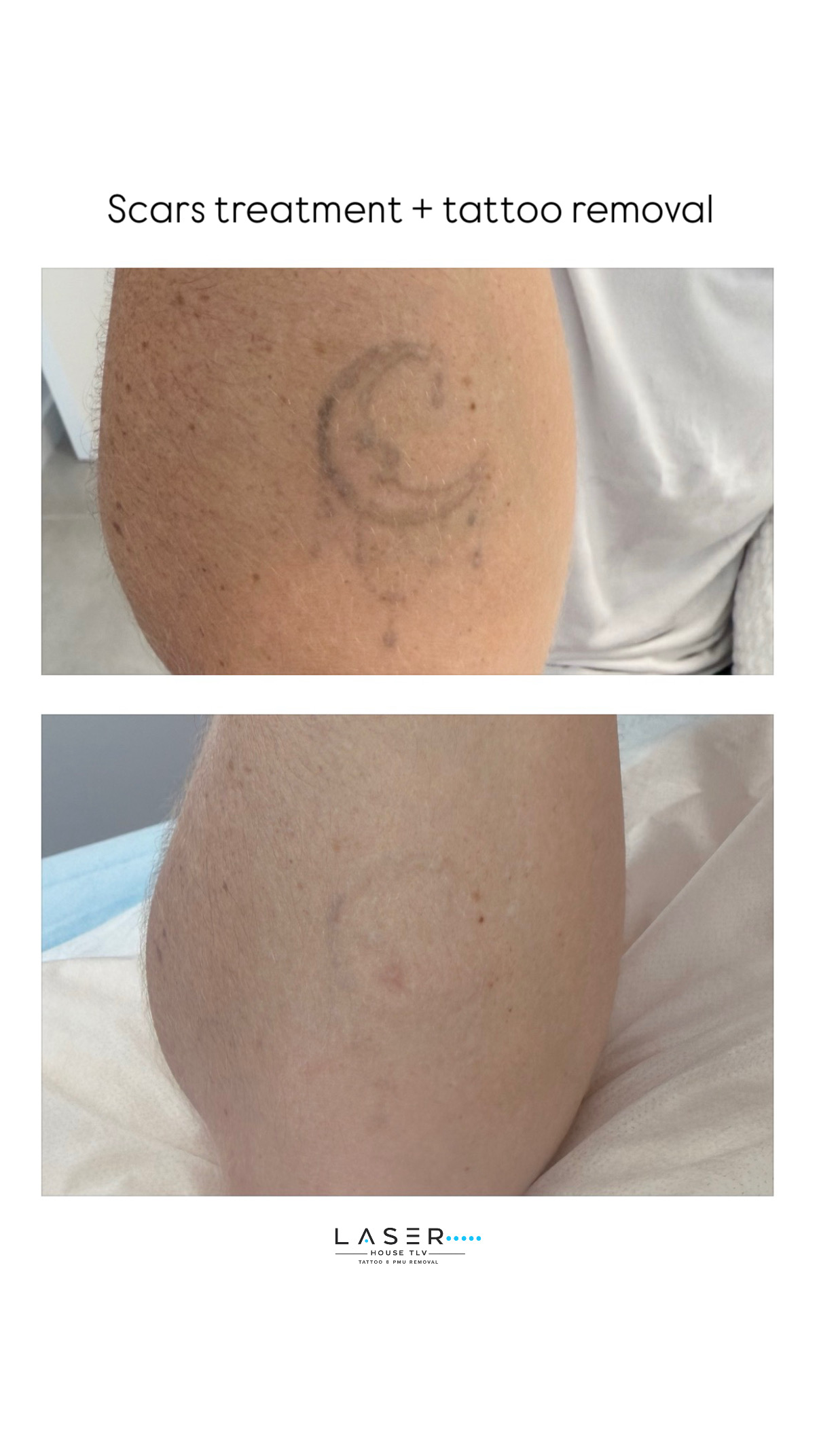
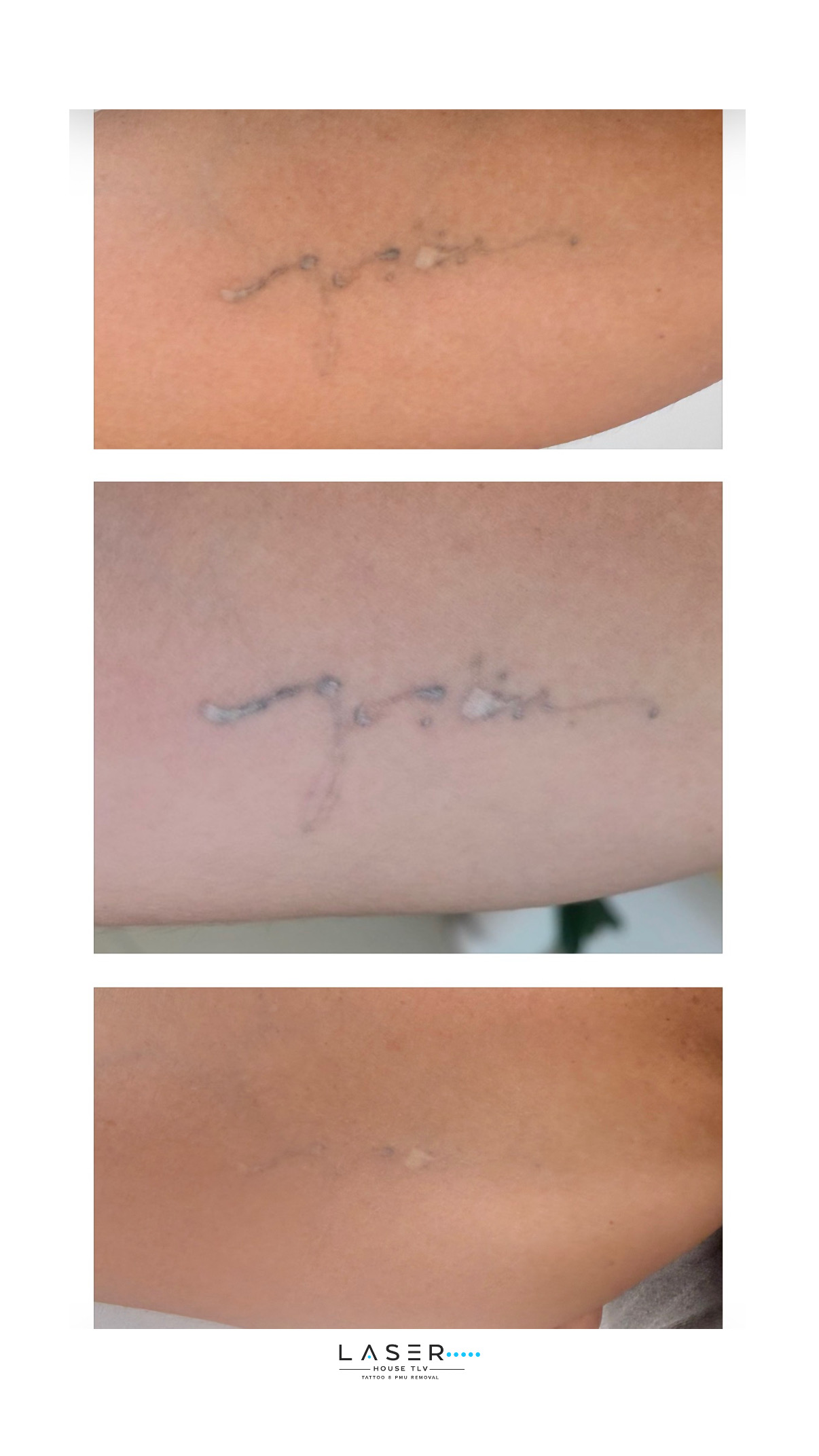
Fractional treatment allows us to focus on the skin itself.
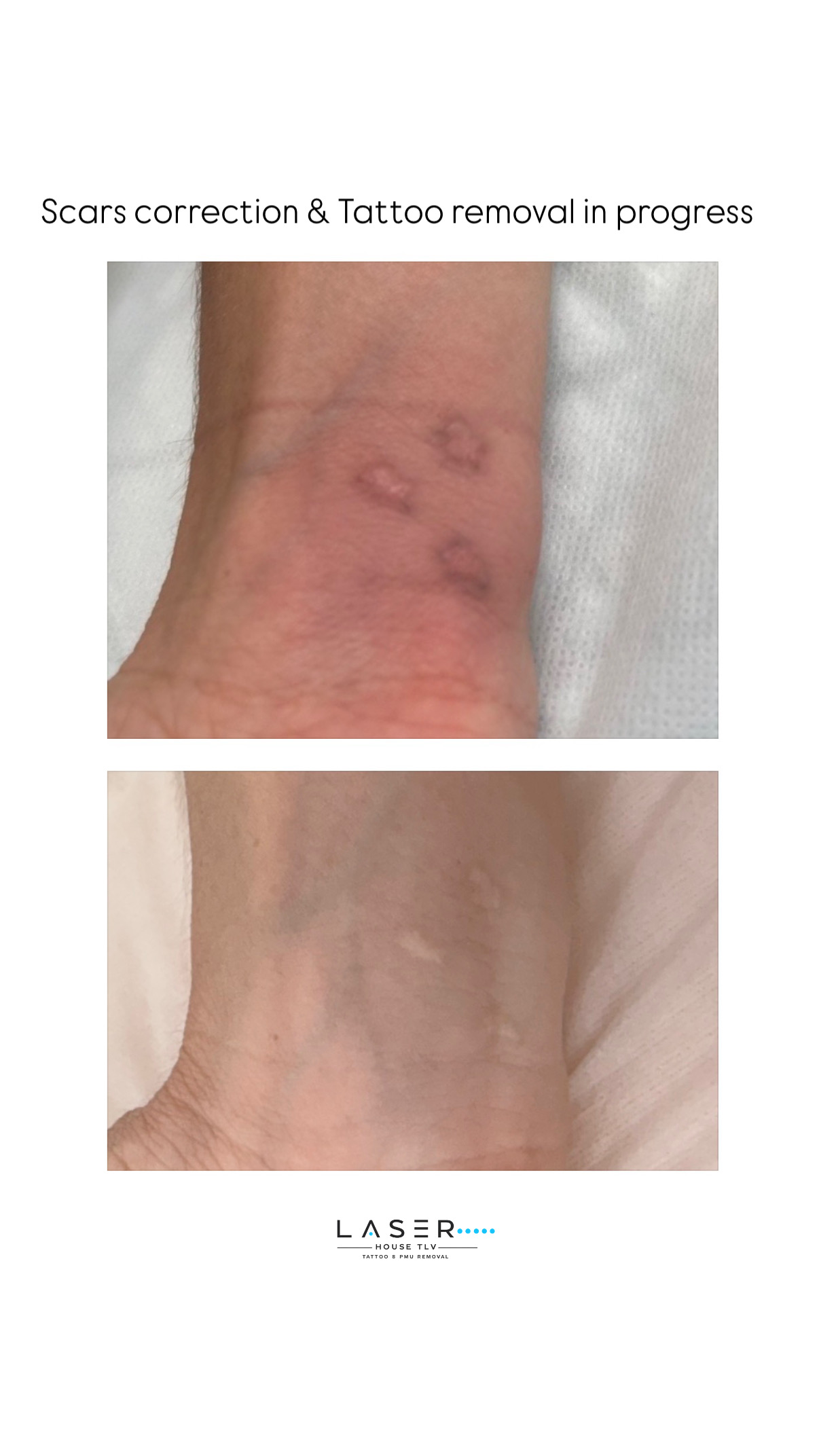
By creating controlled microscopic treatment zones, the goal is to support tissue remodeling and improve the quality of the area before or alongside further pigment removal.
 |
 |
 |
Fractional laser and resistant tattoo pigment
Quanta System specifically lists resistant tattoo removal among the applications of its Fractional DF technology.
This does not mean that fractional laser replaces traditional tattoo removal wavelengths.
Black, red, blue, green and other pigments still require the correct laser wavelength to target the ink itself.
For example, tattoo removal may involve wavelengths such as:
1064 nm for black and dark pigment
532 nm for selected red and warm pigments
694 nm Ruby laser for selected blue, green and resistant pigments
The fractional handpiece has a different role.
It can be used when altered skin structure, scarring or resistant tissue is part of the reason the tattoo is responding poorly.
Why is scar tissue different from normal skin?
Scar tissue is structurally different from healthy skin.
Collagen fibers may be arranged irregularly, the tissue may be denser, circulation can be different and the skin may respond differently to laser energy.
This is why a tattoo located inside scarred or fibrotic tissue can sometimes behave differently from a tattoo in normal skin.
Before continuing aggressive pigment treatment, it may be more appropriate to improve the condition of the tissue first.
The goal is not simply to apply more energy.
The goal is to create a safer and more controlled treatment plan based on both the pigment and the condition of the skin.
What effect can fractional laser have on scarred skin?
Fractional treatment is designed to stimulate remodeling within the skin.
Depending on the type and condition of the scar, the treatment may help improve:
Skin texture
Surface irregularities
Firm or fibrotic tissue
Overall smoothness
Scar appearance
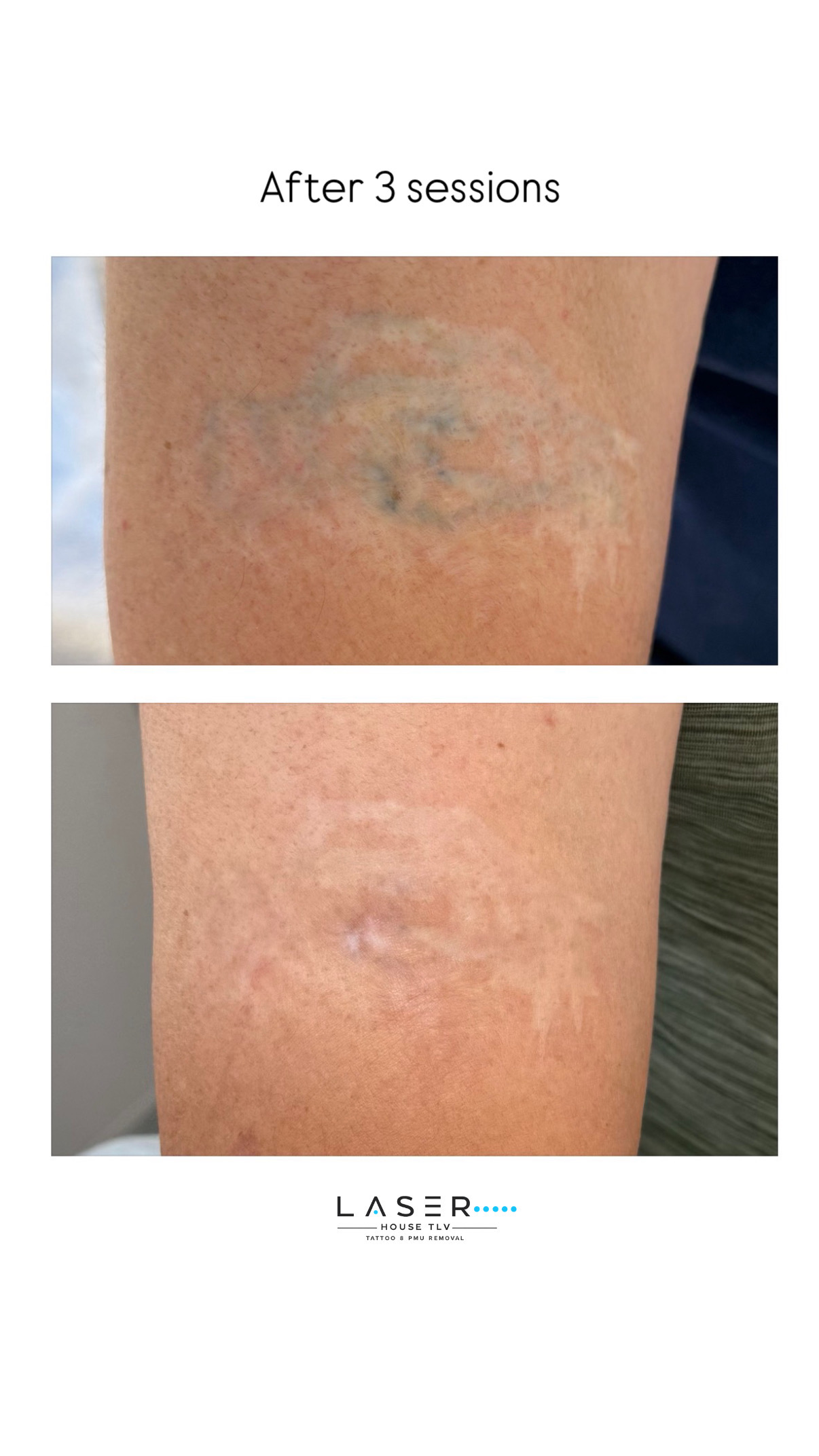
Skin quality in areas previously treated with tattoo removal lasers
The improvement is gradual.
Fractional laser does not erase a scar immediately. The skin continues to remodel after the procedure as collagen organization changes over time.
Is fractional laser the same as Er:YAG 2940 nm?
No.
Fractional 8DF treatment and Er:YAG 2940 nm are different technologies and can have different roles.
Er:YAG 2940 nm is strongly absorbed by water and is used for ablative skin resurfacing and scar treatment.
Quanta System lists its Twain 2940 Er:YAG handpiece for traumatic and acne scars, ablative dermatological procedures and skin resurfacing.
Er:YAG can remove microscopic layers of tissue and may be considered when more pronounced resurfacing is required.
Fractional 8DF works differently.
Its role is based on creating a pattern of microscopic treatment zones to stimulate tissue remodeling while leaving untreated skin between them.
The choice between technologies depends on the scar type, depth, activity, skin condition and treatment goal.
When can fractional treatment be considered?
Fractional laser may be considered in selected cases such as:
Scarred skin after previous tattoo removal
Uneven or fibrotic tattooed skin
Traumatic scars
Persistent texture changes after laser treatment
Resistant tattoos combined with altered skin structure
Areas where pigment remains inside scarred tissue
Skin resurfacing after unsuccessful tattoo removal
Every case must be assessed individually.
Can fractional laser remove a tattoo by itself?
Usually, this is not the main purpose.
The primary treatment for tattoo pigment remains pigment-specific laser technology.
Quanta System describes tattoo removal as a process in which short laser pulses fragment tattoo ink into smaller particles that are gradually processed by the body.
Fractional treatment is particularly useful when the clinical problem includes both remaining pigment and altered skin texture.
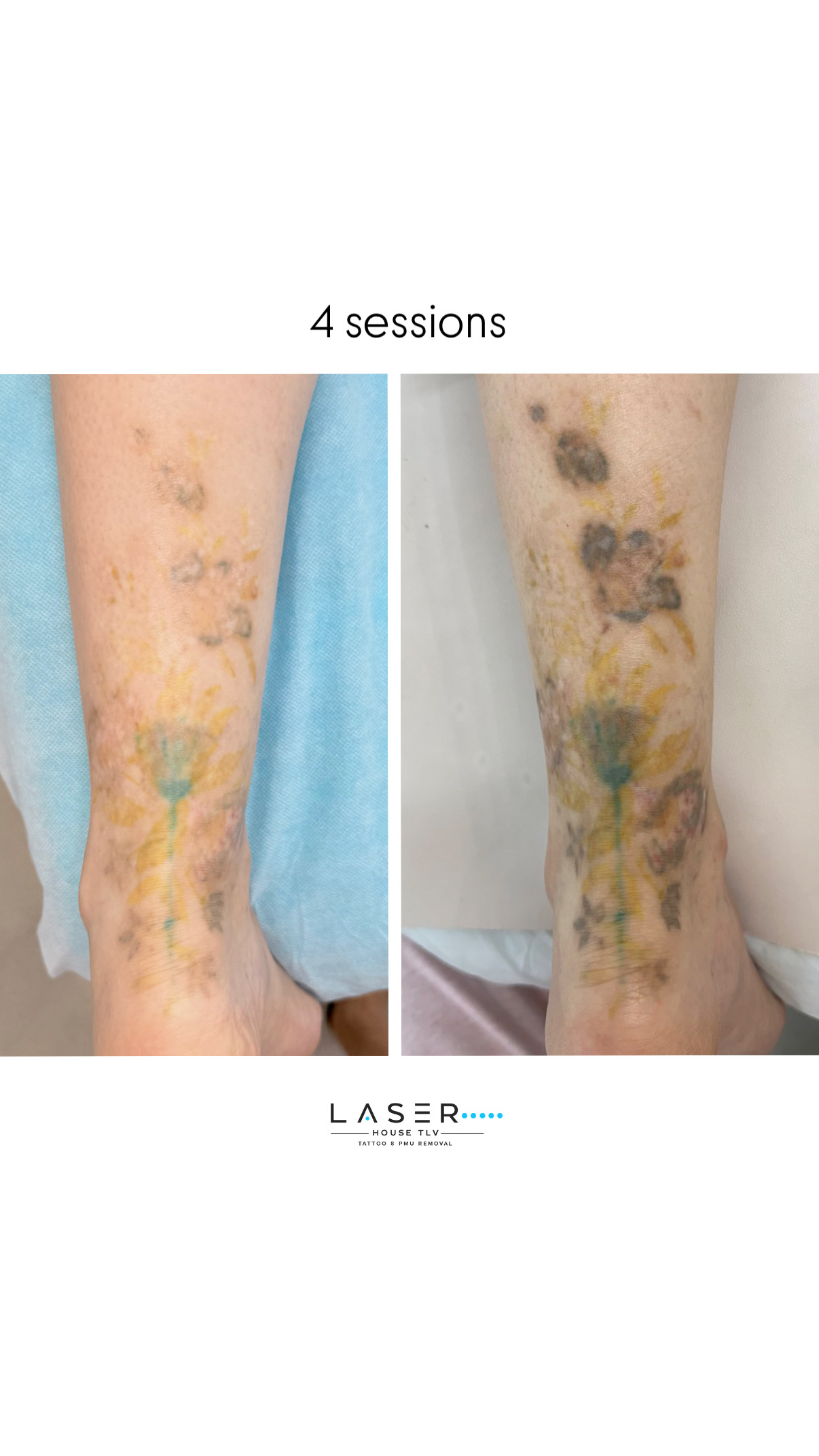
In these cases, the treatment plan may combine different technologies rather than repeatedly using the same laser approach.
Why is skin assessment important before fractional laser?
Not every red, raised or uneven area should immediately be treated with fractional laser.
A scar can be mature and stable, or it can still be active.
Signs such as persistent redness, itching, tenderness, continued thickening or active hypertrophic growth require careful evaluation.
If a scar is still active, the priority may be controlling the scar activity rather than immediately stimulating the tissue with additional laser treatment.
This is why the condition of the scar must be assessed before deciding on fractional resurfacing.
A combined approach to difficult tattoo removal
Complex tattoo removal often requires more than one technology.
At Laser House TLV, treatment planning may involve different laser wavelengths and fractional technologies depending on the case.
The goal is to evaluate:
The remaining pigment
Tattoo color
Depth of the ink
Previous laser treatments
Scar formation
Skin texture
Fibrosis
Skin type
Healing history
Only after evaluating all of these factors can the treatment be planned correctly.
Laser House TLV: Treatment of Difficult Tattoo Removal Cases
At Laser House TLV in Tel Aviv, we work with advanced Quanta System laser technologies for tattoo and permanent makeup removal.
Our approach is not limited to removing pigment.
When previous tattoo removal has caused changes in skin texture, fibrosis or scarring, the skin itself must also be evaluated.
Fractional technology can provide an additional tool for selected difficult cases by supporting skin resurfacing and scar remodeling while the appropriate pigment-specific laser technology is used for the remaining tattoo ink.
The objective is not simply to use more laser. It is to choose the correct technology for the pigment, the scar and the condition of the skin.
Gallery
 |
 |
 |
