Why Choosing the Wrong Laser Can Damage Your Skin
Compact Lasers vs Professional Medical Laser Systems . What You Must Know Before Choosing a Tattoo Removal Clinic
When searching for tattoo removal or PMU removal, many laser devices may look similar from the outside.
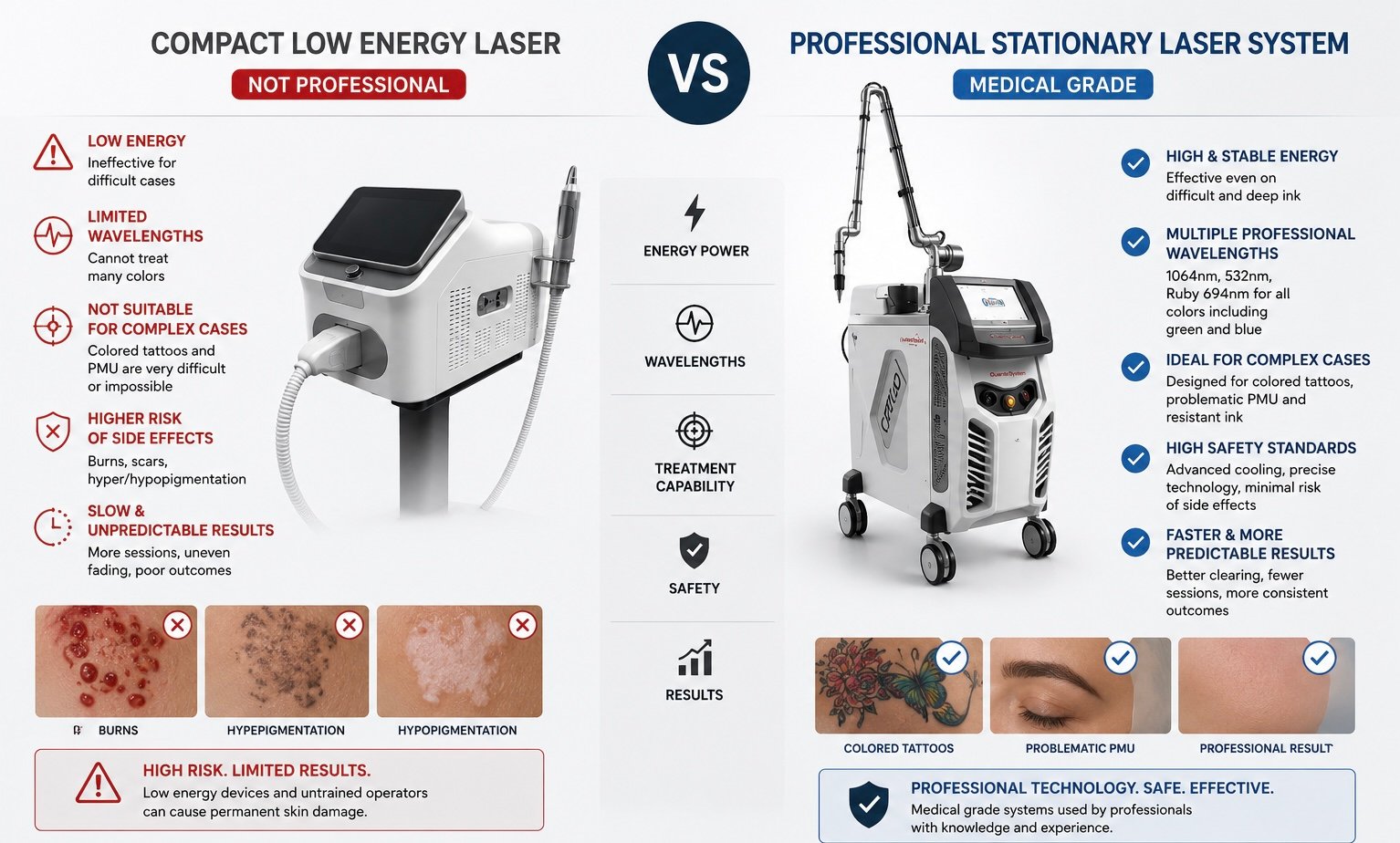
However, there is a major difference between compact low-energy lasers and professional stationary medical laser systems.
This difference directly affects:
- Treatment quality
- Safety
- Skin recovery
- Ability to treat difficult cases
What Is a Compact Laser?
Compact laser devices are smaller systems often designed for lower-cost production and basic cosmetic procedures.
In some simple cases, compact lasers may help with:
- Very small tattoos
- Superficial pigment
- Light fading procedures
However, compact low-energy systems have technical limitations and are usually not designed for difficult or complex tattoo removal cases.
What Is a Professional Stationary Laser System?
Professional stationary systems are medical-grade laser platforms built for:
- Stable high energy
- Advanced wavelength technology
- Deep pigment targeting
- Long treatment sessions
- Clinical precision and safety
These systems are commonly used in:
- Professional tattoo removal clinics
- Dermatology centers
- Advanced medical aesthetic clinics
Professional systems are specifically designed to safely treat:
- Dense tattoos
- Deep pigment
- Multicolored tattoos
- Resistant ink
- Failed previous removal attempts
- Complex PMU correction and removal
Why Compact Lasers Often Cannot Handle Difficult Cases
One of the biggest limitations of compact low-energy lasers is reduced clinical power and unstable energy delivery.
Complex tattoo removal requires:
- Deep penetration
- Stable pulse energy
- Precise beam quality
- Correct wavelength selection
Compact systems may partially fade simple black pigment in the early stages, but in many difficult cases they eventually reach their limitations.
This is especially common with:
- Colored tattoos
- Green and blue pigments
- Dense professional tattoos
- Layered tattoos
- Scarred skin
- Old or migrated PMU pigment
- Resistant residual ink
At some stage, the compact laser may no longer be able to effectively break down the remaining pigment.
As a result:
- Progress becomes extremely slow
- Results become unpredictable
- More unnecessary heat is applied to the skin
- The remaining pigment may stay trapped in the skin
Why Incorrect Laser Use Can Be Dangerous
Laser tattoo removal is not simply about using stronger energy.
Without proper knowledge, diagnosis, and correct wavelength selection, even basic treatments may become unsafe.
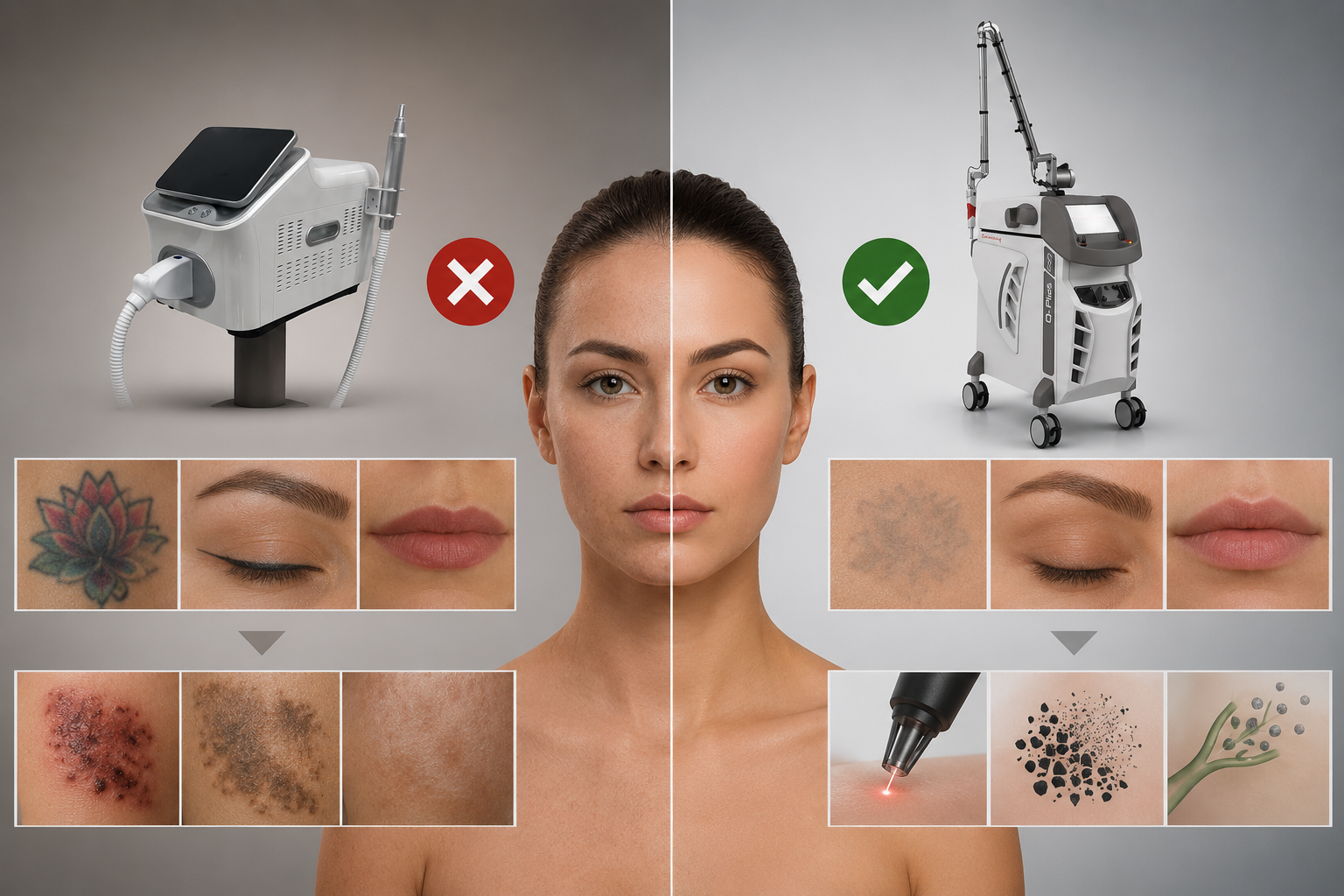
In the best-case scenario, an unsuitable low-energy laser simply will not achieve proper results.
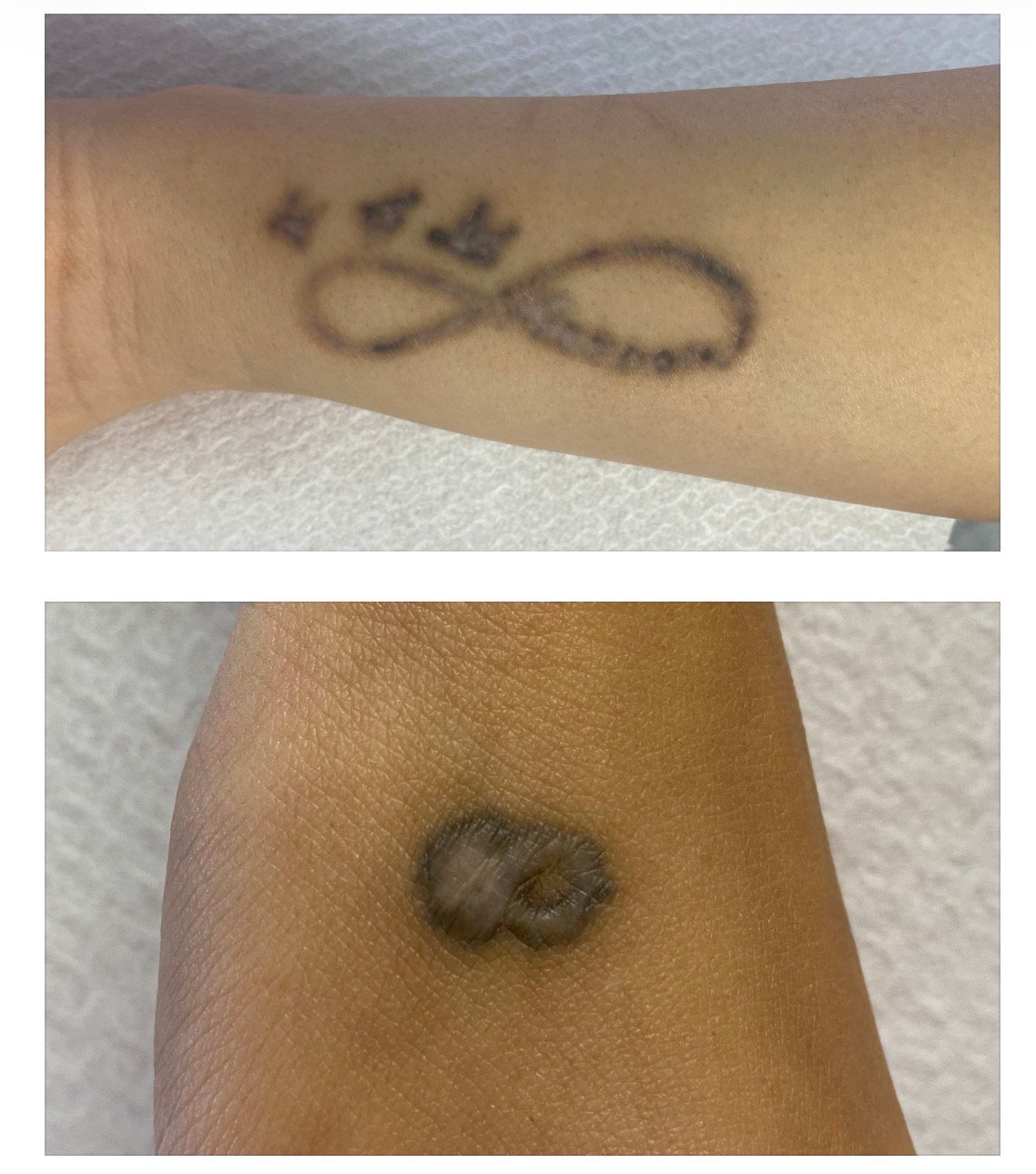
In worse cases, incorrect laser use may lead to:
- Burns
- Scarring
- Hypopigmentation
- Hyperpigmentation
- Uneven skin texture
- Long-term skin sensitivity
This is especially important when treating:
- Colored tattoos
- Sensitive areas
- PMU removal
- Previously damaged skin
- Failed previous tattoo removal attempts
Professional tattoo removal requires understanding not only how to operate a machine, but how different pigments, skin types, wavelengths, and tissue reactions behave throughout the entire removal process.
Why Wavelengths Matter
Different pigments require different wavelengths:
- 1064 nm — black and dark pigments
- 532 nm — red and warm tones
- Ruby 694 nm — green, blue, turquoise, and resistant pigments
Discovery Pico VarioPulse®: Why Advanced Laser Technology Matters
Ruby Laser 694nm: The Gold Standard for Challenging Tattoos Colors
Professional stationary systems provide true multi-wavelength technology with stable medical-grade energy.
Many compact systems cannot deliver the same level of precision, power, or effectiveness for difficult pigment removal.
How to Recognize a Professional Laser Clinic
When choosing a tattoo removal clinic, it is important to look beyond marketing words like “Pico.”
Clients should pay attention to:
- Which laser system is being used
- Whether the system is medical-grade
- Which wavelengths are available
- Whether the clinic treats difficult cases
- Real experience with colored tattoos and PMU
- Safety protocols and skin preservation approach
A professional clinic should be able to explain:
- Why a specific wavelength is selected
- Which technology is appropriate for your case
- What realistic expectations should be
- Possible risks and limitations
How Many Sessions Are Needed for Laser Tattoo Removal?
Laser Tattoo Removal FAQ: The Most Common Questions
Our partners
Why We Work With Professional Quanta System Technology
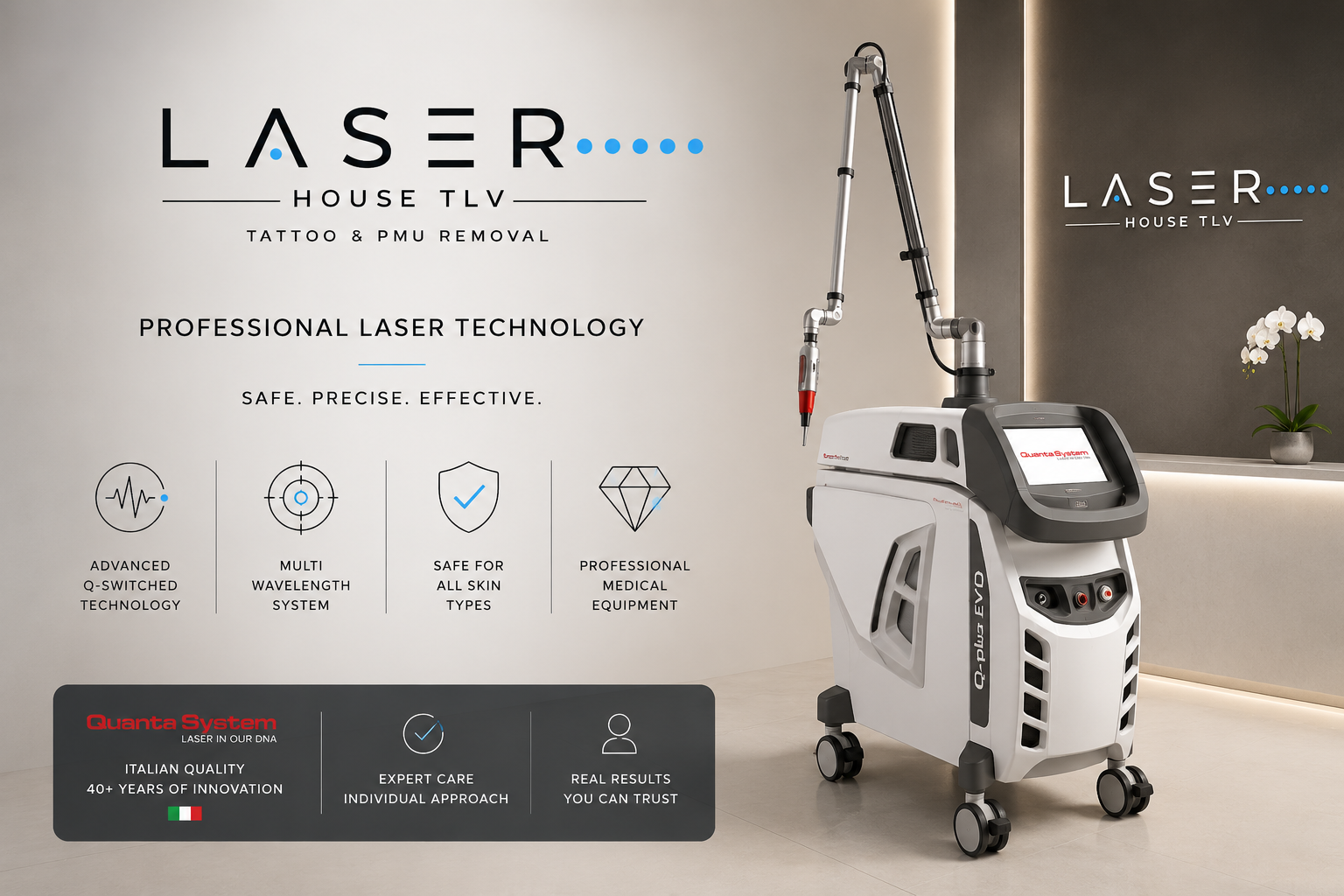
At Laser House TLV, we work with professional medical-grade systems from Quanta System, including advanced Q-Switched technology and Ruby 694 nm wavelength systems.
Quanta System is an Italian medical laser manufacturer with more than 40 years of experience in advanced clinical laser technology.
Our systems are designed for:
- Stable energy delivery
- Professional clinical precision
- Advanced safety
- Effective treatment of difficult pigments
- Safer skin recovery
Every treatment is customized individually according to:
- Pigment type
- Tattoo depth
- Skin condition
- Previous removal history
- Complexity of the case
Our goal is not simply to remove pigment, but to do so safely, professionally, and with maximum preservation of skin quality.
Laser Tattoo Removal in Tel Aviv Complete Guide
Permanent Makeup Removal with Laser
Advanced Colored Tattoo Removal And Pigment-Specific Laser Technology
Why Can Tattoo Removal Stop Working After Many Sessions?
Why Do Eyebrows Turn Green ? Laser Eyebrow Tattoo Removal Guide
 |
 |
 |
Have a question? CONTACT US