Why Can Tattoo Removal Stop Working After Many Sessions?
Many people are surprised when tattoo fading suddenly slows down or completely stops after multiple laser sessions.
One of the most common questions in difficult tattoo removal cases is:
“Why have I already done 15–20 sessions and the tattoo is still there?”
Many people believe that if a tattoo does not disappear, the solution is simply doing more laser sessions. In reality, the condition of the skin itself often becomes the main reason why tattoo removal slows down or completely stops progressing.
At Laser House TLV we evaluate not only the tattoo pigment, but also the quality and condition of the skin before continuing treatment in complicated cases.
Tattoo Removal Depends On The Skin, Not Only The Laser
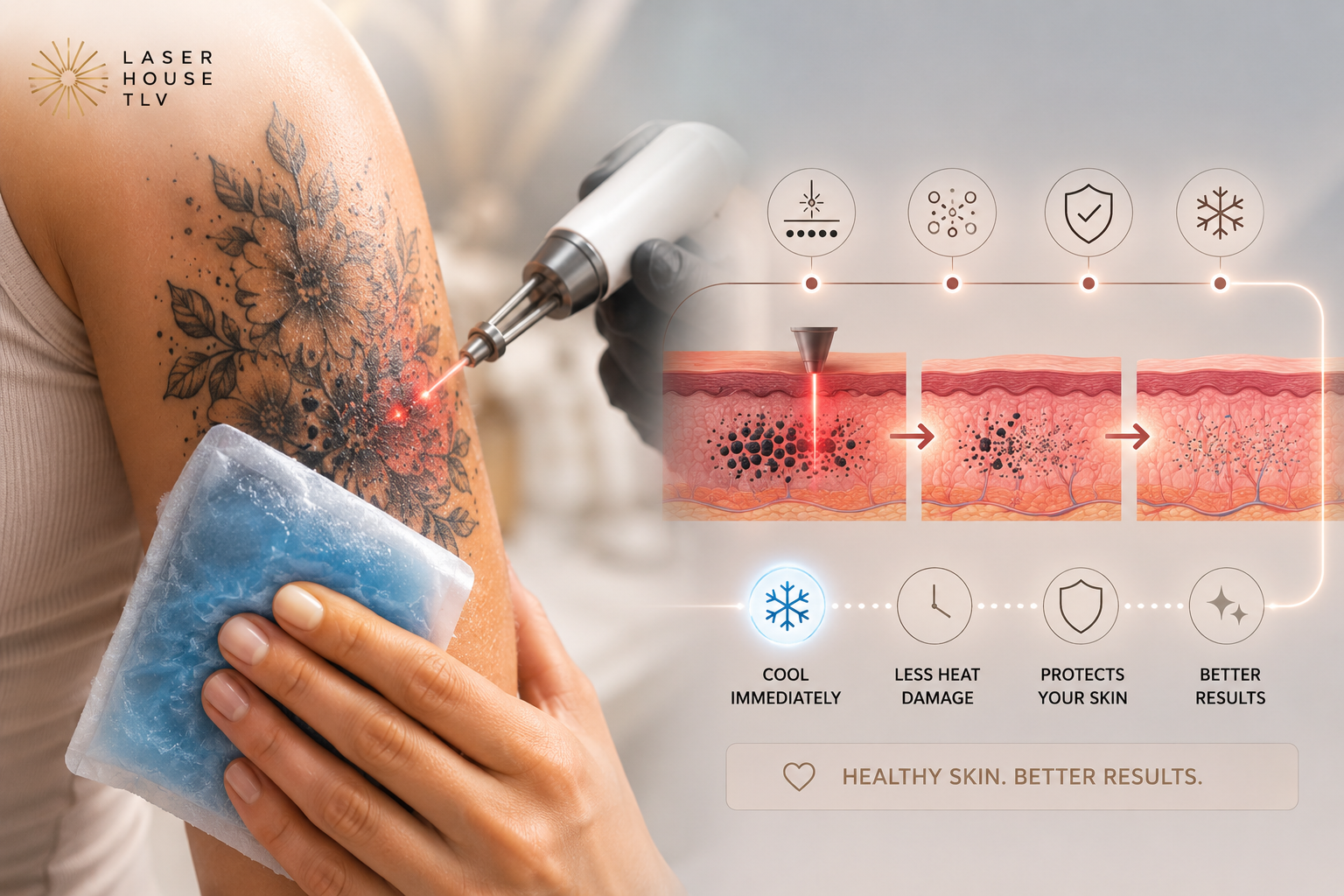
Laser tattoo removal works in two stages.
First, the laser breaks tattoo pigment into smaller particles. After that, the body’s immune and lymphatic systems gradually clear those fragmented particles from the skin over the following weeks. This means the body itself is responsible for removing the pigment after the laser session.
Healthy skin usually contains:
- Good blood circulation
- Active immune response
- Healthy collagen structure
- Proper lymphatic drainage
These factors allow the body to continue clearing pigment naturally between sessions.
However, when the skin becomes damaged, overheated, or scarred, this process slows down significantly.
Top Mistakes After Tattoo Removal
Why Choosing the Wrong Laser Can Damage Your Skin
Why Some Tattoos Stop Fading After Many Sessions
Repeated overheating of the skin may gradually create fibrosis and scar tissue inside the tattoo area. This is one of the most common reasons why some tattoos remain visible even after many years of treatments.
Scar tissue may appear because of:
- Non-professional tattoo removal
- Incorrect laser settings
- Excessive heat accumulation
- Poor cooling after treatment
- Aggressive repeated sessions
- Incorrect aftercare
- Previous burns or skin trauma
When scar tissue forms, the tattoo pigment can become trapped inside dense fibrotic collagen tissue. From an anatomical perspective, the immune system can no longer properly “see” and clear the fragmented pigment particles.
Even if the laser continues breaking the pigment, the body struggles to remove it because:
- Blood circulation becomes weaker
- Immune activity decreases
- Lymphatic drainage slows down
- Dense scar tissue blocks pigment clearance
This is why some tattoos appear almost unchanged even after 15–20 sessions. In these situations, simply continuing regular laser sessions often does not improve the result.
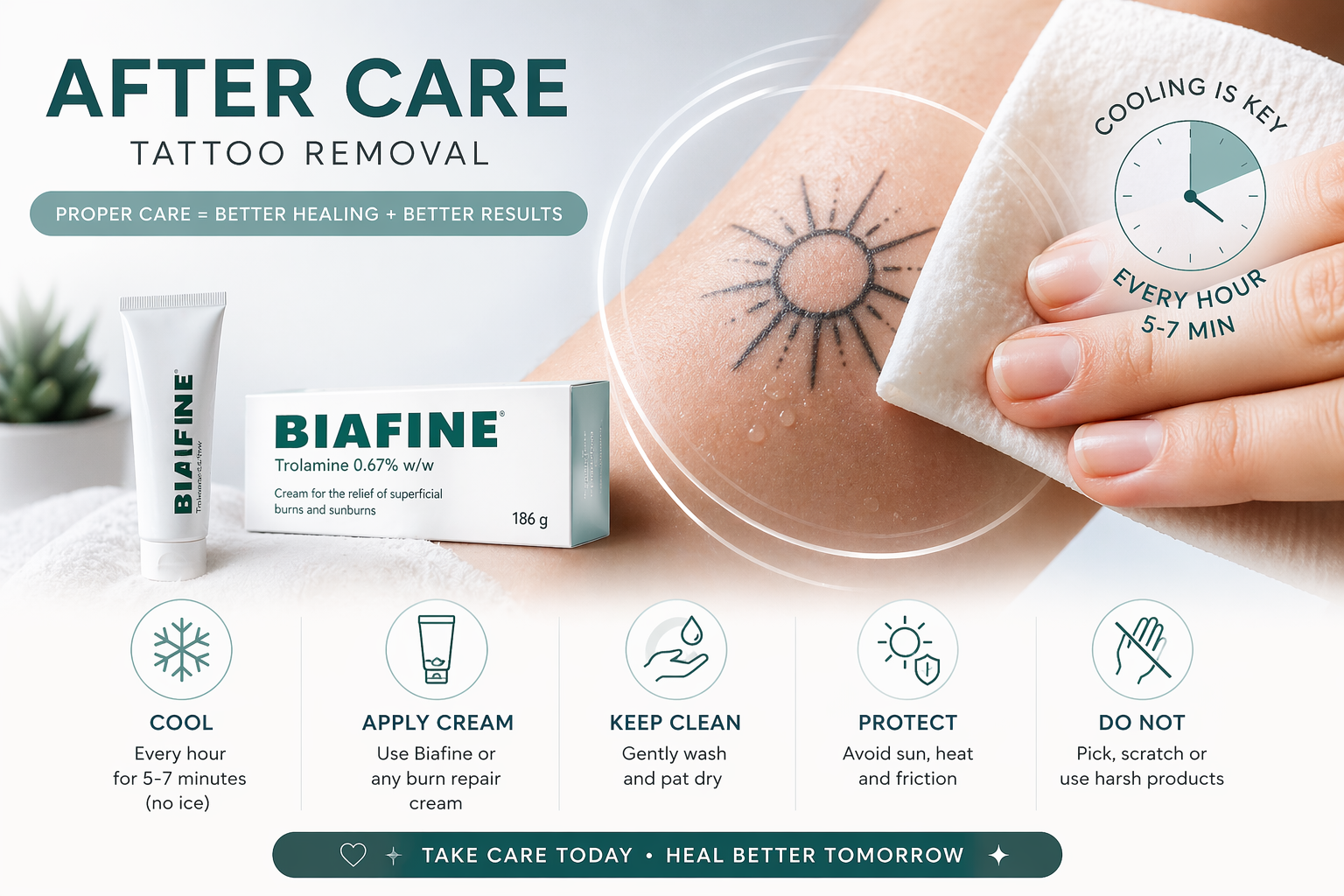
Why Cooling Immediately After Tattoo Removal Is Extremely Important
One of the most important and underestimated parts of professional tattoo removal is immediate cooling after the procedure.
The first 24 hours after laser tattoo removal are critical.
Even after the laser session is finished, heat continues remaining inside the skin for hours. If this heat is not controlled correctly, it may continue damaging tissue long after the treatment itself is over.
This is exactly why proper cooling directly affects:
- Skin recovery
- Risk of scarring
- Blister formation
- Inflammation levels
- Long-term tattoo removal effectiveness
Without proper cooling, excessive thermal damage may trigger stronger inflammation inside the skin. Over time, repeated uncontrolled inflammation may lead to fibrosis and scar tissue formation.
Scar tissue is not only a cosmetic problem.
Once the skin becomes fibrotic:
- Pigment clearance becomes slower
- The immune system works less efficiently inside the area
- Tattoo fading may stop almost completely
- More sessions may no longer improve the result
This is why cooling is not simply for comfort. Cooling is an important part of preserving healthy skin structure during the tattoo removal process.
Proper cooling immediately after treatment helps:
- Reduce heat accumulation inside the skin
- Lower inflammation
- Protect collagen structure
- Reduce blister formation
- Lower the risk of fibrosis and scars
- Support healthier pigment clearance between sessions
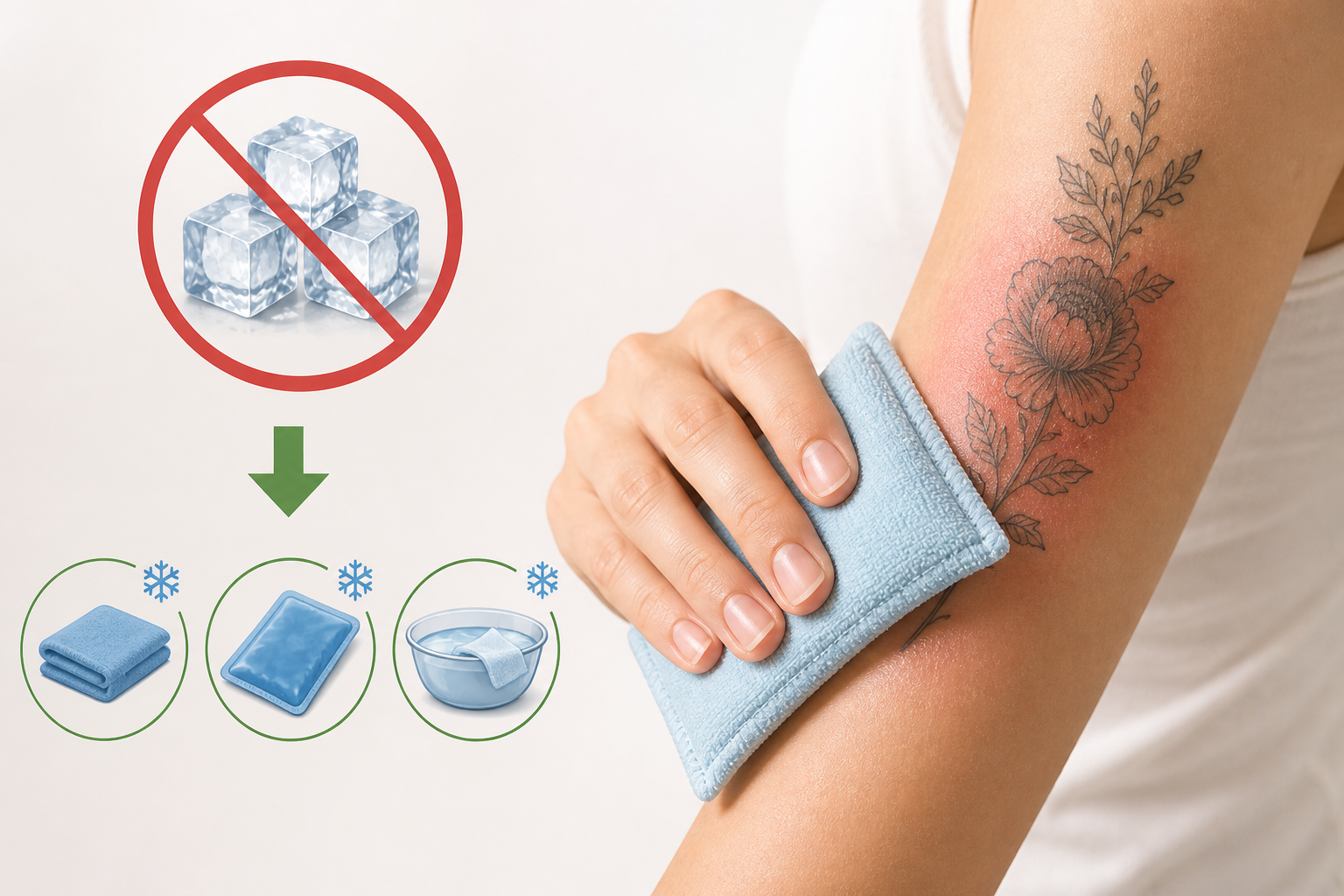
We usually recommend gentle cooling every hour for approximately 5–7 minutes during the first several hours after treatment.
Important:
- Do not place ice directly on the skin
- Use a clean cold compress or wrapped cooling pack
- Avoid overheating the area after treatment
- Avoid intense physical activity during the first days
The healthier the skin remains after each session, the better the body can continue removing fragmented pigment naturally.
Why Scarred Tattoos Often Require More Sessions
Tattoos with previous scars, burns, fibrosis, or skin trauma almost always require more tattoo removal sessions compared to healthy untreated skin.
This happens because scarred tissue slows the body’s natural ability to clear pigment particles between sessions.
In scarred skin:
- Circulation becomes weaker
- Pigment remains trapped longer
- Healing becomes slower
- Immune activity decreases
- Laser energy distributes less evenly inside the tissue
This is why tattoos after unsuccessful or aggressive removal may take significantly longer to fade.
The number of sessions may increase not because the laser is weak, but because the skin itself has already been damaged.
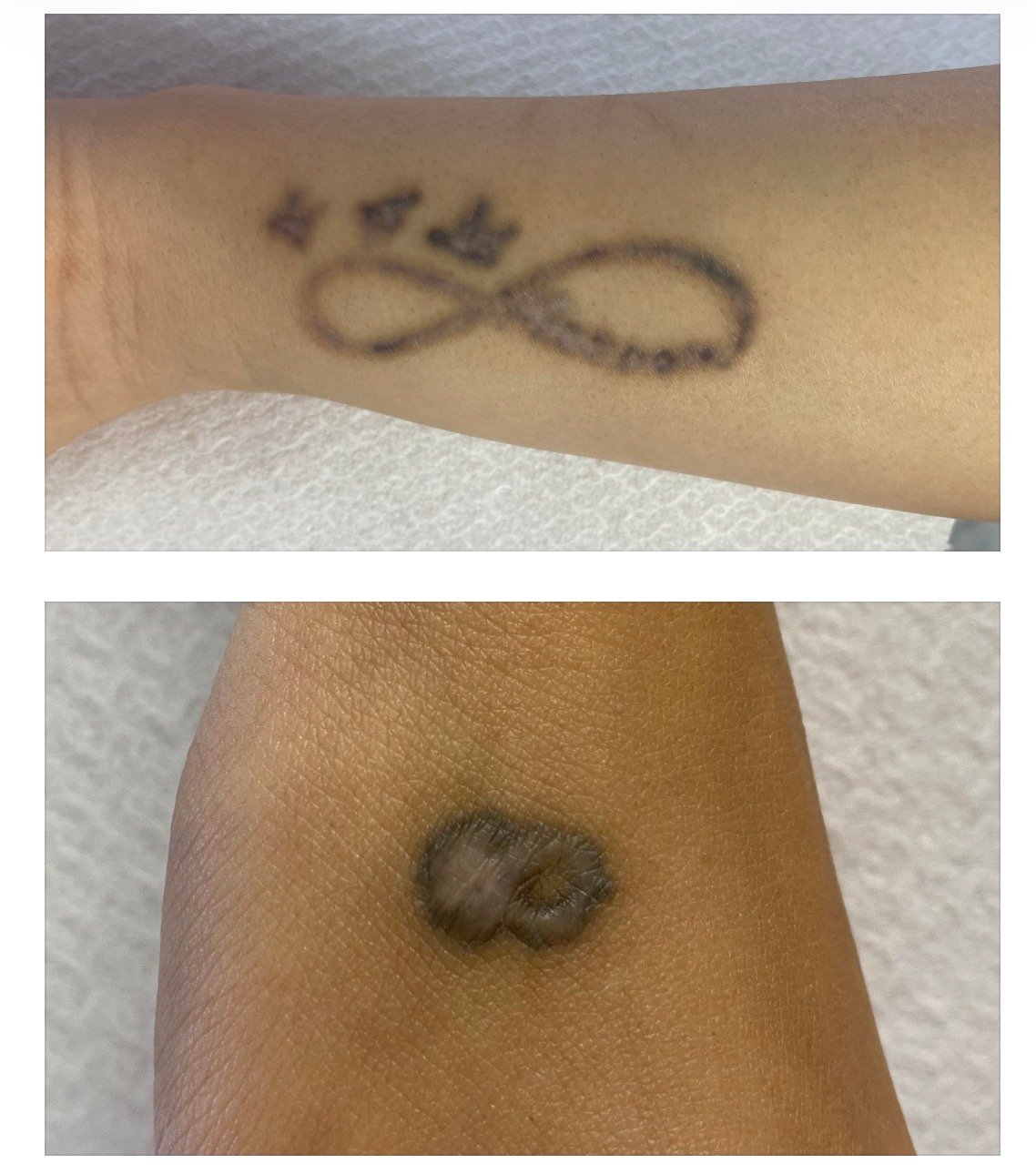
Gallery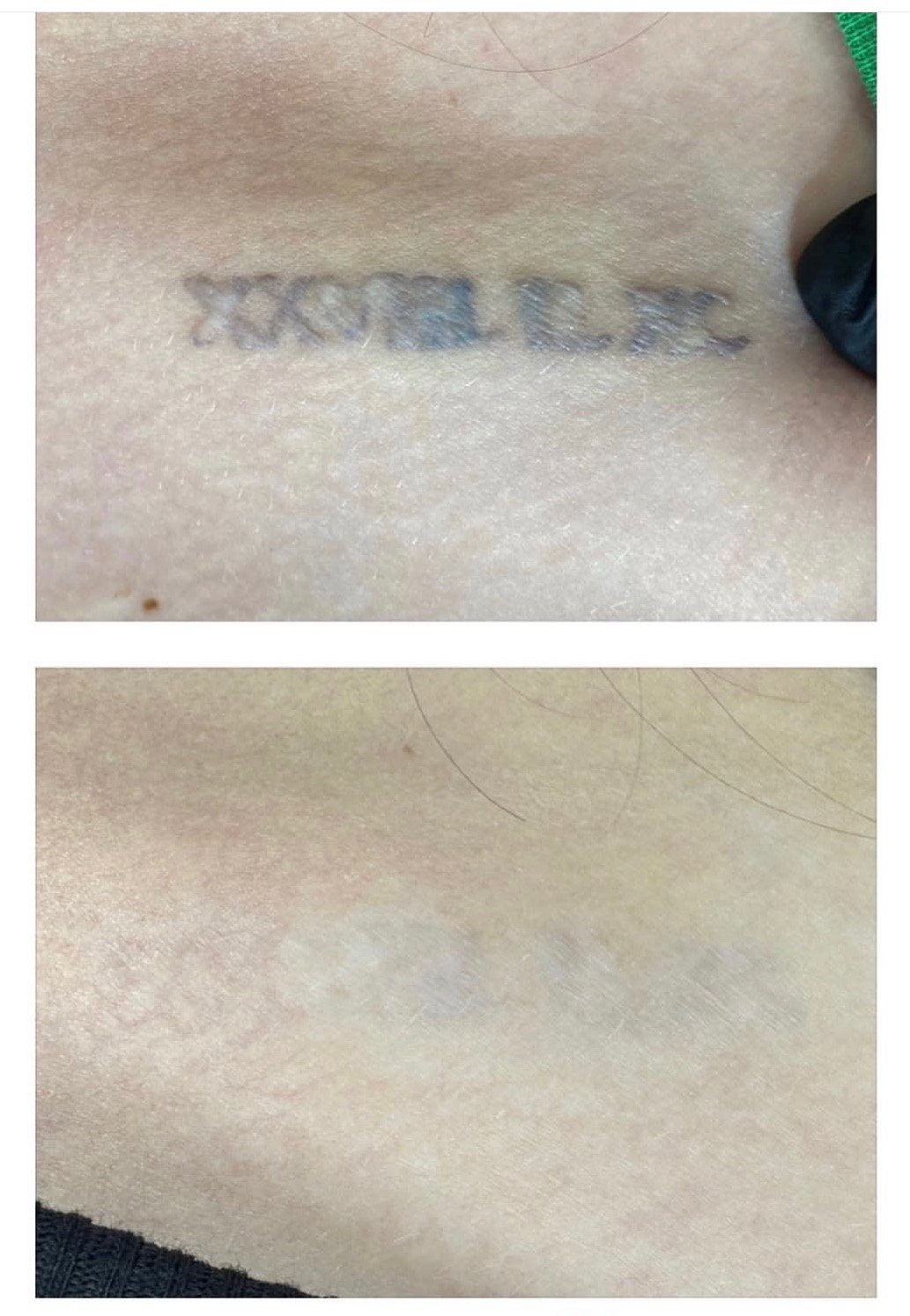 |
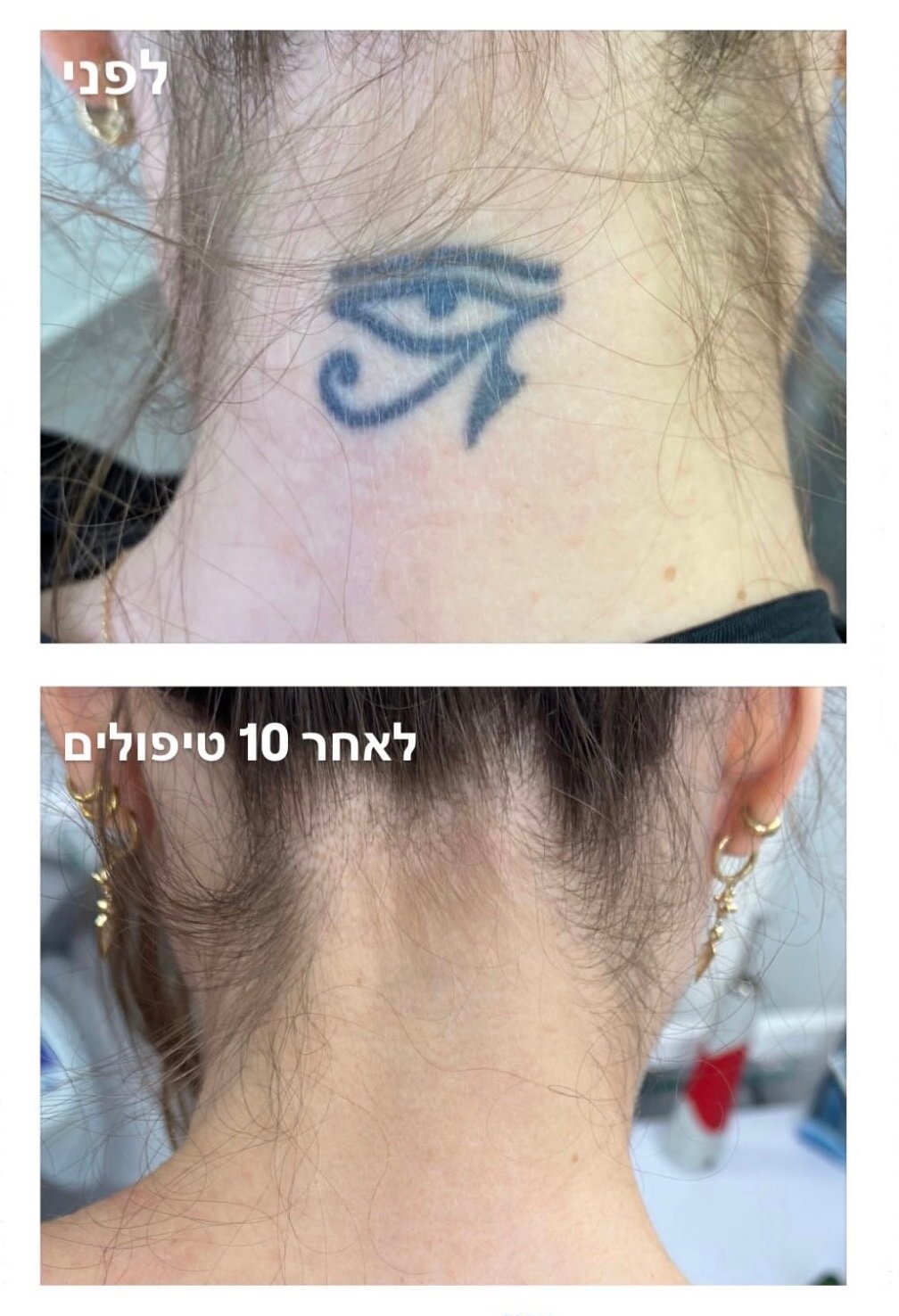 |
Why Fractional Laser Treatments Can Help In Difficult Cases
In complicated tattoo removal cases, the problem is often no longer only the pigment itself. The surrounding skin structure also needs restoration.
Fractional laser treatments work differently from standard tattoo removal lasers.
Instead of only targeting pigment, fractional procedures help improve the condition of scarred skin itself.
From an anatomical perspective, fractional laser treatments may help:
- Improve microcirculation
- Stimulate collagen remodeling
- Soften dense fibrotic tissue
- Improve skin texture
- Support healthier immune activity
- Create better conditions for pigment clearance
When scar tissue becomes healthier and less dense, the body may gradually regain a better ability to remove trapped pigment particles. In many difficult tattoo removal cases, restoring healthier skin structure becomes necessary before further fading can happen.
Correction Of Difficult Tattoo Removal Cases
At Laser House TLV we specialize not only in standard tattoo removal, but also in correction of difficult cases after unsuccessful or non-professional treatments performed elsewhere.
Many clients come to us after:
- Multiple ineffective sessions
- Burns after tattoo removal
- Skin scarring
- Pigment that stopped fading
- Overheated or damaged skin
- Complicated colored tattoo removal
Our clinic uses advanced Quanta System technology together with additional fractional laser support and individualized treatment protocols designed specifically for difficult and scarred tattoo removal cases.
Each treatment plan is adjusted according to:
- Skin condition
- Presence of scars or fibrosis
- Tattoo colors
- Previous removal history
- Skin sensitivity
- Overall tissue quality
Professional tattoo removal is not only about stronger energy. In many cases, preserving and restoring healthy skin becomes the key to achieving further tattoo fading safely.
Related Articles
You may also be interested in:
- Tattoo Removal Aftercare
- Top Mistakes After Tattoo Removal
- How Many Sessions Are Needed To Remove A Tattoo?
- Professional vs Non-Professional Tattoo Removal Lasers
- Why Do Eyebrows Turn Green ? Laser Eyebrow Tattoo Removal Guide
- Can Tattoos Be Removed In Summer?