What Not to Do After Tattoo Removal: Sport, Sun and Sauna
A little gentleness goes a long way after laser tattoo removal. Give the area time to settle and keep the instructions from your session close by. Recovery depends on the treatment, its intensity, the area treated and your skin’s response. An old scar and a fresh scar-treatment wound do not need the same care.
When can I return to my routine?
After pigment removal only: these are minimum guideposts, not automatic clearance. Your skin must be ready and your clinician must approve.
- Cooling: start straight after treatment, especially in the first hours. Use a clean cool pack through cloth, with breaks, as instructed. Never use direct ice or continuous cooling. Later cooling may still ease discomfort; increasing pain, heat or swelling needs assessment.
- Exercise: no exercise on treatment day. After that, return according to skin recovery and your clinician’s permission.
- Pool: no earlier than 72 hours after pigment removal only, and only with fully healed, closed skin and no blisters, crusts, discharge, redness, swelling or pain, after clearance. If any of these remain, wait longer.
- Sea and hot tubs: the pool timeframe does not automatically apply. Wait for complete healing and individual permission.
- Sauna and steam room: a guide is 7 to 10 days; wait longer if the area has not healed, and obtain clearance.
- Sun protection: throughout the course and for 6 months after the last session. Use shade and clothing from the start; SPF 50+ only after the surface has closed and healed, with approval, and reapply as instructed. This does not mean staying indoors.
If scars were also treated: follow a separate individual wound-care plan. These timeframes do not automatically apply to ablative scar treatment.
Gentle cooling, especially in the first hours
Start gentle cooling straight after treatment, especially in the first hours. A clean cool pack through cloth can ease heat, swelling and discomfort. Use it with breaks as instructed. Later cooling may still help discomfort; increasing pain, heat or swelling needs assessment.
No direct ice, hard pressure or continuous cooling. Excessive cold can injure skin. Follow your individual plan.
Shade now, SPF 50+ when healed
Protect the area with shade and suitable clothing. Sun protection helps reduce unwanted pigment changes.
SPF 50+ only once the surface is intact, closed and healed and your clinician approves. Do not apply it to an open or weeping wound without clinical guidance. Your instructions matter.
Small things that help your skin recover
1. Let blisters and crusts heal in peace
Helpful now: Let crusts come away naturally and leave the blister roof in place. It protects the skin beneath.
Keep hands gentle: Scratching and picking can injure healing skin and increase infection and scarring risk. Do not puncture blisters.
If a blister opens itself, do not peel off the remaining skin. Ask the clinic how to clean and dress it. Large, tense or painful blisters need advice, not home drainage.
Illustration only; not a diagnosis.
2. Keep contact gentle
Helpful now: Clean and dry gently using the method you were given. Choose clothing that does not rub the area.
Best saved for later: Tight straps, scrubbing, massage and shaving over broken skin or crusts. Friction can injure the fragile surface and disrupt healing. If cooling is recommended, use a wrapped cool pack as instructed; never place ice directly on skin.
3. Give your skin a break from the sun
Helpful now: Shade and protective clothing. Once the surface is closed and healed and your clinician approves, use broad-spectrum SPF 50+ on exposed skin and reapply as directed.
Best saved for later: Tanning and exposing healing skin. Sun protection helps reduce unwanted pigment changes. Continue throughout the course and for 6 months after the last session. Use shade and clothing immediately, and SPF 50+ only on closed, healed skin as instructed. You can go outdoors with suitable protection.
Leaving blisters intact, avoiding picking and seeking help for infection also help protect healing skin. For a scar already there, see existing scars and additional treatment.
4. Save the workout, sauna and swim for later
Give your skin a rest today
Can I exercise? Our clinic’s rule is no exercise on treatment day. Returning later depends on healing and the procedure; the next day is not automatic clearance.
Why: Heat, sweat and friction may irritate healing skin or damage blisters. Damaged blisters or infection can raise scarring risk; complications can delay healing and the next appointment. This is not inevitable.
Instead: Rest today and return to training according to your skin’s recovery and your clinician’s instructions, especially after additional scar treatment. Follow your individual plan.
Keep the heat gentle
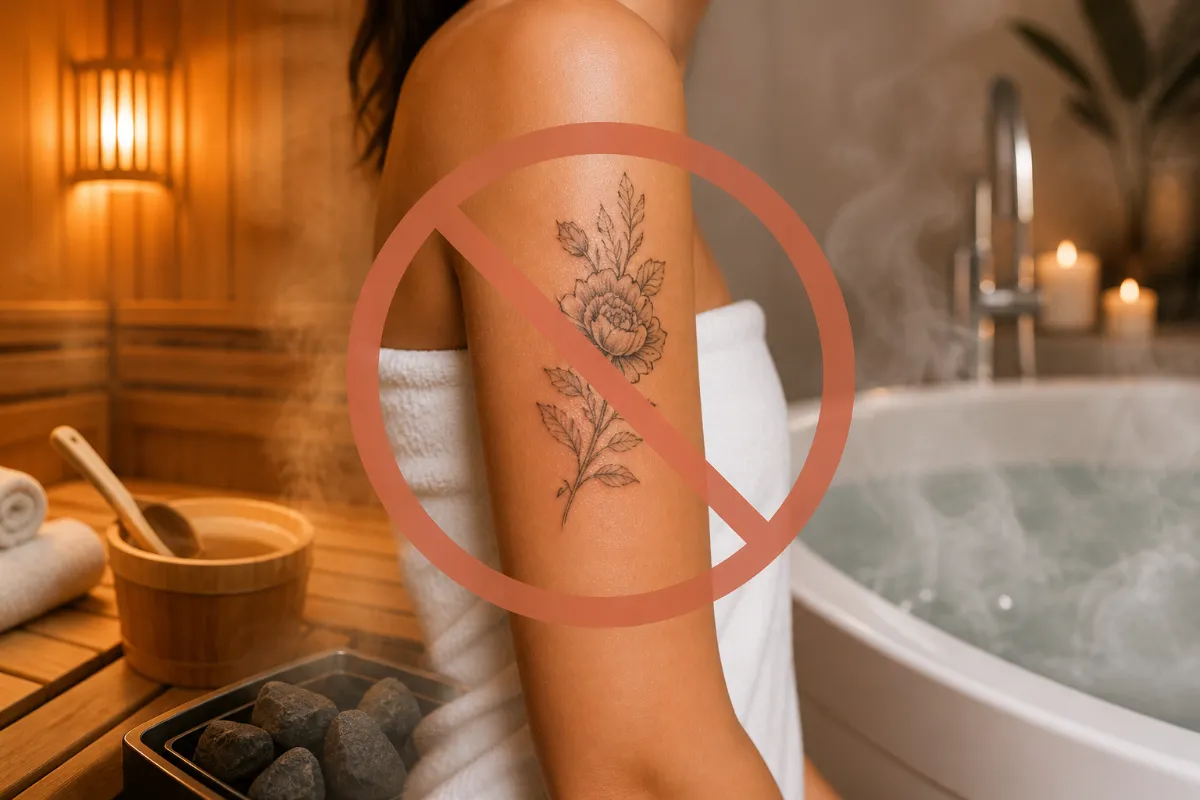
What about a sauna? Avoid saunas, steam rooms, hot baths and very hot showers during early healing: extra heat can aggravate discomfort and swelling.
Instead: Keep comfortable and ask which shower temperature and routine are suitable for your treatment. Your plan may differ.
Save the swim for later
Can I swim in the sea or pool? Avoid pools, the sea, hot tubs and soaking while there are blisters, open areas, weeping or crusts.
Why: Soaking can soften and disrupt fragile healing skin; shared or natural water can expose an open area to infection.
Instead: Wait until the skin has healed and you have been cleared to return. Showering and cleaning are different from soaking: ask when you may shower, whether the dressing must stay dry and how to clean the area.
5. Keep skincare simple
Helpful now: Use only the products and dressings recommended for this session. Unsuitable products can irritate sensitive skin or interfere with wound care.
Best saved for later: Exfoliants, retinol, acids and fragranced products. Do not add alcohol, peroxide or antibiotic creams on your own. Avoid makeup on unhealed skin and do not change prescribed medication without speaking to the prescriber.
For practical care, see our tattoo-removal aftercare guide.
Existing scars or additional scar treatment
An old, closed scar: Tell the clinician about it and any history of raised scars or keloids. Its presence does not automatically mean the skin is an open wound or that you need resurfacing aftercare.
Scar treatment during the same visit: Fractional ablative Er:YAG creates tiny channels in the skin and can require specific wound care and dressings. Do not reuse instructions from an uncomplicated tattoo-removal session. If “fractional” or “8DF” was used, ask exactly which treatment was performed and which instructions apply; the name alone is not enough to choose a home-care plan.
Old, closed scar
After ablative fractional treatment: different care may be needed.
Before leaving, confirm how to clean the area, what to apply, how to change dressings and when to restart exercise, skincare and scar products. Read about types of scars and Er:YAG for healed scars after tattoo removal.
When to get help
Some redness, tenderness, swelling or blistering can follow treatment. Contact the clinic if the reaction is unexpected, a blister is large or painful, or healing is not progressing as explained.
Before your next session
Let the next session wait until your skin is ready; bringing it forward is not a shortcut. Skin recovery and ink clearance take time, and the clinician should set the interval. Tell the clinic about a new tan, persistent irritation, delayed healing or a changing scar before attending. Careful aftercare supports healing, but cannot guarantee complete removal or prevent every complication.
Your individual care: Instructions depend on the treatment and skin assessment, especially when scar treatment was also performed. Ask for your individual plan. This guide does not replace your clinician’s instructions.
A question about your recovery?
We can help you understand the instructions from your visit. For worsening symptoms or the warning signs above, seek medical care rather than waiting for a chat reply.
Ask about your recovery on WhatsApp
Aftercare guide · Types of scars · Er:YAG and healed scars · Clinic gallery
Gallery examples do not predict your result.
Sources and further reading
- American Academy of Dermatology: laser tattoo removal
- Sandwell and West Birmingham NHS: laser tattoo removal (PDF)
- American Academy of Dermatology: blisters
- Leeds Teaching Hospitals: after your laser treatment
- Memorial Sloan Kettering: fractional CO2 wound-care guidance: general wound precautions; this is not an Er:YAG or 8DF protocol.
- Leeds Teaching Hospitals: laser treatment, including fractional Er:YAG
- NHS: cellulitis warning signs