Allergic Reactions During Tattoo Removal: Why Its Happen and What You Should Know
Allergic Reactions During Tattoo Removal: Why Its Happen and What You Should Know
Laser tattoo removal is considered one of the most technologically advanced and medically controlled procedures in aesthetic laser medicine. However, during the removal of colored tattoos and PMU pigments, the body may sometimes develop temporary inflammatory or allergic reactions.
At Laser House TLV, we believe it is important not only to remove tattoo pigment safely, but also to explain how tattoo ink interacts with the immune system, lymphatic circulation, and skin biology during the laser removal process.
Many people believe the laser itself causes the allergy. In reality, this is usually not the case.
During laser tattoo removal, laser energy breaks large pigment particles into microscopic fragments. These fragmented particles are then processed and removed gradually by macrophages, lymphatic drainage, and the immune system. As this happens, the body may suddenly begin reacting to pigments that previously remained “silent” inside the skin for years.
This reaction occurs more often with colored tattoo pigments because modern tattoo inks contain complex mixtures of metals, organic dyes, stabilizers, and synthetic compounds that behave differently inside human skin.
Colored tattoo removal is considered more challenging not only because different laser wavelengths are required, but also because every pigment interacts differently with the immune system and tissue healing processes.
Red pigments are among the most reactive and are more frequently associated with inflammatory or allergic responses.
Yellow pigments are often difficult to remove because they absorb laser energy poorly and may remain in the skin longer.
White pigments containing titanium dioxide may temporarily oxidize under laser exposure and shift into gray, blue, or greenish shades before gradually fading over additional sessions.
Blue and green pigments usually respond more effectively to Ruby 694 nm laser technology, which is specifically designed for deeper absorption of these color ranges.
This is one of the reasons advanced multi-wavelength laser systems are important for professional colored tattoo removal.
Different Types of Tattoo Pigment Reactions
Not every reaction is a classic allergy. In dermatology, tattoo pigments may trigger several different inflammatory and immune responses depending on the patient’s immune sensitivity, pigment chemistry, and the biological behavior of fragmented ink particles inside the skin.
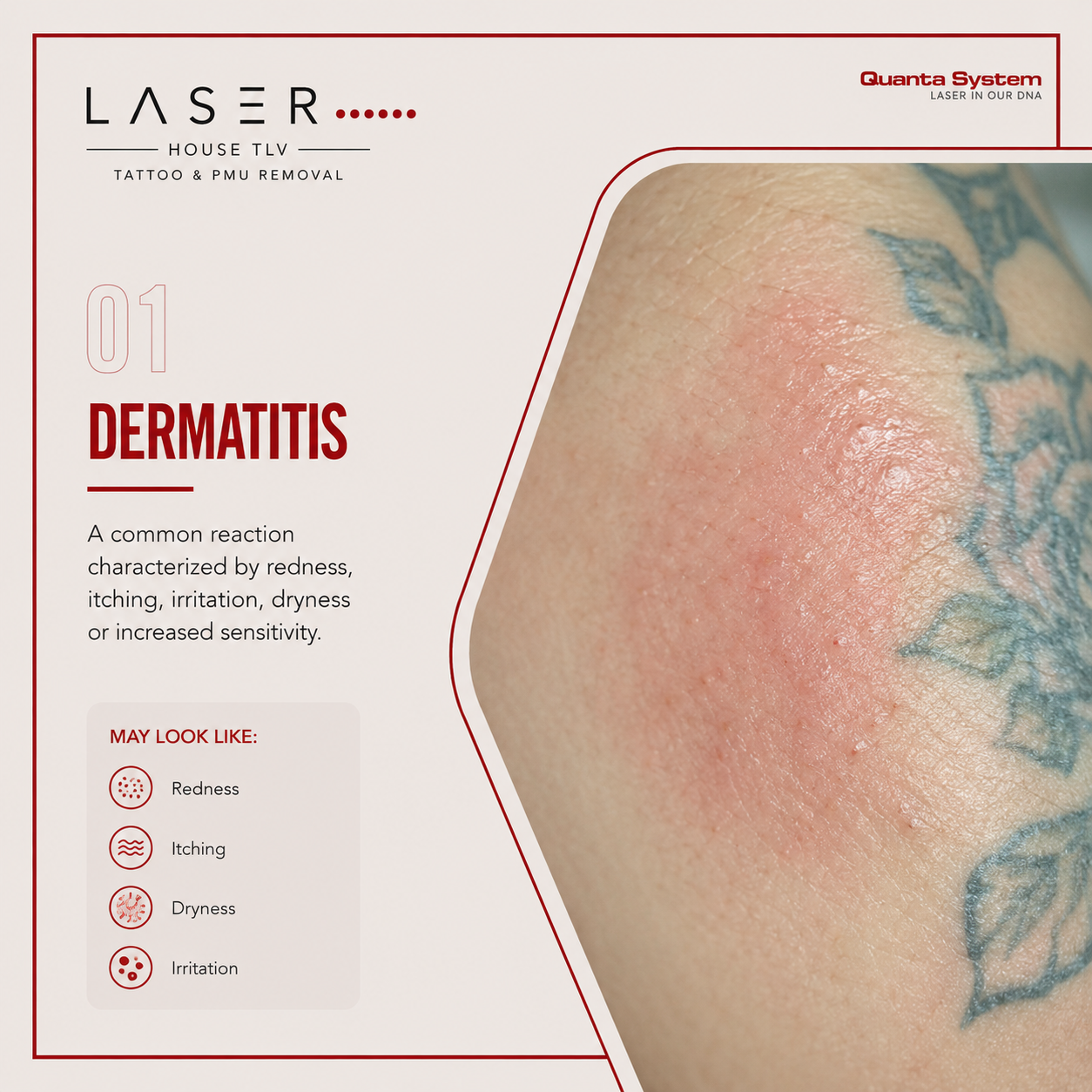
One of the most common reactions is dermatitis. This usually appears as redness, itching, irritation, dryness, or increased sensitivity around the treated area. Dermatitis may develop when the immune system reacts to fragmented pigment particles released during laser treatment.
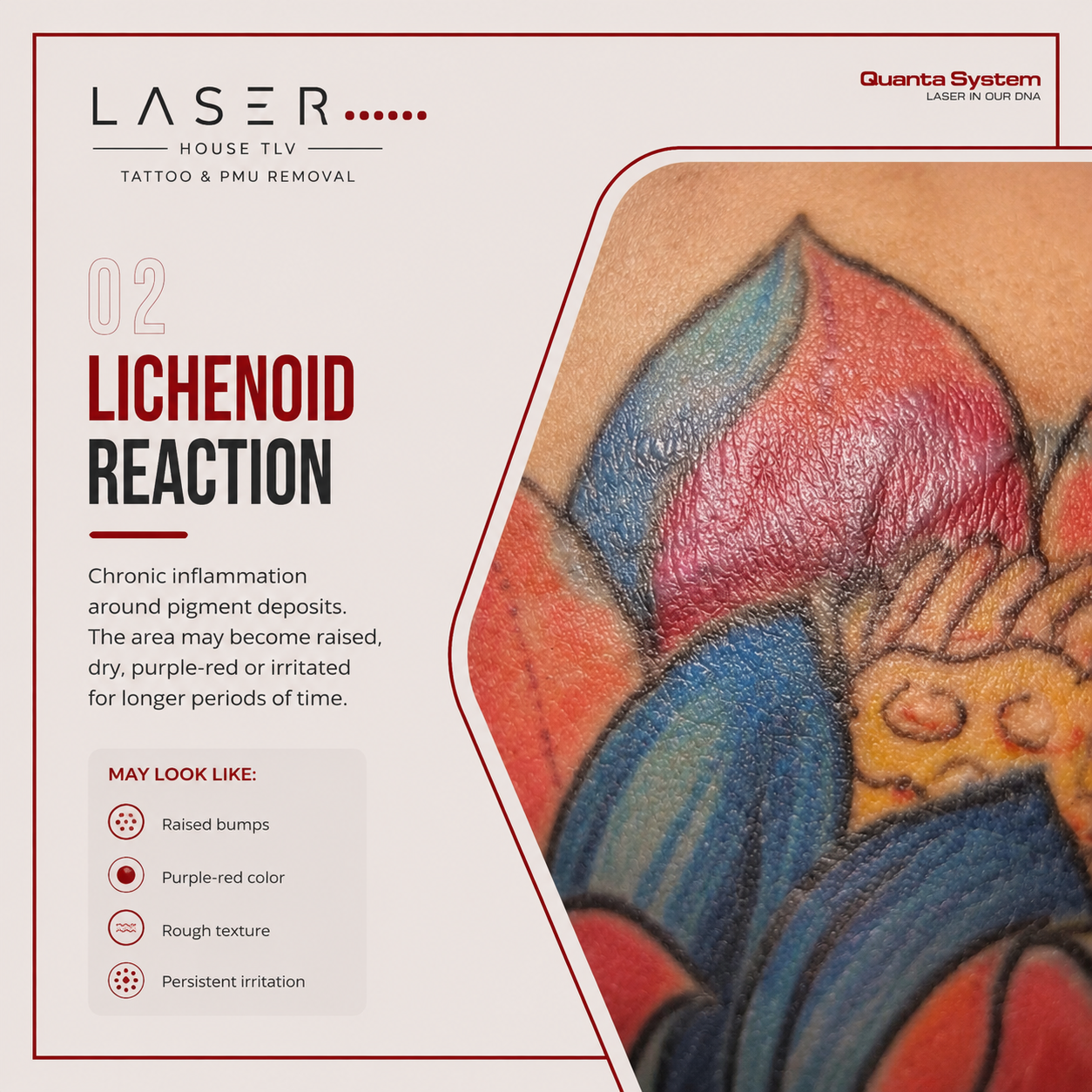
Another possible condition is lichenoid reaction. In this type of immune response, chronic inflammation develops directly around pigment deposits inside the skin. The area may become raised, dry, purple-red, or irritated for longer periods. Red pigments are more commonly associated with lichenoid reactions.
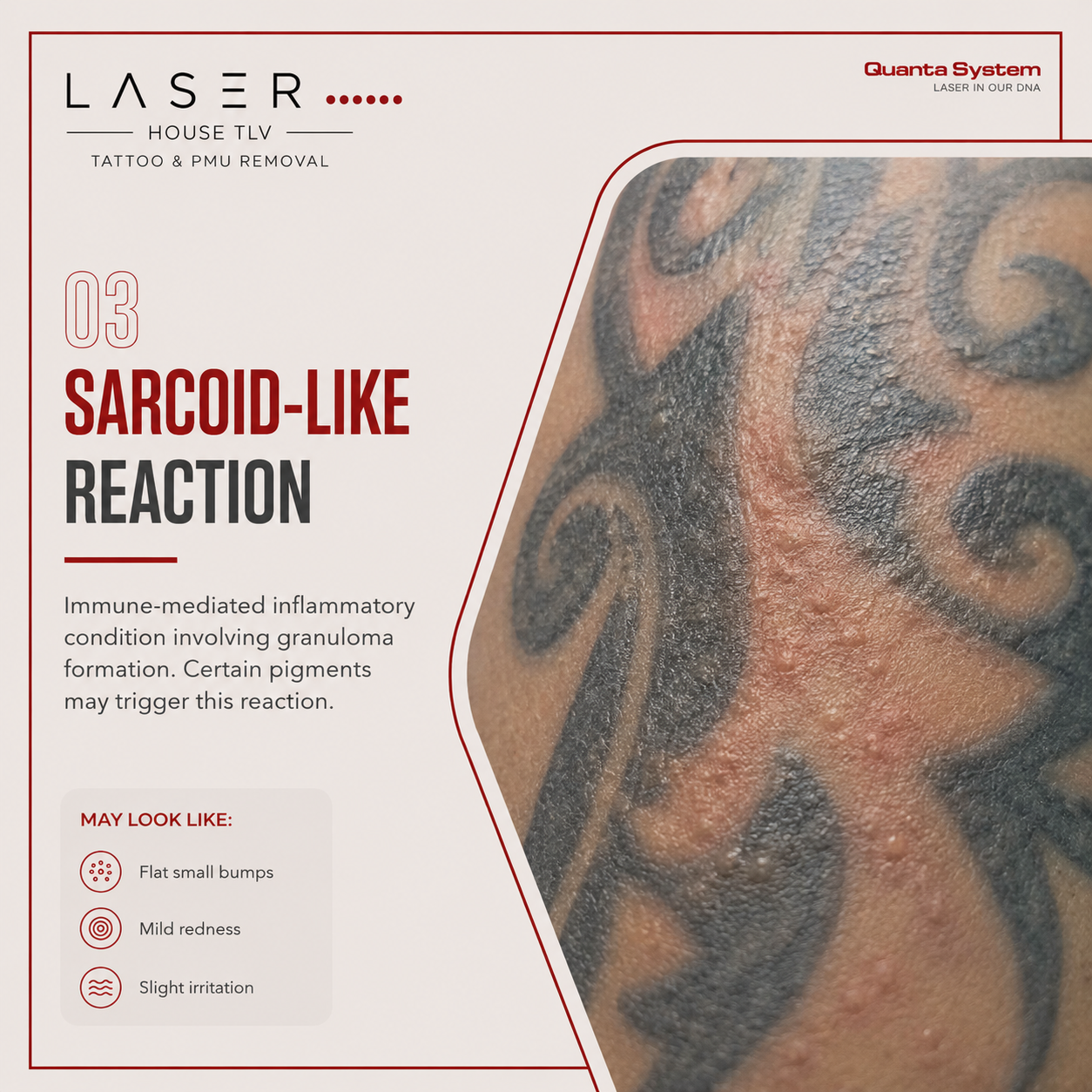
In rare situations, tattoo pigments may also trigger sarcoid-like reaction or localized sarcoidosis within tattooed skin. Sarcoidosis is an immune-mediated inflammatory condition involving granuloma formation. Certain tattoo pigments may act as triggers for this type of immune activation in predisposed individuals.
Another uncommon but medically recognized condition is pseudolymphomatous reaction. This occurs when dense inflammatory immune-cell infiltration develops inside the skin and resembles lymphatic tissue changes. Although rare, it demonstrates how strongly the immune system may react to some tattoo pigments and fragmented ink particles.
What Symptoms May Appear?
A temporary inflammatory or allergic reaction may include:
- redness
• itching
• swelling
• raised skin texture
• irritation
• prolonged sensitivity
• firm nodules or inflammatory bumps in some cases
Mild reactions may appear temporarily during the healing phase and gradually improve as the immune system stabilizes.
What Should You Do If a Reaction Starts?
Not every reaction requires medical intervention. Mild inflammatory responses are relatively common during colored tattoo removal and may improve with proper aftercare and immune stabilization.
In many mild cases, symptoms such as moderate redness, itching, or temporary irritation may gradually improve with cooling, gentle skin care, proper healing creams, and topical anti-inflammatory or antihistamine gels recommended by a professional.
Allowing longer intervals between sessions is sometimes extremely important because the immune system may need additional time to process fragmented pigments safely.
However, persistent or worsening reactions should never be ignored.
If the treated area becomes increasingly swollen, painful, intensely itchy, develops spreading inflammation, fluid discharge, significant skin thickening, or prolonged nodules lasting beyond normal healing periods, professional medical evaluation becomes necessary.
In some situations, especially with strong immune reactions to colored pigments, consultation with a dermatologist is recommended before continuing additional laser sessions.
When Is It Better to Pause Tattoo Removal?
There are situations where continuing aggressive laser treatment is not recommended temporarily.
If the skin remains actively inflamed, highly reactive, or continues developing worsening immune symptoms, additional laser sessions may increase irritation, pigmentation changes, or scar formation.
Professional tattoo removal is not only about removing ink quickly. It is also about understanding when the skin and immune system need more time to recover safely.
At Laser House TLV, every tattoo and PMU removal treatment is approached individually with careful attention to pigment chemistry, immune response, skin preservation, lymphatic recovery, and long-term skin quality.
You may also be interesting in:
Top Mistakes After Tattoo Removal
Why Do Eyebrows Turn Green ? Laser Eyebrow Tattoo Removal Guide
How Many Sessions Are Needed To Remove A Tattoo?
Why Can Tattoo Removal Stop Working After Many Sessions?
Can You Remove A Tattoo In Summer?